How to Build a Campfire That Works in Real Conditions

Most campfire advice is theater. Teepee, log cabin, lean-to, star fire, upside-down fire. Fine, those shapes can help. They are not the skill. A campfire works because the site is legal and controlled, the tinder is dry enough to catch immediately, the kindling is staged from tiny to larger, and the flame can breathe until it makes coals.
The people who get this wrong usually make the same mistake. They strike a match into a cute little sculpture, then scramble around for sticks while the flame dies. That is amateur hour. Build the whole system before ignition. Then feed it like a machine.
Should you build a campfire here today?
If campfires are not legal here today, or the site is dry, windy, gusty, or short on water, the correct campfire is no campfire. Use a stove, lantern, or cold camp instead.
The National Park Service campfire guidance is blunt about this: rules vary by park, and dry or windy conditions can trigger bans or special restrictions. That means yesterday's legal fire ring does not automatically make today's fire legal. Current conditions matter.
Before you touch a stick, answer these questions:
- Are campfires legal here today?
- Is there a burn ban or special restriction?
- Is the weather dry, windy, or gusty?
- Is there an existing fire ring or metal fire pit?
- Do you have enough water to fully extinguish the fire?
- Can you stay with the fire until it is completely out?
If any answer is bad, stop. That is not caution theater. NPS warns that even a small breeze can spread a fire quickly. The woods do not care that you planned on campfire coffee.
The fire ring matters more than the fire shape
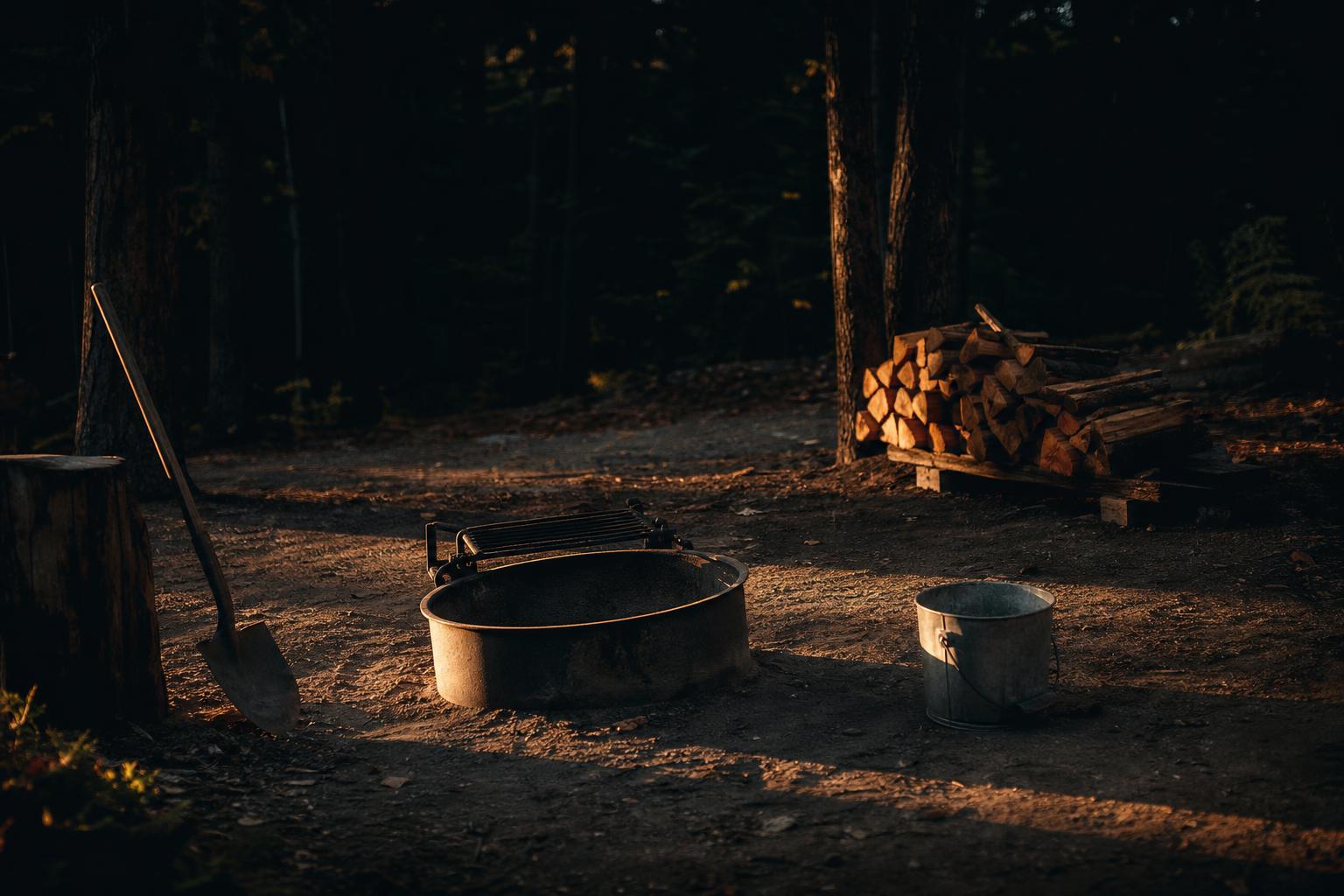
The best campfire site is an existing legal fire ring or metal fire pit. Smokey Bear recommends using an existing fire pit with a metal ring or rock circle when one is available, and that is the standard I use in the field. New fire scars are unnecessary damage in most campsites, and on many public lands they are prohibited.
Your minimum site standard is not complicated:
- Keep tents, gear, vegetation, and low branches at least 15 feet away.
- Use open overhead space, with clearance at least 3 times the flame height.
- Clear at least a 10-foot diameter around the fire site.
- Stack extra firewood away from the pit, not half-touching the edge.
- Stage water and a shovel or trowel before ignition.
NPS recommends flammable objects be at least 15 feet away and upwind of the firepit. Smokey Bear also gives the 15-foot rule for tents, vegetation, and low-hanging branches, plus overhead clearance at least 3 times the flame height. Smokey also recommends a 10-foot cleared diameter around the fire site. That means scrape away leaves, needles, duff, and anything else that wants to become a fuse.
If there is no fire pit and local rules allow one, Smokey describes digging about 1 foot deep and using a metal ring or rock barrier. I would only do that where it is expressly legal or in a true emergency. In normal public-land camping, use the established ring or do not have a ground fire.
Water is not optional gear. Neither is a scraping tool. If your camp water plan is sloppy, fix that before you add flame to camp. The same discipline behind a DIY water filtration system for survival applies here: enough water staged before it is needed, not after the situation gets stupid.
Stage tinder, kindling, and fuel before the match
Do not light first and then forage. That is how small flames die. A working fire is staged in arm's reach before ignition, from the smallest material to the largest.
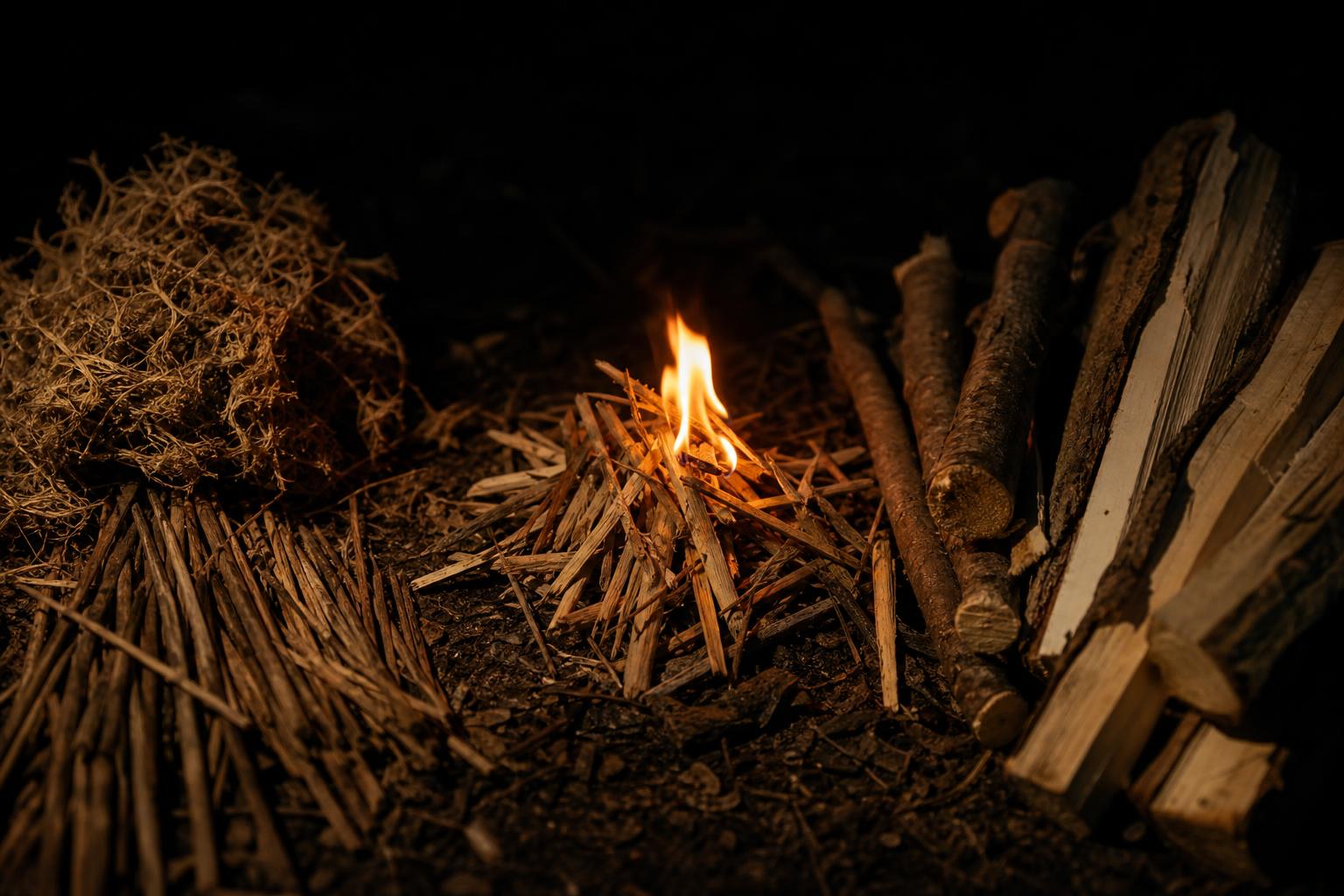
Tinder is the ignition material. Think small twigs, dry leaves, dry grass, and dry needles. It has one job: catch quickly from a match or lighter and burn long enough to light the first kindling. In damp or cold conditions, use more than beginners think, at least a loose double handful. If your tinder feels cool against the back of your hand, treat it as suspect and gather drier material.
Kindling is the flame builder. Smokey Bear defines kindling as sticks smaller than 1 inch around. That is a useful ceiling, not a starting point. Stage it in sizes: matchstick-thin, pencil-thin, finger-thick, then thumb-thick. Fire does not jump politely from a grass nest to a wrist-thick log. You have to give it stairs.
Fuel wood is the sustained heat. Larger dry wood goes on only after the kindling is burning well. NPS notes that bark does not burn as well as the rest of the wood, and thinner split pieces get a fire going faster. That is why split wood beats round bark-covered sticks when the weather is fighting you. Exposed interior wood catches faster.
A waterproof fire starter, commercial fire starter, or fatwood can be useful tinder insurance, especially in wet weather. It is not a license to skip fuel staging. I have watched people light a good fire starter under bad kindling and still fail. The flame burned. The structure did not take. That is not the fire starter's fault.
How much tinder and kindling do you need?
You need enough tinder and kindling to feed the flame continuously from match flame to thumb-thick sticks without leaving the fire pit. If you have to stand up and search after ignition, you did not prepare enough.
Lay your materials in separate piles where you can grab them without crossing over the flame. Put tinder closest, then the thinnest kindling, then progressively larger pieces. Keep the fuel wood farther back. Extra firewood belongs away from the pit, not crowding the fire ring where sparks and rolling logs can reach it.
For a small campfire, I want a tinder pile large enough to look excessive, a bundle of pencil-thin sticks, another bundle of finger-thick sticks, a few thumb-thick sticks, and only then a few split fuel pieces. Beginners skip the middle sizes. That is the failure point. The fire starves during the handoff from tinder to real wood.
Dryness beats cleverness. A sloppy pile of dry staged fuel will beat a perfect teepee made from damp sticks every single time.
Build the ignition core, not a cute sculpture
The ignition core is a loose tinder nest with the smallest kindling arranged so flame can move upward through it. Teepee and log cabin layouts are just scaffolding around that core. If the core is wrong, the shape is meaningless.
Place the tinder in the center of the ring. Keep it loose. Packed tinder smothers itself. Add the thinnest kindling over and around it with gaps for air. I like a small lean-to or open teepee at this stage, not because it is magic, but because it keeps flame touching thin wood while leaving breathing room.
Keep your first build small. Tall flames are not proof of skill. A compact fire is easier to control, easier to feed, and easier to extinguish. NPS tells campers to keep fires small, and practical field work says the same thing. A small hot fire with good coals beats a big smoky mess every night of the week.
Light the tinder with a match or lighter. NPS warns never to use accelerants like gasoline, and Smokey Bear says never use flammable liquids. Gasoline is not a fire-starting shortcut. It is how people turn a camp skill into a burn injury and a wildfire report.
Feed flame in stages and protect the airflow
The first minute decides the fire. Do not dump wood on top of the flame. Feed it. Add matchstick and pencil-thin pieces first, then finger-thick pieces after they are burning, then thumb-thick pieces after the flame is stable.
Every added stick should either touch flame or sit close enough to be heated by it. Every added stick should also leave space for air. A campfire is not a trash compactor. If smoke pours out and the flame shrinks, you buried the core. Pull some material back with a stick or trowel and reopen the gaps.
Wind complicates this. A breeze can help airflow, then turn into a hazard. If gusts are pushing sparks out of the pit or laying flame sideways, the fire is done. Let it burn down under control and extinguish it. NPS warns that wind can spread fire quickly, and that warning is not theoretical.
Once thumb-thick sticks are burning well, add split pieces of fuel wood. Keep them small at first. Big rounds belong on an established coal bed, not on a baby flame. Bark-heavy pieces should not be expected to catch like split interiors. Put exposed split faces toward heat.
The coal bed is the engine. As pieces burn down, nudge coals together in the center of the ring. Do not spread them into a wide glowing carpet unless you are actively cooking and can control the whole surface. Concentrated coals make steady heat. Scattered coals make a bigger hazard and a harder shutdown.
Campfire cooking starts with coals, not flames
Campfire cooking works best when you burn wood down into a steady coal bed instead of trying to cook over tall flames. Flames lick, soot, flare, and shift. Coals give steadier heat and better control.
Build the fire early enough to make coals before food hits the grate, pan, or foil. Feed one side of the fire with split fuel while you rake coals to the cooking side. That gives you heat now and replacement coals later. Keep the fire small enough that you can reach, move, and control everything without stepping over flame.
Do not confuse food planning with fire planning. If your survival food depends on long cook times, you are placing a lot of pressure on weather, fuel, and fire rules. I like food that can be eaten cold if the fire is banned and cooked if conditions allow. Field-stable food like the kind covered in how to make pemmican gives you options instead of forcing a fire when the land manager says no.
Keep water and the shovel staged while you cook. Grease, sparks, shifting logs, and distracted people are the normal failure points around cooking fires. Nobody leaves the fire unattended. Not for more wood, not for a bathroom walk, not for a quick photo from the ridge.
What should you do if the fire leaves the pit?
If the fire jumps from the pit to surrounding vegetation, or embers are flying outside the fire, call 911 immediately. Smokey Bear gives that exact emergency rule, and waiting to see if it gets worse is the wrong move.
Use your water and shovel only if you can do so safely. Do not turn a small campfire problem into an injury by stomping through burning brush or breathing smoke. The right time to prevent an escaped fire was during site selection, clearing, staging water, and refusing to light during dangerous conditions. The second-best time is the instant it escapes.
Put it out until it is cold, not mostly out
A campfire is not out when the flames disappear. It is out when the ashes, coals, sticks, and dirt are cold to the touch. Anything less is lazy and dangerous.
The Smokey Bear campfire safety method is the one worth using: drown, stir, drown, feel. Pour water on the fire until the hissing stops. Stir water into the embers, ashes, dirt, or sand. Scrape sticks and logs until no embers are exposed or smoldering. Add more water until everything is cool. Then check with the back of your hand.
The back of the hand matters because it is sensitive to heat without forcing you to grab hot material. Hover close, feel carefully, and keep working if there is heat. If it is too hot to touch, it is too hot to leave.
Do not bury coals. NPS warns that buried coals can smolder underground and re-ignite. Burying feels neat to people who do not understand fire. It hides the problem. It does not solve it.
Leave enough time for shutdown. If you are breaking camp at dawn, do not feed a big log at midnight and pretend you will solve it in five minutes. Build smaller as the night gets later. Let the fuel burn down. Finish with water, stirring, more water, scraping, and the cold-touch test.
FAQ
What is the best campfire shape?
The best shape is the one that keeps dry tinder, small kindling, and air working together. Teepee and log cabin layouts can help, but they fail if the tinder is damp, the kindling is too large, or the core is smothered.
Can I use gasoline to start a campfire?
No. NPS warns never to use accelerants like gasoline, and Smokey Bear says never use flammable liquids. Use a match or lighter with properly staged tinder and kindling.
How far should a campfire be from my tent?
Keep tents, gear, vegetation, and low branches at least 15 feet from the fire. Smokey Bear also calls for overhead clearance at least 3 times the flame height.
Build the fire like you have to answer for it
A real campfire is not a decoration. It is a controlled burn you started on purpose. Legal site, cleared ground, water and shovel ready, dry tinder, staged kindling, split fuel, open airflow, managed coals, no accelerants, no unattended fire, and a cold-out shutdown. That is the method.
The blogs selling perfect fire shapes are teaching the visible part because it photographs well. The work that matters happens before the first spark and after the last flame. Get that right and your campfire will work in real conditions, not just on a sunny product photo.
For more practical field skills you can save offline, download the free survival guide PDFs from American Survivalist.
Light the core, then feed the machine
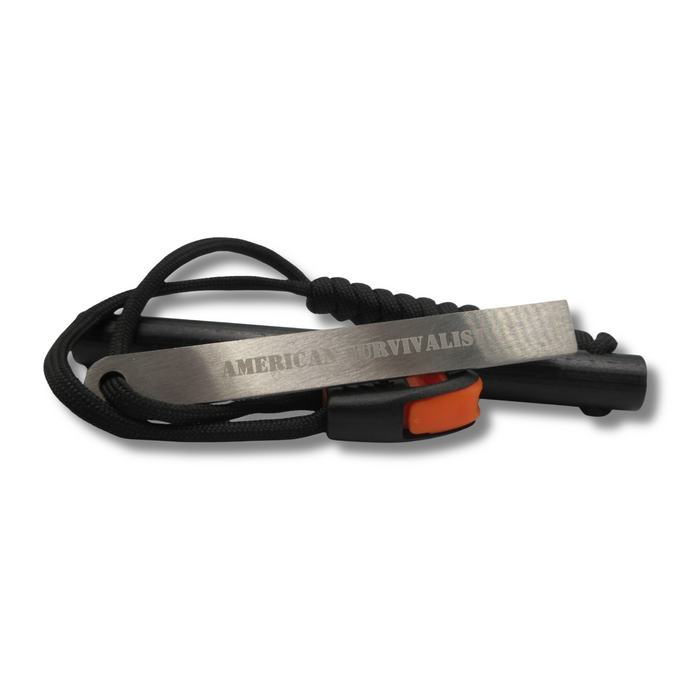
You can stage a flawless fuel ladder and still lose the fire at the match if your ignition source quits in the wind. That's why a ferro rod belongs in the kit right next to your lighter, and ours is built to earn the spot. The Large Ferro Rod is a half-inch bar with five inches of ferrocerium that rains hot sparks into a tinder nest wet or dry, rated past 15,000 strikes, with a hardened striker whose squared edge bites instead of skating. Drop the Large Ferro Rod and striker into your camp kit, and grab our free survival guides for the rest of the fieldcraft that keeps a fire safe and controlled.