How to Use a Ferro Rod: Start a Fire in Wind, Rain, and Real Survival Conditions

Most ferro rod advice is campfire theater. A guy showers sparks onto a perfect cotton ball on a dry picnic table, gets flame in three seconds, and calls it a survival skill. That’s not field craft. That’s a demonstration.
A ferro rod is a ferrocerium rod scraped with a hard striker. It throws burning metal sparks. Rutgers University Recreation fire starting guidance describes ferrocerium as a synthetic pyrophoric alloy and notes that ferro rod sparks can reach about 3,000°C, roughly 5,400°F. That sounds violent, and it is. It still doesn’t make fire by itself.
The tool makes sparks. Your tinder makes flame. If your tinder is chunky, damp, scattered, or sitting three inches away from the spark stream, the best ferro rod won’t matter. You’ll carve a trench into the rod, swear at the weather, and still end up cold.
Why do most ferro rod fires fail?
Most ferro rod fires fail because the tinder isn’t fine and dry enough, the fuel stages aren’t ready, or the sparks land too far from the ignition point. Bad sparks are rarely the real problem.
This is the part most blogs dodge. They obsess over the striker, the handle, the brand, the diameter, and whether it’s the best ferro rod for the money. Fine. Gear matters at the margins. It doesn’t replace preparation.
A ferro rod is a waterproof fire starter only in the limited sense that the rod itself tolerates water and has no fuel reservoir or moving parts to fail. Wet tinder still behaves like wet tinder. Rain doesn’t care that your sparks are hot. If those sparks hit cool, damp fibers, the heat gets stolen before a coal forms.
In the field we see the same beginner pattern over and over:
- One tiny pinch of tinder instead of a real nest.
- Kindling that starts at pencil thickness instead of pencil-lead or matchstick size.
- Sparks sprayed across the ground instead of driven into one prepared ignition zone.
- A flame achieved once, then lost because the next fuel is too big or too wet.
- Striking before the fire is built.
That last one is the killer. Fire starting doesn’t begin with sparks. It begins with a pile of materials sorted by size and dryness. If you don’t have that pile, you’re not ready to strike.
What should be ready before the first strike?
Have tinder, small kindling, larger kindling, and wrist-size fuel ready before you touch the ferro rod. In hard conditions, gather three to four times more material than you think you need.
Survival fires die in the gap between flame and kindling. A cotton ball catches, everyone relaxes, then the flame licks at fat damp twigs and disappears. That’s not bad luck. That’s a bad sequence.
Build the fire before you light it:
- Tinder: at least a double handful if you’re using natural material. Fine, dry fibers beat big pretty curls every time.
- Ignition zone: a coin-sized pocket of the finest fibers, dust, scrapings, or teased cotton where every spark is aimed.
- First kindling: pencil-lead to matchstick-size pieces. This is the bridge from spark flame to working fire.
- Second kindling: pencil-size twigs or split slivers.
- Fuel wood: dead, downed wood no bigger than your wrist for a manageable survival fire.
That size progression isn’t optional. Tiny flame can’t dry and ignite big fuel fast enough. It needs surface area. It needs thin edges. It needs oxygen. A wrist-thick log has too little exposed surface for a brand-new flame, especially in rain.
Place each stage within arm’s reach before ignition. Not behind you. Not still attached to a branch. Not somewhere you have to stand up and hunt for it while your tinder burns out. A good ferro rod fire looks boring before it starts because all the work is already done.
If you’re building a longer survival kit around fire, water, and calories, don’t treat ignition as a stand-alone problem. Fire helps with warmth and morale, but bad water will still ruin you. Pair this skill with a real DIY water filtration system for survival, not a fantasy kit thrown in a coffee can.
What tinder actually catches ferro rod sparks?
Tinder that catches ferro rod sparks is fine, dry, and fluffy enough to expose a lot of surface area. The best ignition pocket is usually golf-ball to softball size overall with a tight coin-sized center of the finest material.
Good tinder is not just small wood. Good tinder is material the spark can bite into before it cools. The spark has a short useful life. If it lands on a flat shaving, wet grass, bark slab, or chunky feather curl, you get a glow for half a second and nothing else.
Reliable ferro rod tinder includes:
- Petroleum-jelly cotton balls teased open until the fibers stand up.
- Dryer lint kept sealed and dry.
- Dry inner bark shredded into hairlike fibers.
- Feather-stick curls cut from the dry interior of dead wood.
- Fine wood shavings, dust, and scrapings from split dry wood.
Petroleum-jelly cotton is the easy button. It catches fiercely and burns longer than plain cotton. That doesn’t make it cheating. Survival isn’t a bushcraft pageant. Carry good tinder.
Natural tinder needs more discipline. Inner bark has to be shredded until it looks more like hair than bark. Feather sticks need paper-thin curls, not chunky chips. If your feather curls snap off as blocks, your knife angle is wrong or the wood is too wet. If your tinder feels cool against the back of your hand, it’s still too damp.
Wood dust and scrapings matter in wet conditions. Split a dead piece of wood, expose the dry interior, then scrape the blade at a steep enough angle to produce dust rather than curls. That dust belongs in the coin-sized ignition pocket. Sparks love dust because it surrounds them instead of making them bounce.
How do you strike a ferro rod without blowing the tinder apart?
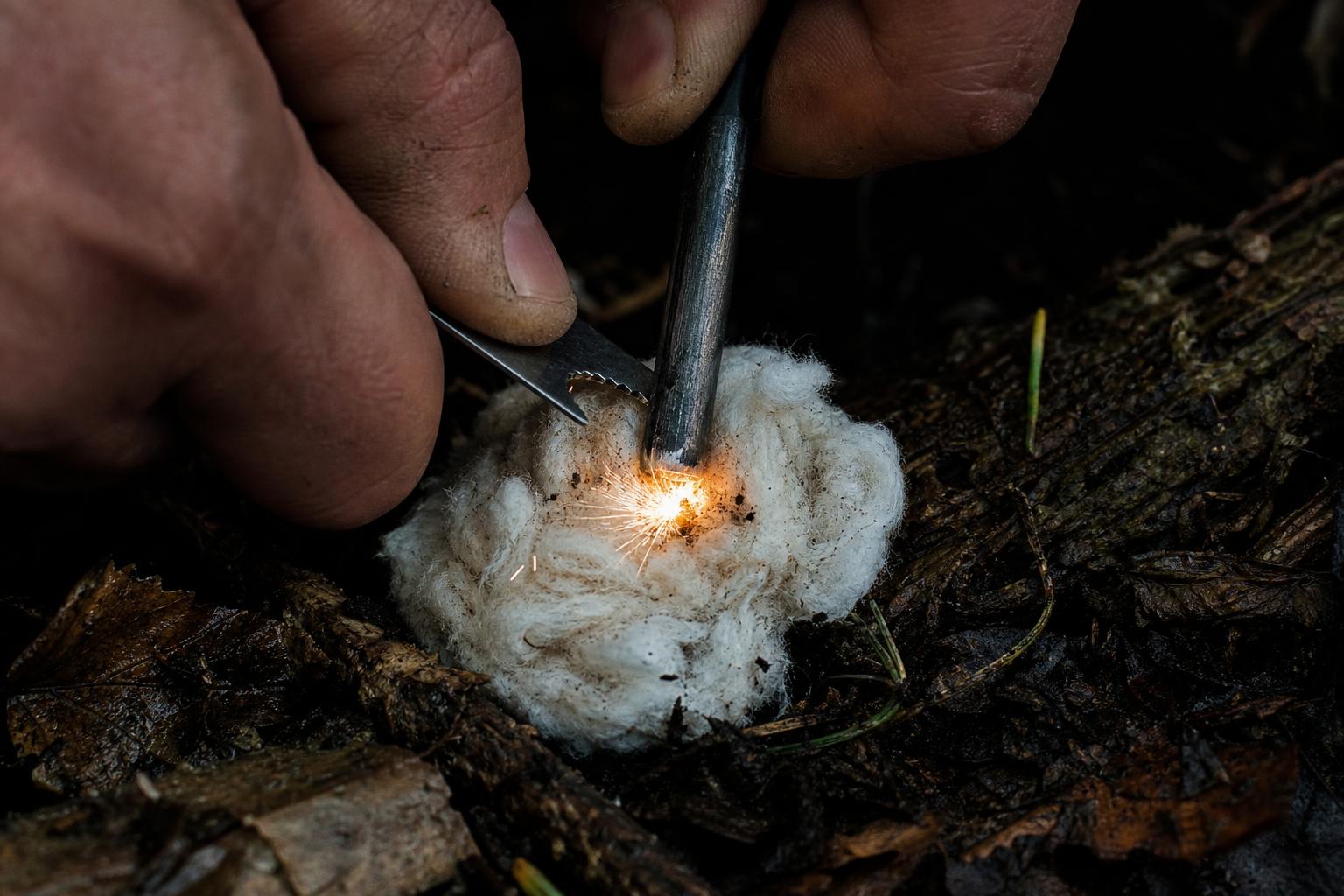
Plant the ferro rod tip almost touching the tinder, about 0 to 1 inch from the ignition pocket, then pull the rod back while holding the striker steady. This keeps sparks concentrated and stops the striker from blasting your tinder nest across the dirt.
This is the technique people should teach first. Not dramatic arm swings. Not showering sparks from a foot away. The closer the spark lands, the hotter it is when it hits, and the less wind has time to rob it.
- Set the tinder nest on stable ground or bark, not loose leaves that shift under pressure.
- Make a coin-sized depression in the center and fill it with the finest fibers or scrapings.
- Place the ferro rod tip into the edge of that depression or just above it.
- Lock your striker hand in place with the striker edge biting the rod.
- Pull the rod backward sharply while the striker stays fixed.
- Repeat short, hard strokes into the same spot until you get a coal or flame.
Pulling the rod instead of pushing the striker is the move that separates clean fire starting from beginner chaos. When you shove the striker forward, you hit the tinder. When you pull the rod back, the tinder stays where you built it.
Use pressure, not speed theatrics. A weak fast scrape throws skinny sparks. A firm controlled scrape peels hotter material from the rod. If you’re getting bright sparks that miss the tinder, lower the rod. If you’re getting dull dust and no spark, use a harder edge and more bite.
Once the tinder catches, don’t smother it with fuel. Feed it first with the smallest kindling. One or two pencil-lead sticks at a time. Give the flame air. People panic and dump a handful of wet twigs on a newborn flame, then wonder why it dies. Fire is hungry, but it can still choke.
How do you use a ferro rod in wind?
In wind, keep the rod low, put your body or pack between the tinder and the gusts, and drive sparks into a sheltered ignition pocket. Wind can help a growing fire breathe, but it scatters sparks and strips heat from weak tinder.
The wrong move is standing tall and striking downward into an exposed nest. That makes a pretty spark fan and a cold pile of grass. Work at ground level. Build a windbreak before ignition using your body, a pack, a log, rocks, or a shallow scrape in mineral soil.
The tinder should sit in the lee side of that windbreak. Not sealed off. Sheltered. A fire still needs oxygen, and a fully covered tinder bundle will smoke and sulk. Leave one side open so the flame has somewhere to draw from.
Wind changes the strike angle. Don’t aim where the tinder is. Aim where the sparks will land after the gust pushes them. In heavy gusts, that usually means placing the rod tip right into the ignition pocket and scraping with shorter strokes. Long strokes give sparks more time to wander.
Once flame appears, turn the tinder nest slightly so the wind feeds across the flame instead of flattening it straight into the ground. Add the smallest kindling from the downwind side so you’re not reaching through flame and so the fire isn’t knocked apart. The first thirty seconds decide the whole fire.
How do you use a ferro rod in rain?
In rain, the ferro rod will still spark, but your success depends on keeping tinder dry and exposing dry wood from the inside. Split dead wood, make fine shavings, and protect the ignition area before striking.
Rain exposes fraud skills fast. A lighter can make flame, but flame still needs dry tinder. A ferro rod can survive being wet, but it still only makes sparks. Rutgers gets this right: ferro rods produce sparks only, not flame, and dry tinder is still required.
Your first job in rain is not striking. It’s finding or making dry material. Look for dead, downed wood that is off the bare ground when possible. Break or split it. The outside can be soaked while the center is workable. Shave from the center, not the bark. Bark can be useful as a platform, but wet bark is lousy tinder.
Use the driest cover available while prepping. Under a dense evergreen, under a leaning log, beneath your poncho edge, inside an open jacket, under a tarp if you have one. Don’t scatter tinder in falling rain while you slowly admire your feather sticks. Keep the nest bundled, then open the ignition pocket only when you’re ready to strike.
In soaking weather, increase the amount of tinder. A golf-ball-size tinder nest can work with petroleum cotton. Natural tinder often needs softball size or bigger because some heat will be wasted driving off moisture. Gather more. Then gather more again.
A wet-weather ferro rod fire should be staged like this:
- A dry platform of bark, split wood, or sticks to lift the tinder off wet soil.
- A dense tinder core with the finest material in the center.
- A teepee or lean-to of matchstick-size dry slivers above it, not heavy twigs.
- Pencil-size split kindling ready beside your knee.
- Wrist-size fuel waiting nearby, not on top of the infant flame.
If you store emergency food with your gear, respect moisture there too. Fire and calories belong together in a survival plan, and dry storage is what keeps both useful. The same mindset that protects tinder also protects long-term food like pemmican survival food.
What fire lay works best after the tinder catches?
A low lean-to or small teepee over a dry platform works best for a ferro rod fire in ugly weather. It protects the flame, keeps fuel above wet ground, and lets you add kindling without collapsing the tinder.
The classic log-cabin fire lay is nice for campgrounds. It’s usually too bulky at the start for wind and rain. A survival fire needs a protected ignition chamber first, then structure later.
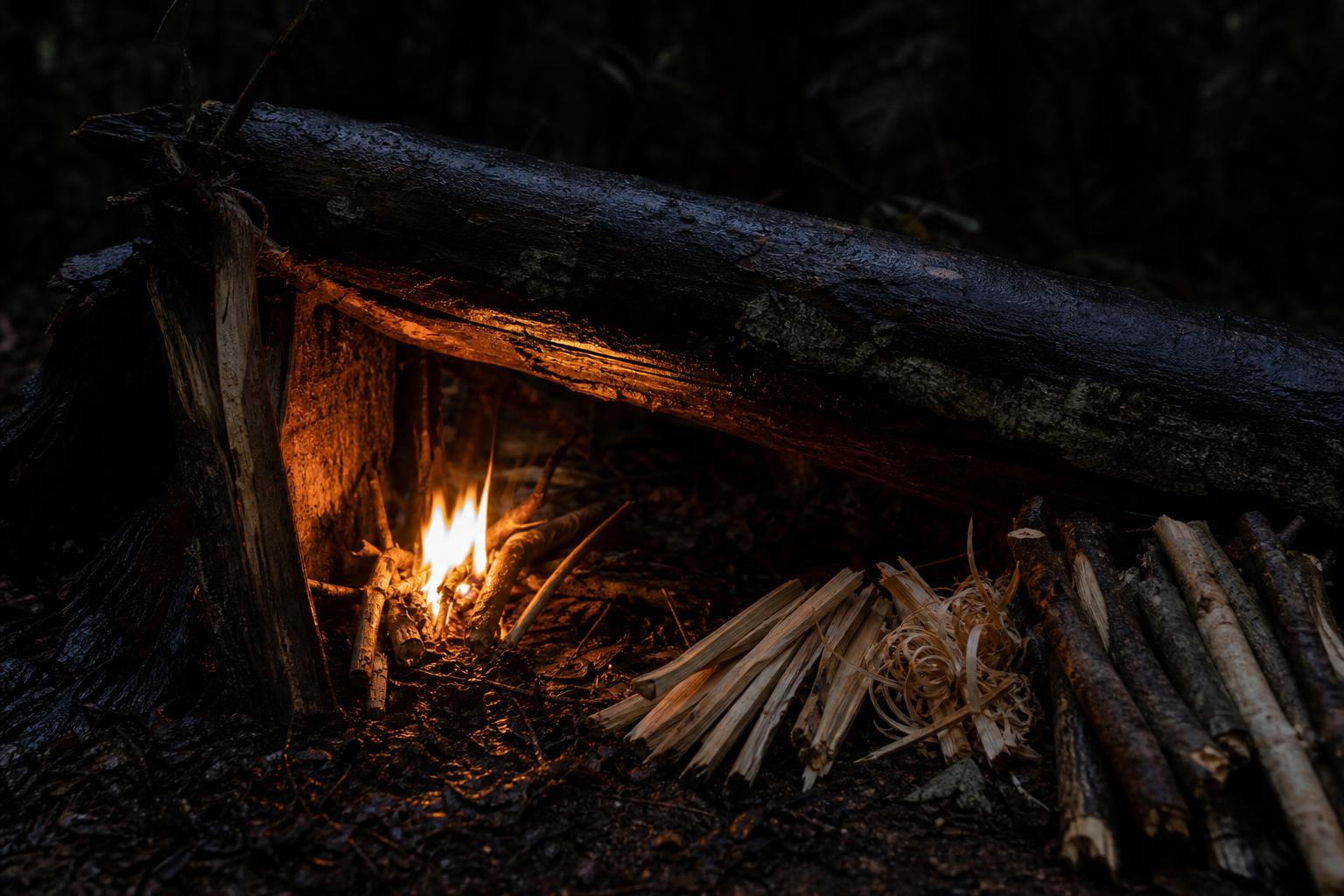
For rain, put down a platform. Split sticks are best because the dry interior faces up. Place tinder on that platform. Lean the smallest kindling over it with enough space for air. Think matchsticks first, then pencil-lead, then pencil. If you can’t see gaps, you built a smothering pile.
For wind, use a lean-to. Put a larger piece of wood or bark on the windward side as a shield. Place tinder on the leeward side. Lean small kindling against the shield so it forms a low roof over the ignition zone. This concentrates heat better than an exposed teepee.
Once the pencil-size kindling is burning on its own, add thicker split sticks. Don’t jump straight to wrist-size fuel. Wrist-size wood is fuel, not kindling. It belongs on a coal base or a strong flame bed, not a spark-fed tinder ball that just woke up.
What safety rules apply after the ferro rod works?
Use a safe fire site, keep the fire small, have water or a shovel ready, and fully extinguish the fire until it’s cool to the touch. Starting fire is a survival skill. Losing control of it is incompetence.
The National Park Service gives clear campfire safety direction for Big Thicket National Preserve: clear a 10-foot circle around the fire site, keep fires small, keep water and a shovel ready, and extinguish by drowning, stirring, and checking until everything is cool to the touch. Read the actual National Park Service campfire safety guidance before you pretend a fire ring makes you safe.
That 10-foot cleared circle matters. Clear leaves, needles, duff, grass, and loose sticks down to safer ground where local rules allow a fire. Don’t build under low branches. Don’t build against a rotten log full of punky material unless you want a hidden coal crawling where you can’t see it.
Small fires are better survival fires. They use less fuel, create less risk, and are easier to manage. A huge blaze feels comforting for five minutes, then it eats your wood pile and throws embers in the wind. Cook small. Warm smart. Reflect heat with a wall or natural backing only where it’s safe to do so.
Extinguishing is not sprinkling a polite cup of water over ash. Drown it. Stir it. Drown it again. Turn over sticks. Feel for heat with the back of your hand near the ash before touching anything. If it isn’t cool to the touch, it isn’t out.
What should be in a ferro rod fire kit?
A reliable ferro rod kit has the rod, a hard striker, sealed tinder, a cutting tool, and redundant ignition. Practice matters more than a shiny handle.
Redundancy is not weakness. Rutgers emphasizes practice and redundancy in fire starting, and they’re right. Carry the ferro rod. Also carry a lighter. Also carry dry tinder. Survival kits fail when people confuse primitive skills with refusing useful tools.
A practical kit:
- Ferrocerium rod with enough length and diameter to grip under stress.
- Dedicated hard striker or a knife spine that actually throws sparks.
- Petroleum-jelly cotton balls sealed in a small bag or capsule.
- Dryer lint or commercial tinder sealed separately as backup.
- Small knife for feather sticks, scrapings, and split kindling.
- Waterproof storage for tinder, not just the rod.
- Lighter or matches as redundant ignition.
The rod can last for many uses because it has no fuel to run dry. Some full-size ferro rods are commonly rated for 15,000 or more strikes, depending on size and use. That doesn’t mean you should waste half the rod learning in a storm. Practice in your yard. Practice with gloves. Practice after soaking the rod. Practice with natural tinder that makes you earn it.
The best ferro rod is the one you’ve already used under bad conditions. Gear you’ve only admired on a workbench is not survival equipment yet.
FAQ
Can a ferro rod start wet tinder?
No, not reliably. A ferro rod throws very hot sparks, but those sparks still need fine, dry tinder. In rain, split wood and use the dry interior for shavings, curls, and dust.
Is a ferro rod better than a lighter?
A ferro rod is more durable in storage and has no fuel or moving parts, but it only makes sparks. A lighter makes flame. Carry both and stop turning survival into a purity contest.
How close should the ferro rod be to the tinder?
About 0 to 1 inch from the ignition pocket. Plant the tip nearly into the tinder and pull the rod back while holding the striker steady so sparks land in one tight spot.
Conclusion: Stop striking and start building the fire
Learning how to use a ferro rod is not about making sparks. Any half-decent rod can do that. The skill is building a fire that’s ready to live before the first spark lands.
Prep a real tinder nest. Make a coin-sized ignition pocket. Stage kindling from pencil-lead size upward. Plant the rod close and pull it back instead of punching the tinder with the striker. In wind, shelter the ignition zone. In rain, split wood and work from the dry interior. Keep the fire small, safe, and dead-out cold when you leave.
If you want the rest of your survival basics tightened up the same way, grab the free survival guide PDFs from American Survivalist and build skills that hold up outside the camera frame.
Practice on a rod that won't quit
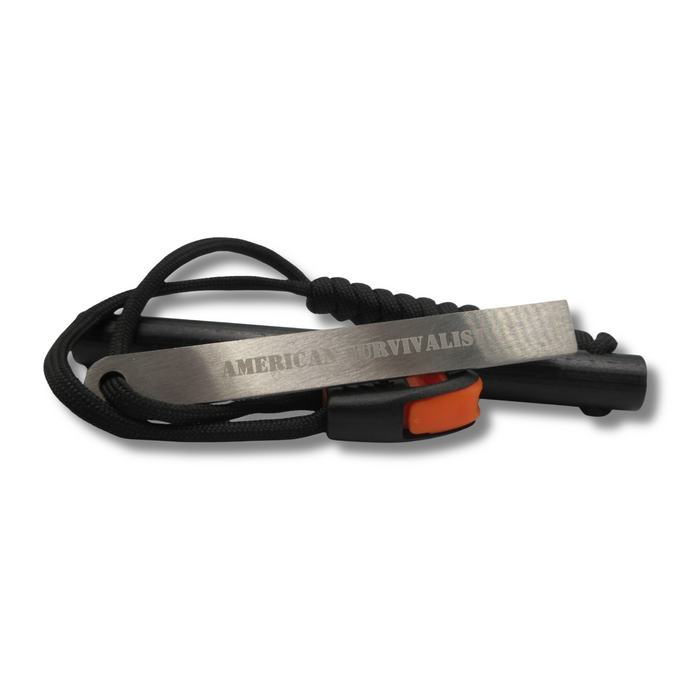
Every bit of this technique only sticks if you drill it on a rod that behaves the same way every single time. That's what we built our Large Ferro Rod for: a full half-inch of ferrocerium you can plant right against the tinder and pull back with real pressure, a hardened striker that throws a fat shower of sparks instead of a few dots, and enough rod to drill all winter without wearing it down. Wet or dry, it sparks. Learn the motion on one you can trust, not a keychain toy that quits the first cold morning.