How to Make a Fire in the Rain: Wet Weather Survival Method

The spark is not the problem. I’m tired of watching rain-fire tutorials spend ten minutes worshiping a ferro rod while their tinder pile is a wet bird nest and their first sticks are thick enough to club a rabbit. A lighter, match, ferro rod, or waterproof fire starter only buys you the first flame. The fire lives or dies on the fuel ladder you built before ignition.
Rain punishes impatience. It exposes every lazy shortcut. If you strike sparks before you have dry tinder, very fine kindling, pencil-size sticks, thumb-size sticks, and wrist-size fuel staged within arm’s reach, you’re not starting a fire. You’re performing a spark demonstration in bad weather.
Should You Build a Fire in the Rain at All?
Build a fire only if it is legal, controllable, attended, and fully extinguishable. Rain does not cancel fire restrictions, wind risk, or your duty to put the thing dead out.
The USDA Forest Service campfire safety guidance is blunt where it needs to be: use an existing fire pit where possible, clear burnable debris from the area, keep water and a shovel nearby, never leave a campfire unattended, and drown, stir, and check the ashes until they are cold to the touch.
Skip the fire if any of these are true:
- Local fire restrictions or burn bans prohibit it.
- The area does not allow fires.
- Wind is strong enough to throw embers outside your control.
- You cannot stay with the fire the entire time.
- You do not have water, snow, sand, or mineral soil to extinguish it fully.
Rain makes people careless because everything looks soaked. That’s how you get a creeping ground fire under duff, roots, or leaf litter. Pick safety first. Skill does not excuse stupidity.
Choose a Fire Site That Protects Flame Without Creating a New Hazard
The site should shield the first flame from direct rain and wind without putting heat under dangerous overhead fuel. A bad site can smother the fire, spread embers, or soak the tinder from below.
An existing fire ring is the first choice. If you do not have one and fires are allowed, clear the spot down to mineral soil. Scrape away leaves, needles, bark flakes, grass, and anything else that can burn. Wet leaves on top do not mean dry material underneath is safe.
Do not build under low-hanging branches just because they block rain. That is amateur thinking. You want protection, not a chimney full of needles. The better answer is terrain and setup: the lee side of a large log, a rock face that blocks wind, or a small natural break that cuts the rain’s angle while leaving open space above the flames.
Wet ground steals heat from a young fire. Lay down a platform of thumb-size sticks or split pieces if the soil is saturated. That platform is not decoration. It keeps your tinder off the wet earth long enough for the first flame to build heat.
Keep your extinguishing materials staged before ignition. If you carried drinking water in, do not dump your only clean water casually unless you have a plan to replace it. Water planning is its own survival problem, and a campfire does not solve dehydration. For that side of the equation, read our DIY water filtration system for survival.
Build the Wet-Weather Fuel Ladder Before You Strike Anything
A rain fire needs a complete fuel ladder: tinder, very fine kindling, pencil-size kindling, thumb-size sticks, then wrist-size fuel. Skip one rung and the flame stalls.
Scouting America’s Wilderness Survival guidance defines tinder as fine, dry material that ignites easily, kindling as twigs no thicker than a pencil, and survival fire fuel as dead and downed wood no bigger than the wrist. That size limit matters. Wrist-size wood burns hot enough for a survival fire without demanding a coal bed you do not have yet.
In dry weather, you can get away with a lazy pile. In rain, you gather three or four times as much tinder, kindling, and fuel as normal before lighting. Scouting’s guidance says exactly that for wet weather, and it is one of the few pieces of mainstream fire advice that matches field reality. The young fire is fragile. If you leave it to hunt sticks, it dies while you’re gone.
Stage your fuel by size, not by vibe:
- Tinder: fine, dry material that catches the first flame.
- Hair-thin shavings: knife-made curls and scrapings from dry inner wood.
- Matchstick-size kindling: tiny splits and slivers that catch from tinder.
- Pencil-size kindling: the first real stick size, still small enough to heat fast.
- Thumb-size sticks: added only after the pencil-size layer is burning cleanly.
- Wrist-size fuel: the upper limit for a practical survival fire.
The mistake is jumping from tinder straight to thumb-size wet sticks. That is how you get smoke, hissing bark, and a dead black wad where your flame used to be.
Where Do You Find Dry Fuel After Hours of Rain?
The driest natural fuel is usually protected wood, not exposed ground litter. Search under larger branches near the base of trees, then split or shave damp pieces to expose the dry interior.
Rain wets surfaces first. Dead branches lying in open grass are usually trash after a long rain. The better candidates are small dead branches sheltered by larger limbs near the base of trees. Break them and listen. A sharp snap is good. A dull bend is bad. If bark peels off in a dripping sleeve, remove it and inspect the core.
Dead standing or suspended wood beats wood sitting flat on wet soil. Not every branch is usable, and not every tree gives you a gift. Stop grabbing the first brown stick you see. Work the protected zones. Check under conifers, under thick branch shelves, and against the underside of logs that are not buried in mud.
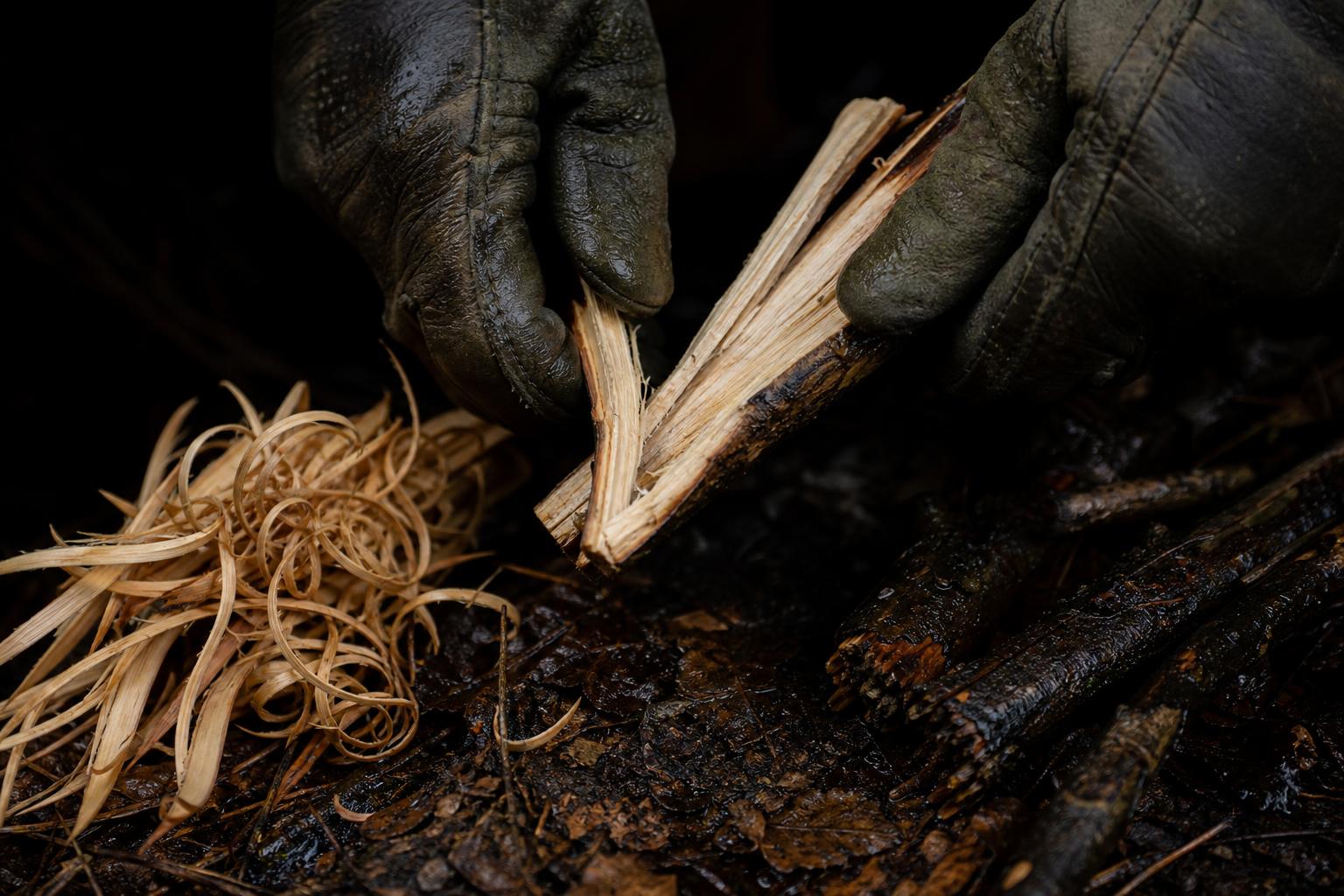
Once you have candidates, process them. Shave off damp outer layers. Split thumb-size pieces into smaller sticks. The interior is what you’re after. A knife turns marginal fuel into usable fuel because it removes the wet skin and exposes dry wood. This is the part most quick videos skip because it is slow and unglamorous. It is also the part that works.
If you carry prepared tinder, keep it protected until the last second. A waterproof fire starter is only waterproof while it stays sealed or designed to shed moisture. Pull it out early and let rain drip into it for five minutes, and you’ve defeated the point. Fatwood, commercial tinder, cotton-based tinder, and natural shavings all still need a sane fuel ladder over them.
Make Feather Sticks From the Dry Interior
Feather sticks turn one damp-looking piece of wood into a cluster of thin dry curls. Those curls bridge the gap between tinder and pencil-size kindling better than whole twigs in the rain.
Start with a straight piece about thumb-thick if you can get it. Strip bark. Split it if you have enough length and a safe cutting setup. Put the dry inner face up and make shallow, controlled cuts that stay attached to the stick. You are not whittling a spear. You are making surface area.
Good curls are thin enough to flex and catch flame quickly. Thick curls look pretty in photos and behave like wet cardboard. If the shaving feels cool and clammy against the back of your hand, keep cutting deeper or choose a better stick. In the field, that quick feel test has saved more fires than another hundred sparks.
Make more curls than your patience wants. Then make more. Rain fires eat tinder and kindling before they become real fires. One feather stick is a sample. A usable rain bundle is several feather sticks, loose shavings, and matchstick-size splits stacked where the rain cannot hammer them.
Air Gaps Matter More Than Flame Size
Damp wood needs heat and oxygen at the same time. Piling on too much fuel early traps moisture, blocks airflow, and smothers the only flame you have.
This is where most people ruin a good ignition. They get a flame, panic, and bury it under a handful of sticks. The fire turns white with steam, then gray with smoke, then black with failure.
Your first structure should be loose. Use a small platform if the ground is wet. Put tinder in the center. Lean matchstick-size pieces around it with open gaps. Add pencil-size pieces only after the smallest kindling is actually burning, not just being licked by flame.
Feed from the edge of the flame, not directly on top of it. A young rain fire is not a trash barrel. It needs room to breathe. If smoke thickens and the flame shrinks, stop adding wood. Lift, loosen, and rebuild with less fuel and more air.
Use the Ignition Tool You Have, Then Stop Thinking About It
A ferro rod, lighter, match, or carried tinder can all start the first flame. None of them replaces dry tinder, fine kindling, and staged fuel.
A ferro rod is a strong choice in wet conditions because it throws hot sparks and still works after getting wet, but sparks do not dry a bad tinder bundle by magic. Strike into the finest, driest material you have. If using a knife spine, lock your hand low and pull the rod back instead of slashing the striker forward into your tinder pile. That keeps the pile intact.
If you have a lighter, use it. Survival is not a purity contest. Shield the flame with your body, a hat brim, or a pack lid while keeping meltable and flammable gear clear. Matches work if they’re dry and you protect the strike from wind. A waterproof fire starter earns its place by giving you more burn time, but it still needs matchstick-size and pencil-size wood ready to accept that heat.
The only technique that works consistently in rain is not the fanciest spark. It is ignition after preparation. The spark arrives last.
The Fire Lay That Works in Wet Weather
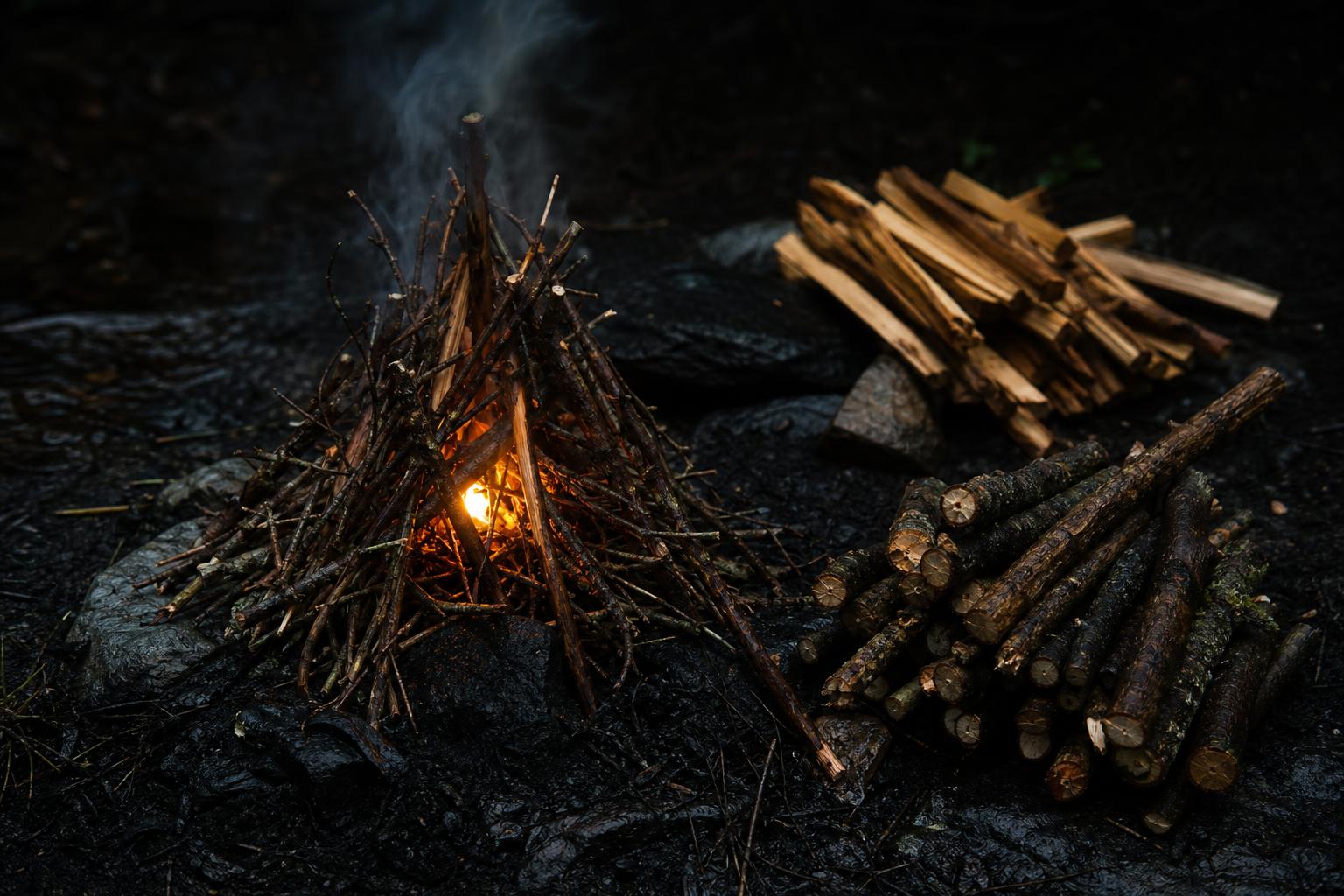
The best rain-fire lay is a raised platform with a loose, tiny teepee or lean-to of fine kindling over dry tinder. It grows slowly from small fuel to larger fuel without smothering the flame.
Build it in this order:
- Clear or prepare the fire site and stage extinguishing material.
- Lay a platform of dry-ish sticks or split wood over wet ground.
- Place tinder and the finest shavings on the platform.
- Set feather sticks and matchstick-size kindling loosely around the tinder.
- Keep pencil-size, thumb-size, and wrist-size fuel sorted within arm’s reach.
- Ignite the tinder while shielding it from direct rain and wind.
- Add the smallest kindling first, one or two pieces at a time.
- Move to pencil-size sticks only after small kindling is burning on its own.
- Add thumb-size sticks after you have sustained flame and some coal formation.
- Add wrist-size fuel last, and only if the fire can handle it.
A lean-to is useful when wind is pushing rain sideways. Place a larger split piece or log on the windward side as a barrier, then feed the fire from the sheltered side. Do not make the barrier so tight it steals the airflow. Protection without oxygen is just a wet coffin.
A teepee catches fast because heat rises through the center. Keep it small and open. Huge teepees are for staged photos and dry campgrounds. In rain, a compact structure with gaps wins.
Why Most Rain Fires Die in the First Two Minutes
Most rain fires fail because the builder lights too early, uses fuel that is too large, blocks airflow, or walks away to gather wood. The failure happened before the spark.
The common errors are predictable:
- Too little tinder: One pinch of fluff is not enough in wet weather.
- No fine kindling: Pencil-size twigs are not the first step after tinder. You need matchstick-size material and shavings.
- Wet bark left on: Bark can hold moisture and steam the fire down. Shave or split to the interior.
- Oversized fuel: Wrist-size is the practical upper limit for a survival fire, and it comes late.
- No staging: Leaving the young flame to hunt more sticks is a self-inflicted kill shot.
- Smothering: Damp wood needs air gaps. A tight pile makes smoke, not fire.
There is a reason wet-weather guidance says gather three or four times normal fuel first. It is not busywork. It is the difference between a flame that becomes a fire and a flame that becomes a lesson.
How Do You Keep a Rain Fire Going?
Keep feeding small dry fuel until the fire has enough heat to dry the next layer. Add larger wood gradually, maintain air gaps, and process damp fuel before it touches the flame.
Use the fire’s edge as a drying zone, not as a dumping ground. Place damp thumb-size and wrist-size pieces near the heat, far enough away that they do not collapse onto the flame. Rotate them as the surface dries. Split thicker pieces before adding them. Again, the interior is your friend.
Smoke tells you what is happening. Some smoke is normal as damp wood heats. Heavy smoke with shrinking flames means you overloaded the fire or choked the air. Fix the structure instead of throwing more ignition at it.
Keep fuel sorted even after the fire is established. Rain turns camp into a mess fast. If your next round of kindling is scattered in the mud, you are back to the first problem.
How Do You Extinguish a Fire When Everything Is Already Wet?
Extinguish it as if the rain did nothing. Drown it, stir it, feel for heat, and leave only when the ashes are cold to the touch.
The Forest Service guidance to drown, stir, and check for cold ashes is not optional just because clouds are leaking on you. Rain can wet the surface while heat remains underneath. Roots, duff, and buried embers do not care how confident you feel.
Use water when you have it. Stir the ashes and coals with a shovel or stick, exposing hidden heat. Add more water. Stir again. Put the back of your hand near the ashes, then closer only if there is no heat. Cold means cold. Warm is not good enough.
FAQ
Can you start a fire in the rain with a ferro rod?
Yes, if the tinder and kindling are dry enough and staged correctly. A ferro rod can throw sparks into wet conditions, but it will not fix missing tinder, oversized kindling, or a smothered fire lay.
How much kindling do you need for a rain fire?
Gather three or four times as much tinder, kindling, and fuel as you would in dry weather. That gives the young fire enough small dry material to grow without forcing you to leave it unattended.
What is the best way to start a fire without matches in wet weather?
Use a ferro rod or lighter with dry tinder, feather sticks, and progressively larger kindling. The ignition source matters less than exposing dry inner wood and building the fuel ladder before the first spark.
Conclusion
Rain-fire skill is not about being tougher than the weather. It is about doing the boring work before ignition: legal site, safe clearing, dry inner wood, feather sticks, tiny kindling, staged fuel, and clean airflow. Strike last. Feed small. Build heat before size.
If you want the rest of the field skills that keep people alive when conditions turn ugly, download the free PDFs in our survival guides. They are the kind of references worth reading before you need them.
The rod that doesn't care about the weather
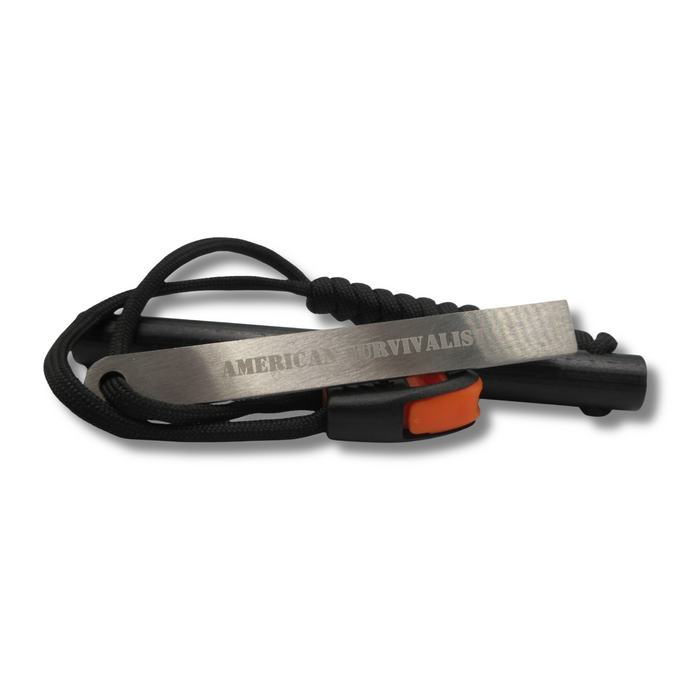
Rain is exactly where a soaked lighter and a book of damp matches let you down, and it's where our half-inch ferro rod does its best work. It throws a shower of sparks whether it's soaking wet or bone dry, so once you've shaved your feather sticks and staged the ladder, the spark becomes the one thing you're not sweating. Rated past 15,000 strikes and paired with a hardened striker that has a real squared edge, it keeps working long after the storm blows through. Stash the Large Ferro Rod and striker in your kit, and download our free survival guides so the rest of your wet-weather plan is set before the clouds open.