How to Start a Fire Without Matches: 7 Methods That Work

Most articles on how to start a fire without matches waste your time pretending every method belongs in the same toolbox. They don’t. A ferro rod and fatwood in a wet tree line are not the same animal as a hand drill routine filmed on dry desert grass. One is a survival method. The other is a skill demonstration unless you’ve trained it hard and conditions are cooperating.
The failure point usually isn’t the spark. It’s the prep. People scrape a ferro rod over a soggy wad of leaves, get three seconds of drama, then blame the tool. Wrong target. Fire is a chain: ignition, tinder, kindling, fuel, airflow, and shelter from wind. Break one link and you get smoke, not heat.
What is the most reliable way to start a fire without matches?
The most reliable field method is a ferro rod used on prepared tinder, especially fatwood shavings or a dry fire starter carried in your kit. A ferro rod throws 5,400F+ sparks, uses a ferrocerium alloy, and quality rods are commonly rated for 15,000+ strikes.
That combination wins because it does not depend on one fragile flame. You make sparks, catch them in material that wants to burn, then feed the flame fast with pencil-lead kindling before the weather steals it. This is the only technique in this list I’d expect a tired person to make work repeatedly in damp woods with cold hands, assuming they’ve done the prep.
Carry the rod, yes. More importantly, carry the tinder. A bare ferro rod is not a fire kit. It’s a spark source waiting for someone competent to show up.
The real ranking in wind and damp ground
Rank fire methods by the conditions that punish you, not by how impressive they look on video. Wind strips heat off a young flame. Damp tinder absorbs heat before it ignites. Cold hands make fine motor work worse. Darkness makes bad prep look good until it fails.
- Ferro rod with fatwood or packed fire starter: best balance of durability, heat, and repeat use.
- Butane lighter with protected tinder: excellent if it works and you can shield the flame.
- Flint and steel with char cloth: reliable for trained users, but it starts with an ember, not a flame.
- Fatwood shavings lit by sparks or flame: outstanding tinder method, especially in damp woods.
- Battery and steel wool: useful if you have the exact materials and keep them dry.
- Solar lens: strong under direct sun, nearly useless under clouds or at night.
- Bow drill: possible, proven, and badly overrated as an emergency answer for untrained people.
That order is opinionated because field fire has consequences. The method that works when it’s dry, calm, and convenient doesn’t deserve the same respect as the method that still works when your sleeves are wet and your patience is gone.
Build the fire before you make a spark
The fire lay must be ready before the first strike. If you’re hunting for kindling after the tinder catches, you already made the rookie mistake. A small flame is a short fuse. It gives you seconds, not minutes.
Use three piles. First, tinder: scraped fatwood, dry inner bark fibers, char cloth, or a packed fire starter. Second, kindling: pencil-lead, pencil, and thumb-thick sticks in separate bundles. Third, fuel: wrist-thick pieces staged close enough to grab without leaving the flame.
Damp woods still hold dry material if you look in the right places. Split sticks and use the inside. Shave curls from the core. Break dead branches off standing trees instead of scooping punky sticks off the ground. If your tinder feels cool against the back of your hand, it’s still too damp. That little test catches a lot of lies.
Give the fire structure. A loose teepee or lean-to works because it allows air to move through the flame path. A suffocated nest smolders. A pile of heavy sticks crushes the only heat you had.
Method 1: ferro rod and packed tinder
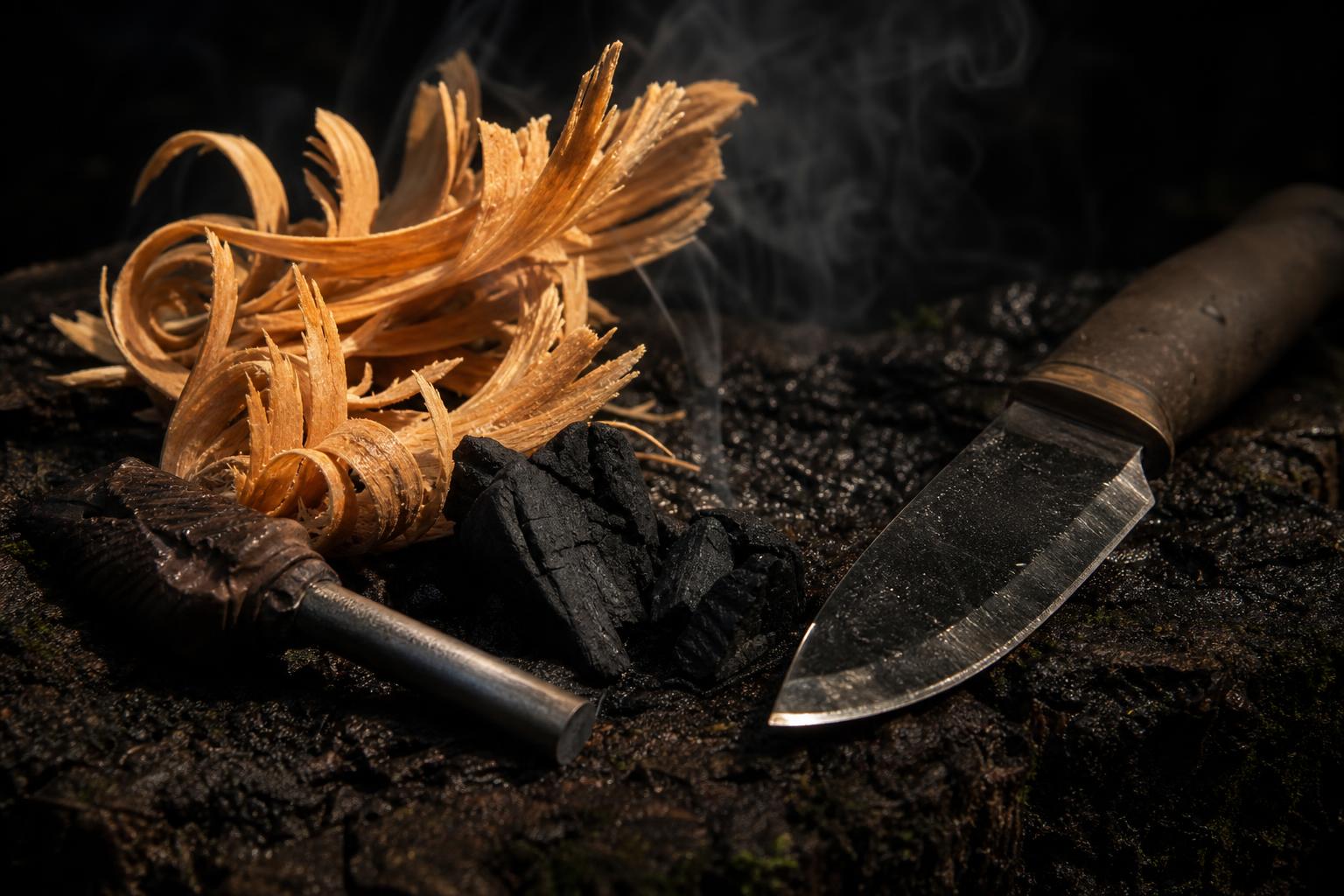
A ferro rod is the best no-match ignition tool for a survival kit because it is simple, durable, and throws hot sparks without needing a maintained flame. The rod is only half the method. The striker angle, tinder prep, and follow-up kindling decide whether it becomes fire.
Scrape a small pile of ferro rod dust onto your tinder if conditions are bad. Then pin the rod close to the tinder and pull the rod backward against the striker instead of swinging the striker forward. That keeps you from blasting your tinder pile apart. The sparks should land in one tight spot, not spray across the county.
Fatwood shavings are the right partner here. Make curls thin enough to catch, then scrape dust onto them. Don’t make a few decorative feathers and call it good. Make a pile the size of a golf ball, then double it if the air is wet. A ferro rod rewards preparation.
Field rule: one spark catching does not mean the job is done. Cup the flame from the wind, feed it pencil-lead sticks, then pencil-thick sticks. Wait until you have a real flame body before adding anything thumb-thick.
Method 2: butane lighter and a wind shield
A lighter is still a no-match fire method, and anyone who sneers at it is playing bushcraft games. If you have a working lighter, use it. Survival is not a purity contest.
The weakness is wind. A lighter gives you a small flame that hates exposure. Build a wind wall with your body, pack, bark slab, or a shallow scrape in the ground. Keep the flame low and feed it tinder from above and beside, not by smashing material onto it.
Lighters also fail when people treat them as the whole fire kit. A lighter held under wet grass just burns fuel and pride. Pair it with dry tinder, fatwood, or a stored fire starter. In a pocket kit, a lighter and ferro rod together are not redundant. They cover each other’s weaknesses.
Method 3: flint and steel with char cloth
Flint and steel works by catching a spark on prepared char cloth, then turning that ember into flame inside a tinder bundle. It is dependable for people who practice it, but it asks more from the user than a ferro rod.
The common mistake is expecting flint and steel to throw modern-style sparks into raw grass and burst into flame. That’s fantasy. Traditional flint and steel wants char cloth. The spark lands, the char cloth glows, and you move that ember into dry fibers. Then you blow steadily until the bundle flashes.
Char cloth must be protected from moisture. Keep it in a small tin or sealed pouch. Once it’s damp, the method slows down hard. In wind, turn your back to the gusts and hold the tinder bundle low. Blow into the bundle like you’re building heat, not like you’re trying to inflate a tire.
This method is worth learning because it teaches ember management. It also teaches patience, which most failed fires are missing.
Method 4: fatwood shavings as your ignition bridge
Fatwood is not just kindling. Used correctly, it is the bridge between spark and flame. That’s why it belongs in a serious no-match fire kit.
Make two grades. First, scrape fine dust and paper-thin shavings for ignition. Second, carve larger curls that burn longer once the first flame appears. The fine material catches. The curls sustain. If you only make thick curls, sparks bounce off. If you only make dust, the flame burns out before your sticks are involved.
People waste fatwood by trying to light a chunk. Don’t. Process it. A knife spine, scraper, or sharp edge can make the fine material you need. Put the tinder on a dry platform, a strip of bark, a split stick, or even a flat stone. Damp soil steals heat from underneath.
Fatwood pairs best with ferro rods and lighters. With flint and steel, use char cloth first, then move the ember into a dry tinder bundle that includes fatwood scrapings if you’ve prepared them fine enough.
Method 5: battery and steel wool
Battery and steel wool is a legitimate emergency trick, not a complete fire plan. It works only if you have fine steel wool, a usable battery, and tinder ready to accept the brief ignition.
Touching the battery terminals to steel wool heats the fibers fast. The glow spreads through the wool, and you use that heat to ignite tinder. The problem is that the ignition window is short. Wind and damp tinder punish hesitation.
Use very fine steel wool and keep it separated from the battery until needed. This is not something to leave loose in a pocket with random gear. Treat it as a controlled kit item. Once the wool glows, place it into prepared tinder and feed it immediately.
I rank it below flint and steel because it depends on consumable materials that are easy to ruin. It’s clever. Clever is not the same as dependable.
Method 6: solar lens
A solar lens can start fire without matches, fuel, sparks, or batteries, but only under direct sunlight. Under heavy clouds, in dense canopy, near dusk, or at night, it is dead weight for ignition.
Use the smallest, brightest focal point you can make. Hold it steady on dark tinder, char cloth, or prepared fine material. Movement kills heat buildup. Once the tinder smokes and forms an ember, transfer that ember into a tinder bundle and blow it into flame.
This method is quiet and gear-light, which makes it attractive. The limitation is brutal: no sun, no fire. I carry lenses as backups, not primary ignition tools. Anyone ranking solar above a ferro rod for survival conditions has spent more time theorizing than freezing.
Method 7: bow drill, if you already own the skill
A bow drill can start a fire without matches, but it is not a reliable first plan for an untrained survivor in damp conditions. It belongs at the bottom because it demands the most skill, the best materials, and the most energy.
The internet loves friction fire because it looks primitive and pure. The field doesn’t care. You need a workable spindle, fireboard, bearing block, cordage, dry tinder, correct pressure, correct speed, and enough stamina to keep going after the first smoke shows up. Smoke is not an ember. Black dust is not an ember. A coal that collapses before transfer is not fire.
Practice bow drill on good days. Learn the mechanics. It will make you better at reading wood and managing tinder. Just don’t make it your emergency plan unless you can produce coals repeatedly in the kind of weather you actually travel in.
The hand drill and fire plow fall even lower for most people. They are valid primitive skills. They are not what I’d tell a cold, wet person to bet their night on.
Wind and moisture are the real enemy
Wind does two things at once. It feeds oxygen and steals heat. A mature fire likes airflow. A baby flame dies from exposure. Build a windbreak before ignition, not after. Use your pack, a log, a bark slab, rocks, or terrain. Keep the flame path open on the downwind side so smoke can move and air can feed the base.
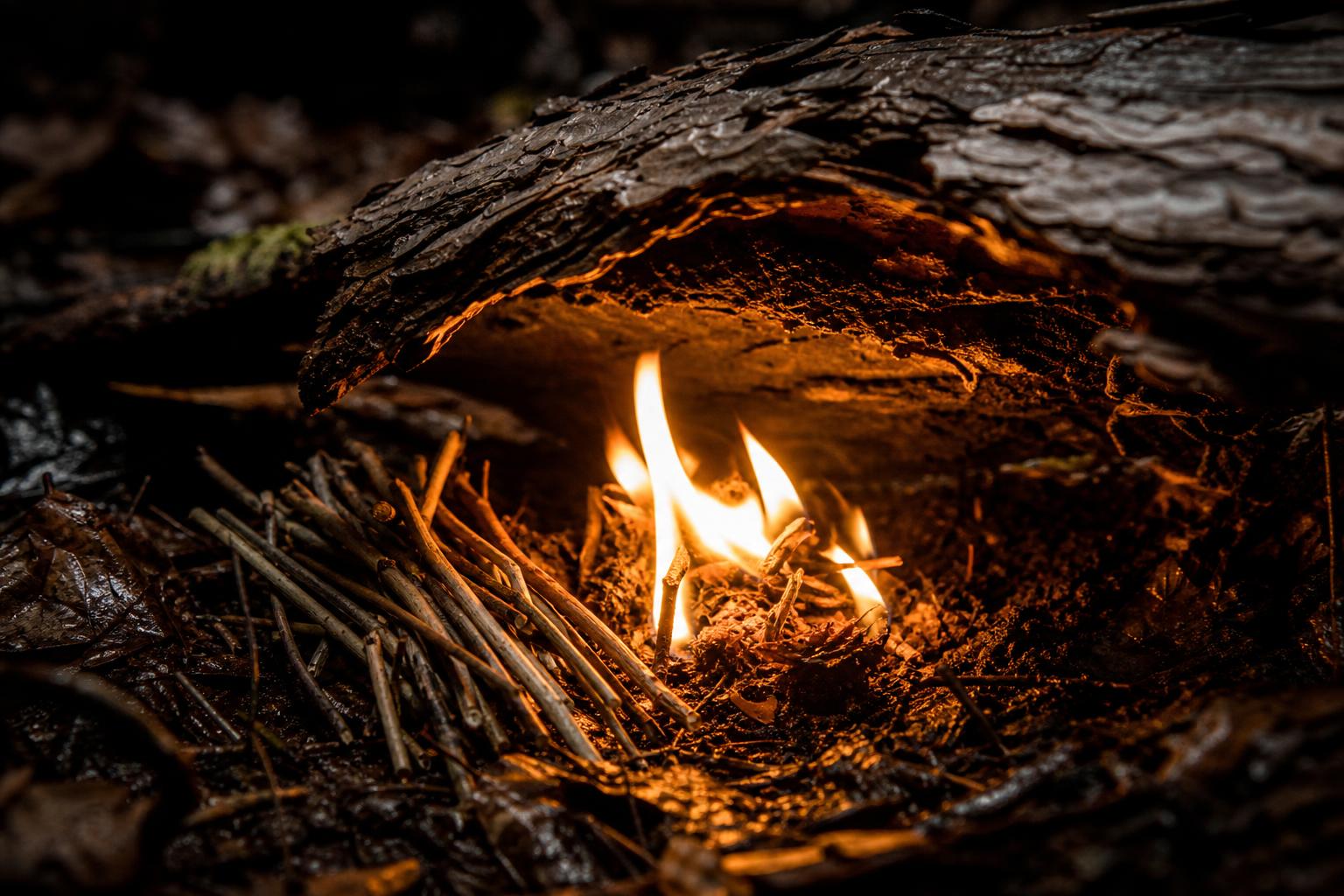
Moisture forces you to spend heat drying material before it can burn. That’s why tiny, dry, processed tinder wins. Split wood exposes the dry core. Feather sticks increase surface area. A bark platform keeps the tinder off wet ground.
Fire is one survival task, not the whole plan. If you’re building a basic field system, pair ignition with water, shelter, and food instead of treating sparks like magic. A proven DIY water filtration system for survival belongs in the same preparedness conversation as fire.
Do not skip fire safety because you are cold
A survival fire still has to be controlled. Clear the fire area down to mineral soil when possible. Keep fuel staged on one side, not scattered into the flame. Build smaller than your ego wants. A small fire you can feed is better than a big fire you can’t manage.
The National Park Service campfire guidance calls for using established fire rings where available, keeping fires small, and making sure fires are completely out before leaving. That last part is where lazy people get dangerous. Drown it, stir it, feel for heat, and repeat until it is cold.
If the wind is high, fuels are dry, or fires are restricted, don’t build one. Survival judgment includes knowing when a flame creates a bigger problem than it solves. Use insulation, shelter, movement, and hot food from controlled stoves when open fire is the wrong call.
Common mistakes that keep people cold
- Starting too big: large sticks do not help a weak flame. They smother it.
- Skipping the tinder bundle: sparks need prepared material, not hope.
- Using ground sticks: dead wood on wet ground is usually wet wood.
- Blowing too hard: steady breath builds heat. Hard blasts scatter tinder and cool the ember.
- Holding the ferro rod too high: sparks cool and spread before they hit the target.
- Adding fuel too early: wait until the flame can consume what you feed it.
The best fire starters don’t save bad sequencing. Tinder first. Flame second. Kindling third. Fuel last. That order is boring because it works.
FAQ
Can you start a fire without matches in the rain?
Yes, but the method must use protected tinder and processed dry wood from the inside of sticks. A ferro rod with fatwood shavings or a packed fire starter is the strongest choice because it gives repeated hot sparks and does not depend on keeping matches dry.
Is flint and steel better than a ferro rod?
No, not for most survival conditions. Flint and steel is a good traditional skill when paired with char cloth, but a ferro rod throws hotter, more aggressive sparks and is easier for most people to use under stress.
What should I carry as a no-match fire kit?
Carry at least two ignition sources and one protected tinder source. A ferro rod, a lighter, fatwood shavings, char cloth, or a sealed fire starter gives you options when wind, damp ground, and cold hands start working against you.
The field standard is boring for a reason
The dependable answer is not the fanciest one. Carry a ferro rod. Carry dry tinder. Learn flint and steel if you want depth. Practice bow drill if you respect primitive skills. Stop pretending they are equal in bad weather.
Fire starting without matches is a system, not a trick. Build the fire before ignition, protect it from wind, use material that is actually dry, and feed the flame in the right order. That’s what works after the camera is off and the temperature is dropping.
For more field-ready skills you can print, pack, and use offline, grab the American Survivalist free survival guide PDFs.
Our pick for the top of that list
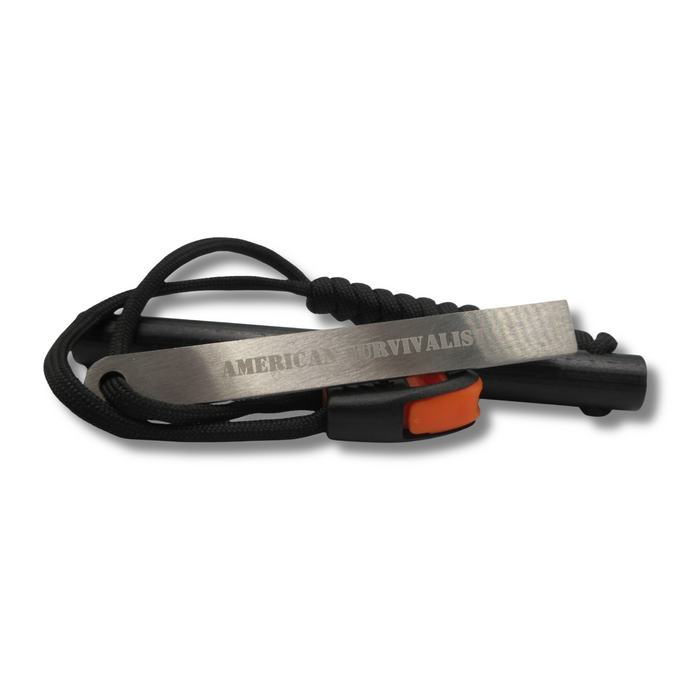
The whole ranking lands on the same tool: a ferro rod with prepared tinder beats every other no-match method when the wind's up and the ground's wet. Our Large Ferro Rod is built for that top spot, a half-inch bar with five inches of ferrocerium throwing a shower of sparks soaking wet or bone dry, rated past 15,000 strikes and shipped with a hardened striker, a paracord lanyard, and a whistle. Pin it low, pull the rod back into your fatwood dust, and it catches on the first pass. Reach for the Large Ferro Rod and striker, and download our free survival guides to build the rest of your no-match kit right.