Best EDC Knife for Survival: What to Carry Every Day and What to Avoid

The best edc knife for survival is usually boring. That statement irritates the tactical crowd, which is fine. Oversized folders look good in product photos, but daily survival work is cutting cordage, food packaging, tape, cardboard, tinder, cloth, webbing, and the occasional ugly emergency job where your hands are cold and your attention is split. A pocket sword with a fantasy grind and a fragile tip is not the answer. A legal, sharp, maintainable knife with sane blade geometry is.
Most roundup posts get this backwards. They start with blade length, black coatings, aggressive names, and thumb-flick drama. That is mall-counter thinking. A survival-focused EDC knife has to disappear in the pocket, open reliably, lock securely, cut efficiently, and come back to sharp without turning maintenance into a religion. If it fails any of those tests, it is not the best edc knife. It is pocket jewelry.
What makes the best edc knife for survival?
The best edc knife is a daily-carry blade with practical geometry, reliable lockup, manageable steel, and a carry setup that is legal where you actually live and travel. Survival value comes from repeatable utility, not size.
I want a knife that cuts cleanly before I want one that looks intimidating. Edge control matters more than blade bulk. A tip you can place accurately is more useful than a thick point that wedges in material. A handle you can grip without thinking matters more than a sculpted tactical shape that creates hot spots after five minutes of work.
The knife also has to fit your real day. If it is uncomfortable in jeans, too heavy for office clothes, or questionable under local carry rules, it will sit on a dresser. Gear left at home has a survival value of zero. That is why the best edc knife is not selected like a bug out bag trophy. It is selected like a tool you expect to use before lunch.
Blade geometry beats blade size, every time
A survival EDC knife should slice first. The edge should get into material without forcing the cut, and the blade shape should give you control at the tip and at the belly.
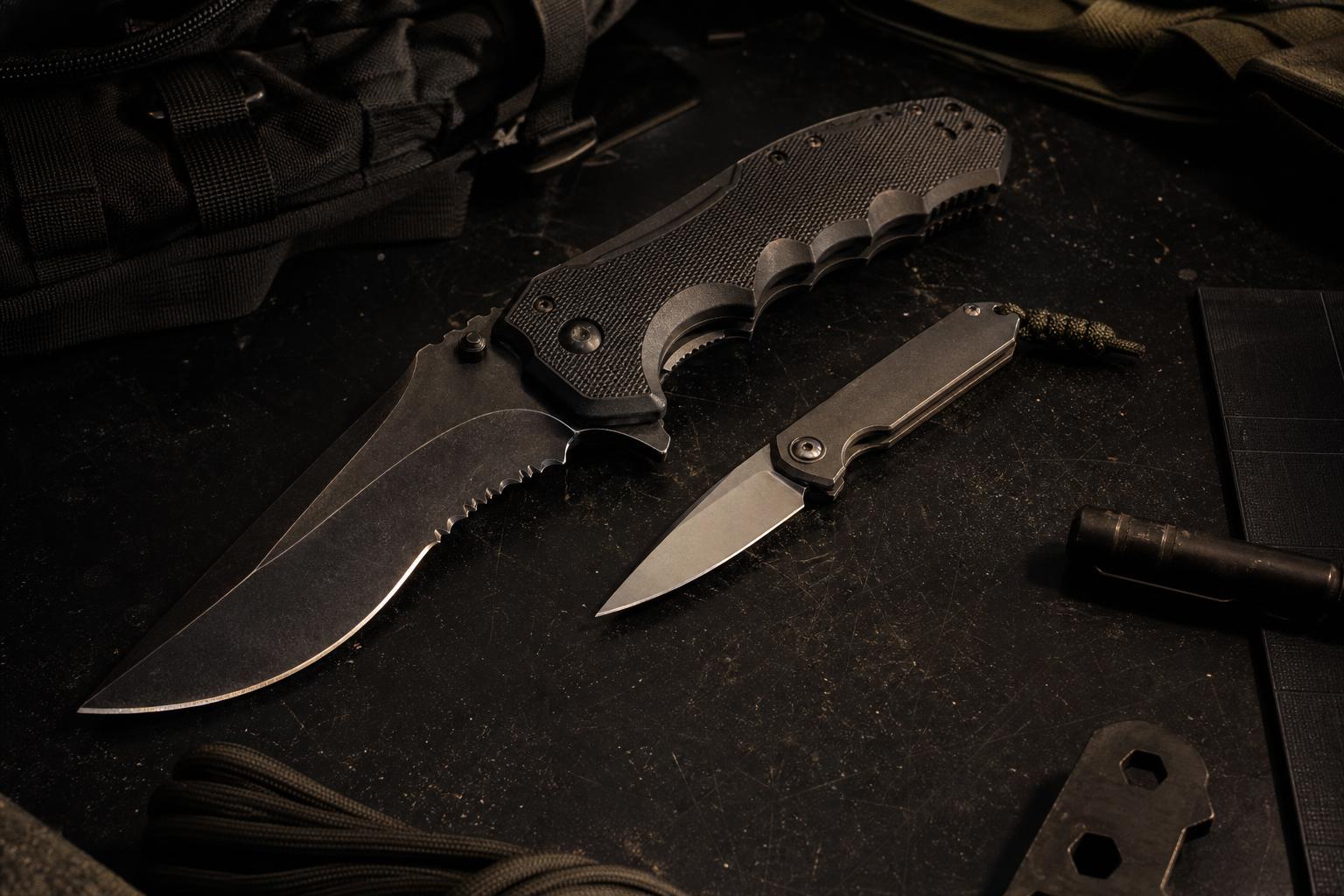
This is where the oversized tactical folder crowd loses me. Thick blades with dramatic profiles often cut worse than simpler knives because the geometry fights the task. A good EDC blade should handle three daily jobs without argument: controlled tip cuts, long slicing cuts, and light carving. If it cannot open a stubborn package cleanly, shave tinder curls, and trim cord without feeling clumsy, it is wrong for survival carry.
Drop points and simple utility profiles earn their keep because the point stays controllable. A wildly upswept or needlelike fantasy tip may look dangerous, but tool work punishes weird shapes. Bushcraft skills depend on repeatability. You should be able to make small shavings, notch a stick, scrape a fire prep surface, and cut food without changing your whole grip every ten seconds.
Blade length gets too much attention. I care more about how much usable edge the knife gives me and whether that edge meets the material at an efficient angle. A compact, sharp blade with good geometry will outwork a huge dull folder all day. We have tested this in the field enough times that I no longer argue about it around camp tables. Hand someone a big tactical folder and a properly sharpened plain utility blade. After cord, cardboard, tinder, and food prep, the pretty monster usually gets set aside.
The oversized tactical folder problem
Huge tactical folders create carry, cutting, and legal problems without giving you a real survival advantage. They are often optimized for appearance first and daily work second.
A large folder can be strong, but it is still a folder. The pivot and lock are mechanical points. That does not make folders bad. It does mean you should stop pretending your pocket knife is a hatchet, pry bar, camp chopper, and fighting blade rolled into one. That fantasy is how people break tips, defeat locks, and cut themselves.
A survival EDC knife should not scare you into leaving it behind when you go into town. It should not print like a brick in your pocket. It should not require a dramatic draw to retrieve. The more special handling a knife demands, the less useful it becomes when you are wet, tired, cramped in a vehicle, or managing another problem at the same time.
There is also a mindset problem. Oversized knives make beginners think size replaces skill. It does not. Knife work is edge angle, pressure, material control, and maintenance. A small sharp knife in trained hands beats a huge dull one in nervous hands. Every time.
What steel should an EDC survival knife use?
An EDC survival knife needs steel you can keep sharp with the maintenance tools you actually carry. Edge retention is useless if you cannot restore the edge when it dulls.
Knife steel arguments are where internet survival advice goes to die. People will debate steel charts for hours and still carry a dull knife. I care about a simpler test: can I sharpen it consistently, can it hold a working edge for ordinary cutting, and am I willing to maintain it before it gets stupid dull?
For survival EDC, the best steel is not the rarest or most expensive name on the box. It is the steel that fits your maintenance discipline. If you never sharpen, no steel saves you. If you do sharpen, a plain, serviceable blade becomes a serious tool.
Corrosion resistance matters if you sweat on your gear, work around water, or keep the knife in a vehicle kit. Toughness matters if you cut dense materials or do light wood work. Edge retention matters if your day includes cardboard, rope, and packaging. The catch is simple: every advantage has a tradeoff. Do not buy steel like a collector if you plan to use the knife like a survivor.
Lock strength matters, but it does not make a folder a pry bar
A knife lock should keep the blade open during normal cutting, not convince you to abuse the tool. The safest folder is one with secure lockup and a user who does not treat it like a fixed blade.
Check lock behavior before you trust a knife. The blade should open cleanly, seat fully, and close only when you intentionally release it. Side-to-side slop is not character. Sticky engagement is not a feature if it makes you fumble the knife under stress. If your lockup feels vague, gritty, or inconsistent, fix the problem or retire the knife.
The grip matters with the lock. A handle that forces your fingers toward the edge during a hard cut is a bad handle. A pocket knife used in survival tasks will see awkward angles, wet palms, gloves, and rushed decisions. You want a handle shape that indexes naturally, not one that demands perfect technique every time.
Fixed blades are better for hard field abuse. That is not controversial among people who use knives outside. The EDC folder handles daily carry and normal cutting. Your pack or camp kit can carry the heavier tool. Confusing those roles is one of the fastest ways to destroy a folder and blame the manufacturer for your own bad judgment.
Carry legality is part of the survival system
The best edc knife is the one you can carry without creating a legal problem. A knife that is legal in one place can become a liability when you cross into another city, state, workplace, school zone, courthouse, or airport.
This is the dull section that keeps people out of handcuffs. Survival-minded carry has to include legality. Do not rely on a comment thread, a buddy, or a two-year-old chart. Check current state and local rules from official sources before committing to a daily knife. Pay attention to blade type, blade length, opening mechanism, concealed carry rules, and restricted locations.
Air travel is its own trap. The TSA knife rules do not let normal knives ride in carry-on bags, with only narrow dining-knife exceptions. If you forget that and walk into screening with your favorite EDC, the trip may continue without your knife.
Workplaces matter too. A knife can be lawful and still banned by employer policy. That may not feel fair, but losing your job over pocket gear is not survival thinking. Carry the best tool you can carry consistently and lawfully. The rest belongs in the pack, vehicle, or home kit.
How should you sharpen a knife for survival use?
Sharpen a survival EDC knife by keeping a consistent angle, working both sides evenly, raising and removing the burr, then testing the edge on ordinary cutting material. Complicated systems do not matter if you never use them.
A dull knife is more dangerous than a sharp one because it makes you push harder. More pressure means less control. Less control is how edges jump into fingers, thighs, and gear you meant to keep intact.
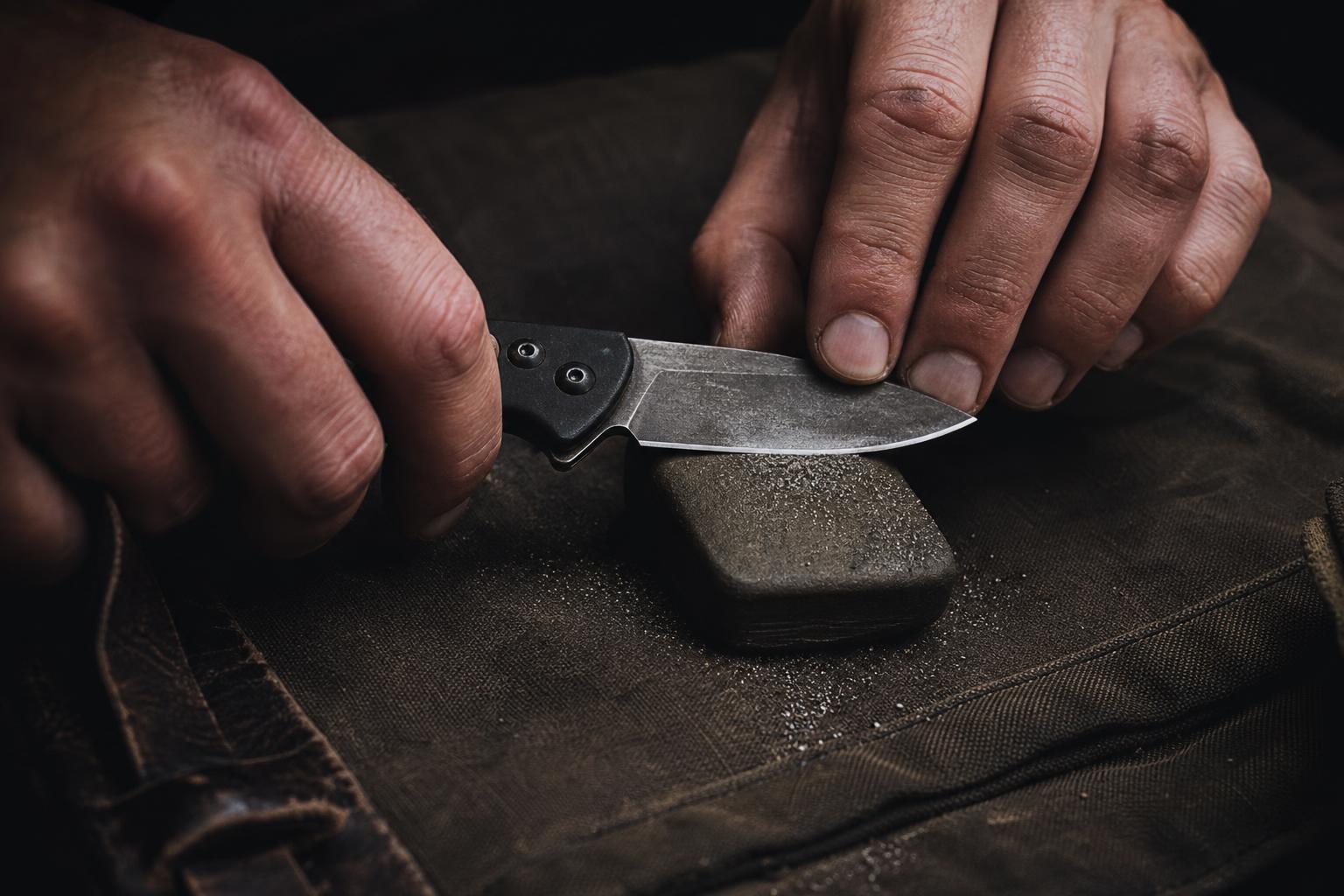
Field sharpening does not need to be theatrical. Start with the least aggressive abrasive that will solve the problem. If the edge is only tired, touch it up. If the edge is damaged, go coarser until the bevel is reset, then refine it. The mistake is waiting until the knife is completely dead before doing anything. Five minutes of maintenance today beats a half hour of frustration later.
Keep the angle consistent. That matters more than chasing a perfect number. Move the blade as if you are trying to slice a thin layer off the stone. Work one side, then the other. Feel for the burr carefully, then remove it with lighter passes. Test on something real, not your forearm hair. Paper, cordage, cardboard, and scrap fabric tell you more about survival usefulness than a shaving trick.
For people asking how to sharpen a knife in a realistic EDC setup, my answer is blunt: carry a small sharpener you will actually use. If it is too bulky, it stays home. If it requires a bench, it is not a field maintenance plan. Your edge should be kept alive, not resurrected once a year.
Where the knife fits in a bigger EDC survival loadout
An EDC knife is one tool, not the whole survival plan. It supports fire prep, shelter repair, first aid access, food tasks, cordage work, and vehicle emergencies, but it does not replace specialized gear.
This is another place where online gear lists get lazy. They act like a knife solves every field problem. It does not filter water. It does not keep you warm by itself. It does not start a fire unless you already have the rest of the fire system. It does not make calories appear. A knife is a force multiplier for the kit around it.
For bug out bag essentials, pair the knife with water, food, shelter, fire, first aid, light, and navigation. A blade opens packaging, cuts tape, trims cordage, prepares tinder, and helps with repairs. It is not a substitute for water treatment. If your kit is weak there, study a practical DIY water filtration system for survival before buying another shiny folder.
Food is the same story. A knife helps process and portion food, but shelf-stable calories come from planning. Pemmican, dehydrated food, and compact rations all beat hoping you can improvise dinner with a blade. If you are building the food side of a kit, the old-school method in how to make pemmican deserves more attention than another knife review.
A car emergency kit changes the carry equation. A knife in your pocket is good. A backup cutting tool in the vehicle is better. Ready.gov keeps a plain vehicle preparedness list in its car emergency kit guidance, and that mindset is right: the vehicle kit should cover more than the single tool on your body. Add water, weather gear, light, first aid, and tools that can stay in the car without depending on your pockets.
What to avoid when buying an EDC survival knife
Avoid oversized tactical folders, fragile novelty shapes, hard-to-maintain steels, weak or inconsistent locks, and knives you cannot legally carry every day. If the knife makes simple cutting harder, it is the wrong knife.
Skip the knife that needs a backstory. You do not need skull graphics, fantasy serrations, saw teeth on the spine, a glass-breaker you will never test, or a blade shape that looks like it escaped a video game. Those features sell confidence to people who have not done enough cutting.
Serrations are not automatically bad, but they are usually oversold for EDC survival. Plain edges sharpen easier and handle more daily tasks cleanly. If your work genuinely requires cutting heavy fibrous material often, serrations can earn a place. For most people, a sharp plain edge is the smarter default.
Avoid knives that are uncomfortable closed. Pocket clips, handle corners, and thickness decide whether a knife gets carried. If it chews up your hand when you reach past it for keys, you will stop carrying it. If it rides so high that it snags on seatbelts and jackets, you will start leaving it on the nightstand. Survival tools have to live with you.
Last, avoid buying past your skill. A premium knife will not teach safe cutting, edge maintenance, or bushcraft skills. Buy a dependable tool, then use it. Cut cord. Make shavings. Open food. Sharpen it. Learn what your hands do when they are cold and rushed. That education is worth more than another spec sheet.
FAQ
Is a folding knife enough for survival?
A folding knife is enough for daily carry and normal cutting tasks, but it is not a replacement for a fixed blade in hard field use. Carry the folder for EDC and put the heavier tool in your pack if your plan includes serious camp work.
Should the best edc knife have serrations?
Most people are better served by a sharp plain edge because it is easier to maintain and more versatile for daily cutting. Serrations make sense only if your normal tasks justify the extra sharpening hassle.
What is the biggest mistake people make with EDC knives?
They buy for intimidation instead of use. The knife ends up too large, too awkward, too hard to sharpen, or too questionable to carry legally. A smaller practical blade that stays sharp wins.
Conclusion: carry the knife you can legally use and keep sharp
The best edc knife is not the loudest knife in the case. It is the tool you can carry every day, use without drama, sharpen without excuses, and trust for the cutting jobs that actually show up. Blade geometry, steel you can maintain, secure lockup, and legal carry beat size.
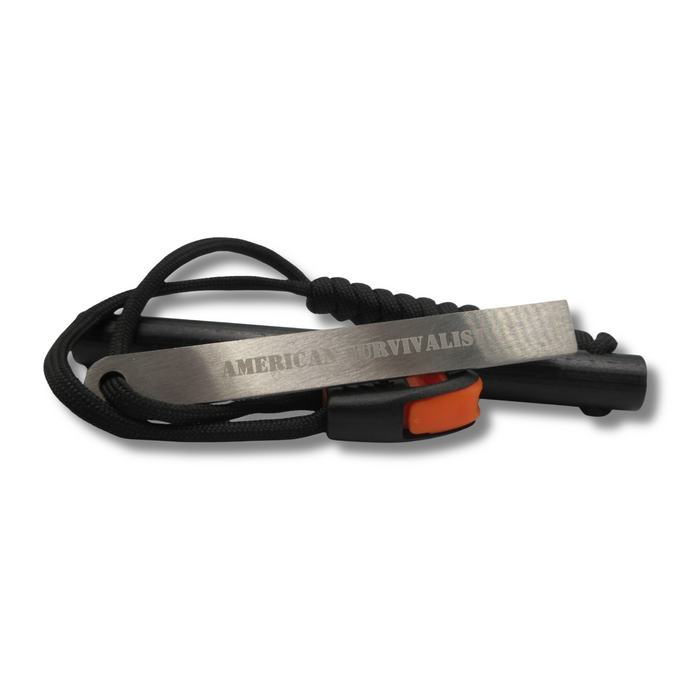
Build the rest of the kit around that same standard. Grab the free survival guides if you want practical PDFs instead of gear fantasy. If your knife is part of a field fire kit, add a full-size ferro rod and hardened striker so the blade can prep tinder while the spark tool does its own job. That is how a real survival system works: simple tools, clear roles, no cosplay.