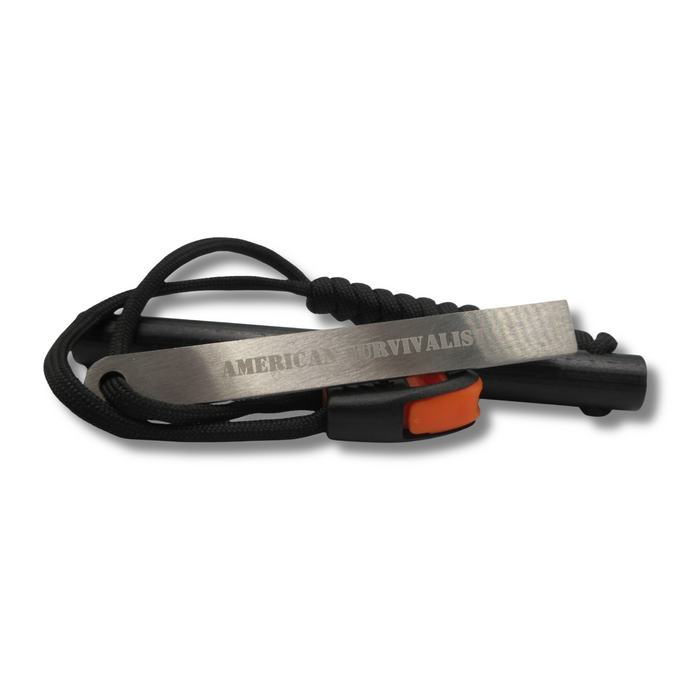
Best Ferro Rod for Survival: What to Look For Before You Buy

The best ferro rod for survival is not the tiny spark stick dangling from a key ring. That thing is survival jewelry. It makes people feel prepared while giving them the worst possible tool when their hands are cold, the tinder is marginal, and the wind is stealing every ember.
A real survival ferro rod is full-grip, full-stroke, and paired with a scraper that bites. It rides with prepared tinder. It is not expected to light wet sticks directly, because ferro rods make sparks, not flame. Most gear reviews skip that part because it ruins the fantasy that one shiny gadget solves fire.
The National Park Service includes fire-making materials in the outdoor Ten Essentials, listing matches, a lighter, and fire starters as gear to carry. That’s the right mindset: redundancy and fast flame, not one magic rod. Their guidance specifically calls out items that catch fire quickly and sustain flame, which is exactly where most ferro rod kits fail. See the NPS Ten Essentials guidance if you want the official version without the gear-review circus.
What size ferro rod is best for survival?
The practical sweet spot for a survival kit is a 3/8 inch by 4 inch usable ferro rod. For a vehicle kit, cabin kit, or cold-weather kit, a 1/2 inch rod in the 5 to 6 inch range is better because it gives you more grip, more stroke length, and less fine-motor nonsense.
The bare minimum I’d call serious is 5/16 inch, or 8 mm, in diameter with at least 3 inches, or 75 mm, of usable rod. That’s the floor. Not the goal. Below that, you’re usually dealing with a tool optimized for carrying, not using.
Rod size matters because the mechanics are brutally simple. A ferro rod works by shaving off tiny particles of ferrocerium that ignite in air when scraped hard with a sharp edge. You are not rubbing two magic sticks together. You are cutting hot metal dust off the rod and throwing it into tinder. A bigger rod lets you brace close to the tinder and carve material off with authority.
Tiny keychain rods fail in the field for four reasons:
- They’re hard to grip with cold, wet, or gloved hands.
- They’re too short for a full power stroke.
- They wear quickly when you actually train with them.
- They throw fewer usable sparks per strike because you can’t apply the same pressure and length of scrape.
The problem isn’t that small rods never spark. They do. The problem is that survival rarely gives you dry hands, perfect tinder, no wind, and calm nerves. A ferro rod that works only under picnic-table conditions is not the best ferro rod. It’s a demo prop.
A sharp 90 degree scraper matters as much as the ferro rod
A good ferro rod with a bad scraper is a sparkless stick. The scraper needs a hard, sharp 90 degree edge that removes material aggressively instead of polishing the rod.
This is where cheap kits expose themselves. They include a stamped piece of steel with a rounded bottle-opener-style edge and call it a striker. If that edge skates across the rod, rounds over, or makes you saw frantically for a few weak pinpoints, it’s not survival-grade.
Look for a scraper with these traits:
- A squared stainless or carbon-steel scraping edge.
- A comfortable grip that doesn’t twist under pressure.
- Enough length to hold while wearing gloves.
- An edge that bites the rod on the first firm scrape.
- A lanyard long enough to allow full strokes without binding.
The field test is simple. One firm scrape should produce a shower of sparks. Not three orange dots. Not a sad little fizzy line. A shower. If your striker requires frantic motion, the geometry is wrong or the material is too soft to hold an edge.
A knife can work if the spine has a crisp 90 degree edge. Use the spine, not the sharpened cutting edge unless it’s a true emergency. Scraping a ferro rod with the cutting edge damages the blade, and there’s no reason to chew up your knife when a proper striker weighs almost nothing.
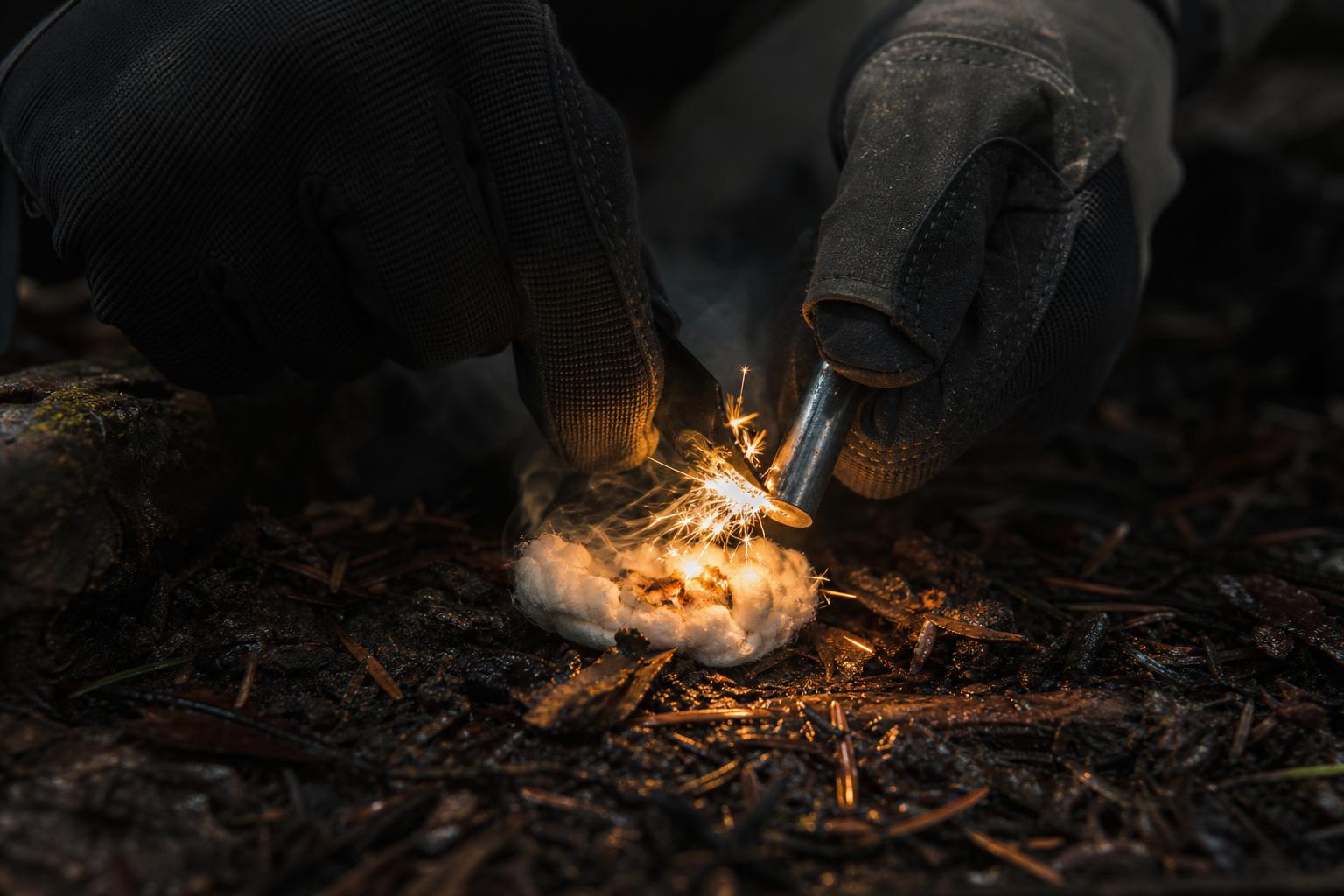
Soft ferro rods beat hard rods when ignition matters
For survival use, choose easy ignition over maximum strike count. A ferro rod advertised for huge strike numbers is useless if it throws weak sparks with the scraper you actually carry.
There’s no universal labeling standard for soft and hard ferro rods, which is why the marketing language is such a mess. In practice, softer rods are easier to scrape and tend to throw bigger globs of sparks. They wear faster. That trade is fine. Fire now beats theoretical lifespan later.
Harder rods last longer, but they often demand more pressure and cleaner technique. Pair a hard rod with a weak scraper and you get the classic beginner failure: lots of motion, not much heat delivered to the tinder. The user gets blamed. The kit deserves plenty of blame too.
This is why strike count is overrated. A rod that lasts 20,000 strikes but lights poorly in your hands is worse than one that burns faster and lights tinder reliably. In real use, especially with damp conditions and cold fingers, spark volume and ease of shaving matter more than bragging rights.
If you’re testing rods side by side, don’t just count sparks in daylight. Scrape each rod with the actual striker supplied in the kit. Then scrape it with the knife spine or dedicated striker you plan to carry. If one combination throws fat, hot sparks with controlled pressure and the other needs a panic attack to perform, the choice is made.
Can a ferro rod work after getting wet?
A ferro rod can spark after getting wet, but wet-weather capable does not mean it lights wet sticks directly. The spark still needs tinder that can catch and sustain flame.
This is the place where bad survival advice gets people in trouble. Writers say ferro rods are waterproof, then imply that rain no longer matters. That’s nonsense. The rod can be soaked and still spark once you scrape it, but the fire lay, tinder, and fuel prep still decide whether you get flame.
Carry prepared tinder with the rod. Not nearby in a different pouch. With it. Minimum kit:
- 6 to 12 cotton balls with petroleum jelly, sealed in a small plastic bag or straw sections.
- Commercial fire tabs or waxed tinder.
- A way to keep that tinder protected until you need it.
Cotton balls with petroleum jelly are popular for a reason. The cotton catches a spark, and the petroleum jelly helps sustain flame long enough to move into finer kindling. Commercial fire tabs and waxed tinder serve the same role: they buy you burn time.
That burn time is the difference between sparks and a fire. A ferro rod alone gives you hot particles. Prepared tinder gives those particles somewhere to live. Without it, you’re trying to land sparks on whatever the weather left you, and that’s how people turn a simple fire into a half-hour failure.
In wet weather, build the fire from the tinder outward. Feather, split, or otherwise prepare fuel before striking sparks. Keep the rod close to the tinder so sparks land where they matter. Scrape the rod, don’t wave it in the air like you’re conducting music. The best waterproof fire starter setup is boring: dry tinder, sharp striker, controlled stroke, small prepared fuel ready to catch.
Should you carry a ferro rod instead of a lighter?
No. Carry a ferro rod plus a lighter and waterproof matches. A ferro rod is part of a fire kit, not a replacement for every other ignition source.
This is another place survival influencers get cute and wrong. They act like using a ferro rod proves skill and using a lighter proves weakness. Skill is getting fire when conditions are bad, not role-playing a frontier catalog.
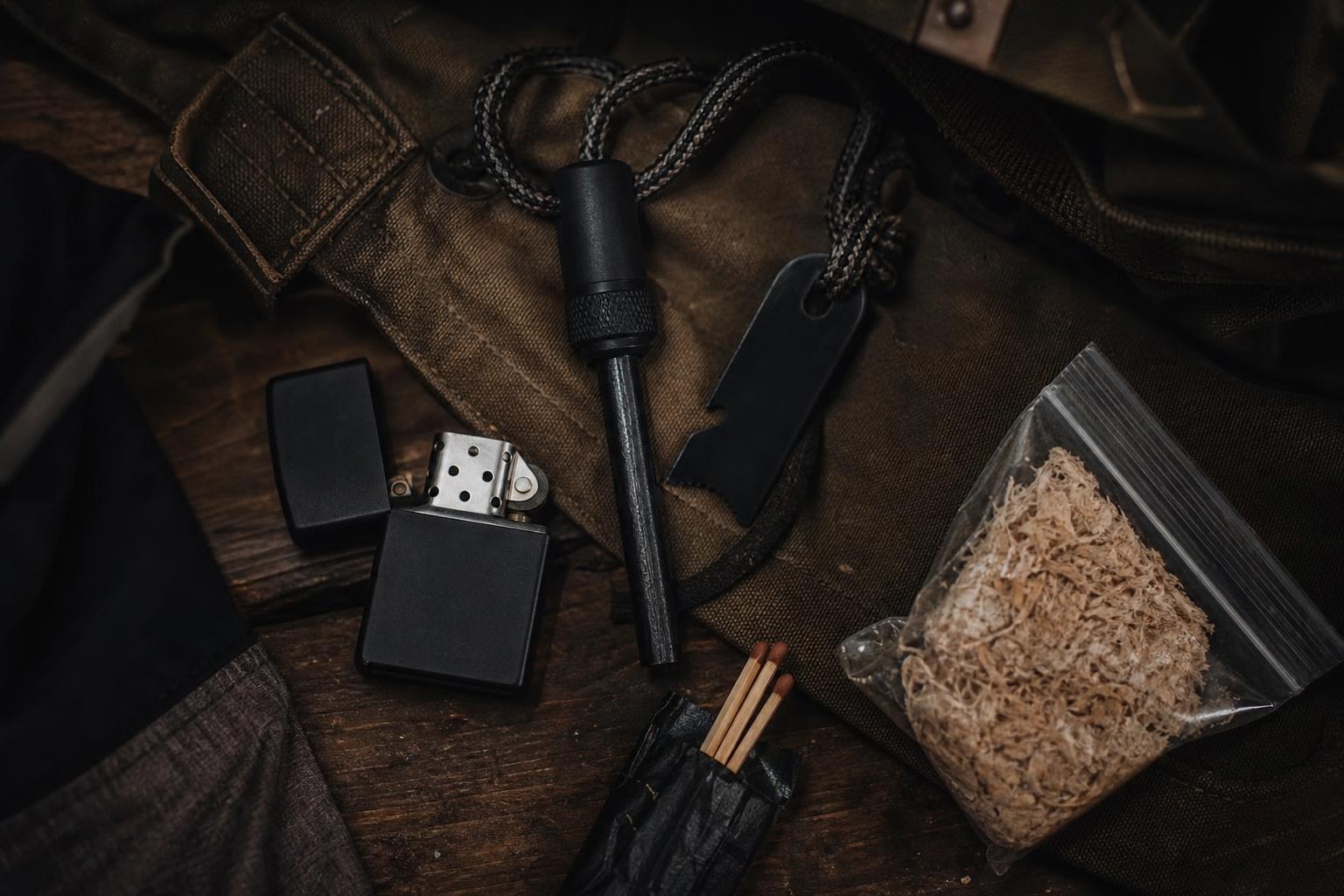
A lighter gives you immediate flame. Waterproof matches give you another flame source. A ferro rod gives you a durable spark source that can work after getting wet. Those tools solve different problems. Carry all three.
The NPS Ten Essentials guidance lists matches, a lighter, and fire starters. That redundancy is not overpacking. It’s basic survival planning. If your lighter fuel is gone, if matches are spent, if your ferro rod striker is lost, the other systems still exist.
Think in layers:
- Primary ignition: lighter, because flame is faster than sparks.
- Secondary ignition: waterproof matches, because redundancy matters.
- Durable ignition: ferro rod with a real striker.
- Flame extender: prepared tinder that catches quickly and sustains burn.
Fire starting belongs in the same category as water planning. One method is a weak plan. If you’re building a wider kit, pair your fire system with a practical water system and learn the limits of both. Our DIY water filtration system for survival guide covers that side of the kit.
Ferro rod vs flint and steel vs magnesium fire starter
For most survival kits, a ferro rod is the better spark tool because it throws ignition particles directly when scraped with a sharp edge. The buyer mistake is treating every spark tool as equal and ignoring the tinder requirement.
The phrase ferro rod vs flint and steel creates confusion because people use the words casually. A ferro rod is ferrocerium. Its particles ignite in air when shaved off hard enough. That’s why scraper geometry matters so much. You’re not coaxing a tiny historical spark onto char cloth for a demonstration. You’re trying to throw enough heat into practical tinder to start a fire.
A magnesium fire starter is often sold as a block or tool paired with a ferro rod. Don’t let the magnesium label distract you. Judge the ferro rod and scraper first. If the rod is tiny and the scraper is rounded, the kit still has the same failure points. A magnesium bar doesn’t excuse bad grip, bad geometry, or no prepared tinder.
For survival buying, use this rule: if you can’t grip it hard, scrape it hard, and land sparks into tinder without fighting the lanyard, skip it. The name on the package matters less than the mechanics in your hand.
How do you field test a ferro rod before trusting it?
A ferro rod earns a place in your kit only after it lights your carried tinder with your carried scraper. Testing sparks on concrete or posing it beside a knife tells you almost nothing.
Run this test before you pack it:
- Remove any coating from the rod with a few scrapes.
- Place your prepared tinder on bare soil, rock, or another safe surface.
- Brace the rod close to the tinder.
- Hold the scraper still and pull the rod back, or drive the scraper down the rod without blasting the tinder apart.
- Demand ignition from one to three firm strikes once your setup is correct.
Pulling the rod back while keeping the scraper near the tinder often works better than ramming the striker forward. It keeps your tinder pile intact. Beginners love to scatter their own tinder, then blame the rod.
Test with gloves too. If the rod is too short to control with gloves, it’s too small for cold-weather survival. If the lanyard prevents a full stroke, replace it or cut it off and rebuild the setup. A lanyard that keeps parts together is useful. A lanyard that chokes the stroke is sabotage.
Train until the motion is boring. Survival gear you’ve never tested is inventory, not capability. A ferro rod is durable, but it still demands pressure, angle, and prepared tinder. Learn that in the backyard, not under sleet with shaking hands.
Campfire legality and control are part of the fire kit
The best ferro rod doesn’t give you permission to build a fire anywhere. Know local rules, check restrictions, keep fires small, keep water nearby, and never leave a campfire unattended.
That’s not bureaucracy. It’s survival discipline. Fire that gets away from you stops being a tool and becomes the emergency. The NPS campfire safety guidance is plain: know the rules, check current restrictions, keep fires manageable, keep water close, and don’t abandon a burning fire.
Carry the gear to control what you start. In established areas, use existing fire rings where allowed. In dry or restricted areas, don’t turn fire starting into a stunt. A ferro rod is an ignition tool, not a waiver from conditions.
Keep fires small. Small fires cook, warm, signal, and conserve fuel. Large fires waste energy and create control problems. In the field, the person who builds a massive fire usually isn’t the experienced one. They’re the one compensating for poor prep.
FAQ
Is the best ferro rod the one with the highest strike count?
No. Strike count matters less than rod size, scraper bite, spark quality, and tinder. A lower-count rod that throws strong sparks and lights your tinder reliably is better survival gear than a hard rod that lasts longer but performs poorly.
Can I use my knife as a ferro rod striker?
Yes, if the spine has a crisp 90 degree edge. Use the spine, not the sharpened cutting edge unless it’s an emergency, because the cutting edge can be damaged by scraping the rod.
Is a ferro rod a waterproof fire starter?
The rod can work after getting wet, which is why people call it a waterproof fire starter. That does not mean it lights wet sticks directly. You still need dry or prepared tinder that catches sparks and sustains flame.
The ferro rod worth carrying is the one you can run under stress
Buy the usable size. Demand a real 90 degree scraper. Carry prepared tinder. Back it up with a lighter and waterproof matches. That combination beats every tiny keychain rod and every inflated strike-count claim I’ve seen pushed as serious survival gear.
For a pocket or pack survival kit, start at 3/8 inch by 4 inch. For a vehicle, cabin, or cold-weather kit, go bigger, 1/2 inch by 5 to 6 inches. Test it with your tinder before you trust it. If it throws a shower of sparks and lights prepared tinder without drama, it belongs in the kit. If it skates, binds, or requires perfect conditions, retire it to the junk drawer.
Keep building the rest of the system with the same standard. Get the free American Survivalist PDFs in our survival guide PDFs collection and stop treating gear as prepared until you’ve proven it works.
The rod that meets this standard
Everything above is the reason we built our Large Ferro Rod the way we did. Half an inch thick, five inches of ferrocerium, enough grip to run with cold or gloved hands, and a hardened striker with a real squared edge that bites on the first scrape instead of skating. It throws a shower of sparks soaking wet or bone dry, and it's rated past 15,000 strikes, so you can train with it in the yard and still have most of the rod left when it counts. If you want one you can actually run under stress, that's the one we stand behind.