Fatwood: How to Find, Harvest, and Use Nature’s Waterproof Fire Starter

Fatwood gets oversold by people who have only lit it on a picnic table in dry weather. They call it a waterproof fire starter, toss a shiny orange stick in a kit, and act like the job is done. That’s campfire cosplay. Real fatwood works because resin-rich pine burns when ordinary punky wood sulks, but only if you know how to find the dense stuff, cut away the wet exterior, and reduce it into shavings and splinters before your hands are shaking.
The mistake is treating fatwood like a match. It isn’t. Fatwood is concentrated resin in old pine wood, usually found where resin collected after damage, stress, or death. Used right, it gives you a hot, stubborn flame that helps wet kindling catch. Used wrong, it’s just a hard little stick you scrape at while daylight bleeds out.
Fire is only one part of staying alive outdoors. Water matters just as much, and bad water planning ruins trips faster than bad tinder. If your kit is still weak there, fix it with a real DIY water filtration system for survival before you congratulate yourself over a pocket full of orange pine.
Good fatwood is dense, orange, and loud with resin
Useful fatwood looks and behaves different from normal dead pine. The good pieces are heavy for their size, yellow-orange to deep amber inside, sharp with pine-solvent smell, and resistant under a knife. If it looks pale, feels light, crumbles, or smells like damp mulch, leave it.
Most bad fatwood advice starts with color and stops there. Color helps, but color alone lies. Old pine can stain orange without being loaded enough to carry a fire in wet weather. A better test uses four checks.
- Weight: resin-rich fatwood feels heavier than a same-size piece of plain dry pine. That density is the first clue.
- Smell: fresh cuts should smell strong, piney, and resinous. If you shave it and barely smell anything, it’s mediocre.
- Knife feel: good fatwood cuts waxy and firm. Bad pieces cut dry, crumbly, or punky.
- Shaving color: thin curls should show yellow, orange, or amber tones, not dull gray rot.
The back-of-the-hand test works in the field. Shave a fresh patch and press it against the back of your hand. If it feels cold and wet, you’re still dealing with surface moisture or bad wood. Cut deeper. If the cut face feels waxy and dry, you’ve hit the part that matters.
Where fatwood hides after a pine dies
Fatwood is easiest to find in dead pine stumps, root crowns, old branch knots, and heartwood sections where resin collected. The best places are not random sticks on the ground. They’re the dense remains of a pine that held resin after the softer wood rotted away.
Start at old pine stumps. Kick or tap the outside with the back of your knife. Rotten outer wood sounds dull and breaks apart. Dense resin wood sounds harder and resists. You’re hunting the stubborn pieces left behind after weather has eaten the useless material.
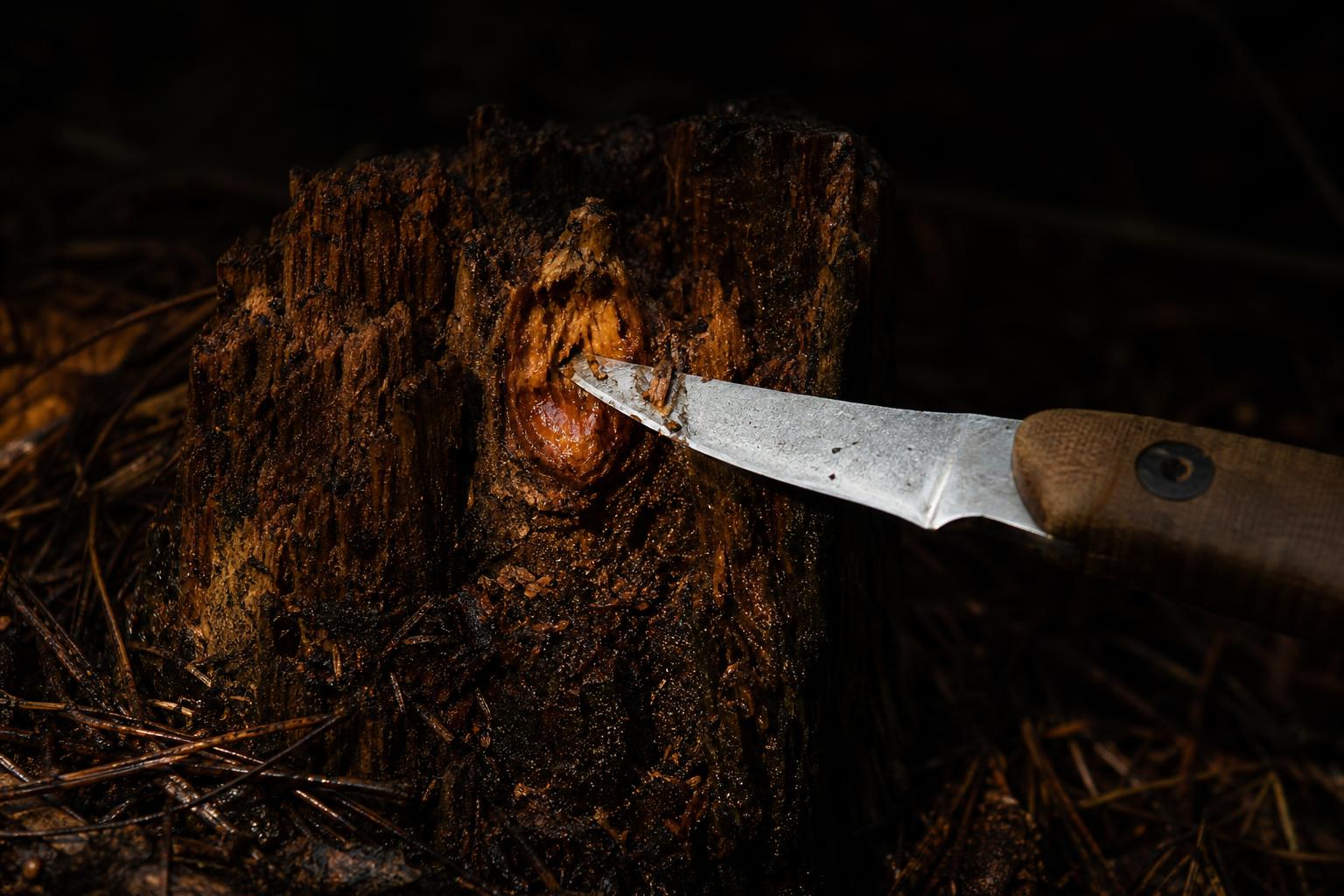
The root crown is often better than the stump top. Resin collects heavily near the base and roots, and those pieces can stay usable after the rest of the stump has gone soft. Break away punky outer wood first. Don’t waste blade edge carving through rot. Pry off the trash and expose hard orange core.
Branch knots are another high-percentage target. Where a limb grew out of the trunk, resin often concentrates around the joint. A dead standing pine or fallen trunk can have knots that cut out as dense orange plugs. Those plugs are small, but they’re excellent fire-kit material.
Don’t ignore split logs or storm-fallen pine. A cracked piece that shows an amber seam is worth shaving. Good fatwood flashes its quality once you cut into it. Bad pieces keep making excuses.
Harvest dead pine, not living trees
Responsible fatwood harvesting means taking small resin-rich pieces from dead stumps, deadfall, and old knots, not hacking live trees. Cutting live pine for tinder is lazy, slow, and destructive. It also gives you wet, sappy wood that still needs time and processing.
The field rule is simple: take the hard orange leftovers, not the living tree. A dead stump can give you enough fatwood for many fires without creating a scarred mess. A living pine needs its bark and cambium. Ringing or chopping it for a fire starter is beginner behavior dressed up as bushcraft.
Public land rules matter. Some areas restrict collecting wood, removing natural material, or using fires at all. Follow posted regulations and burn bans. The Leave No Trace Seven Principles are a good baseline for not turning every campsite into a chewed-up training area.
Use a small fixed blade, folding saw, or hatchet only when the tool fits the job. Pry with a knife and you can snap the tip. Baton a folder and you deserve the broken lock you get. For a stump, remove rotten outer wood, expose the hard resin core, then cut a fist-size chunk. That’s plenty. A fire kit does not need a backpack full of fatwood.
Test every piece before it goes in your fire kit
Bad fatwood should fail at home, not during a storm. Shave a sample from every piece you collect and light it with the ignition source you actually carry. If it only burns after a lighter bakes it for ten seconds, it doesn’t belong in your emergency kit.
A proper test is boring and strict. Make a nickel-size pile of fine shavings. Strike your ferro rod into it. If the shavings catch and build a small flame, keep that piece. If sparks bounce off or the shavings only smoke, cut deeper and try again. If it still fails, throw it into the casual campfire pile.
Ferro rods throw sparks around 5,400F or hotter, and good rods are commonly rated for 15,000 or more strikes. That doesn’t mean every tinder catches from one lazy scrape. The spark is hot, not large. Fine surface area wins. A fatwood stick with no shavings is almost useless to a ferro rod.
This is where people fool themselves. They light a whole fatwood chunk with a butane lighter, see flame, and call it proven. That proves the lighter works. Your survival fire starter needs to take a spark after you process it with cold hands.
Process fatwood into three sizes, not one cute curl
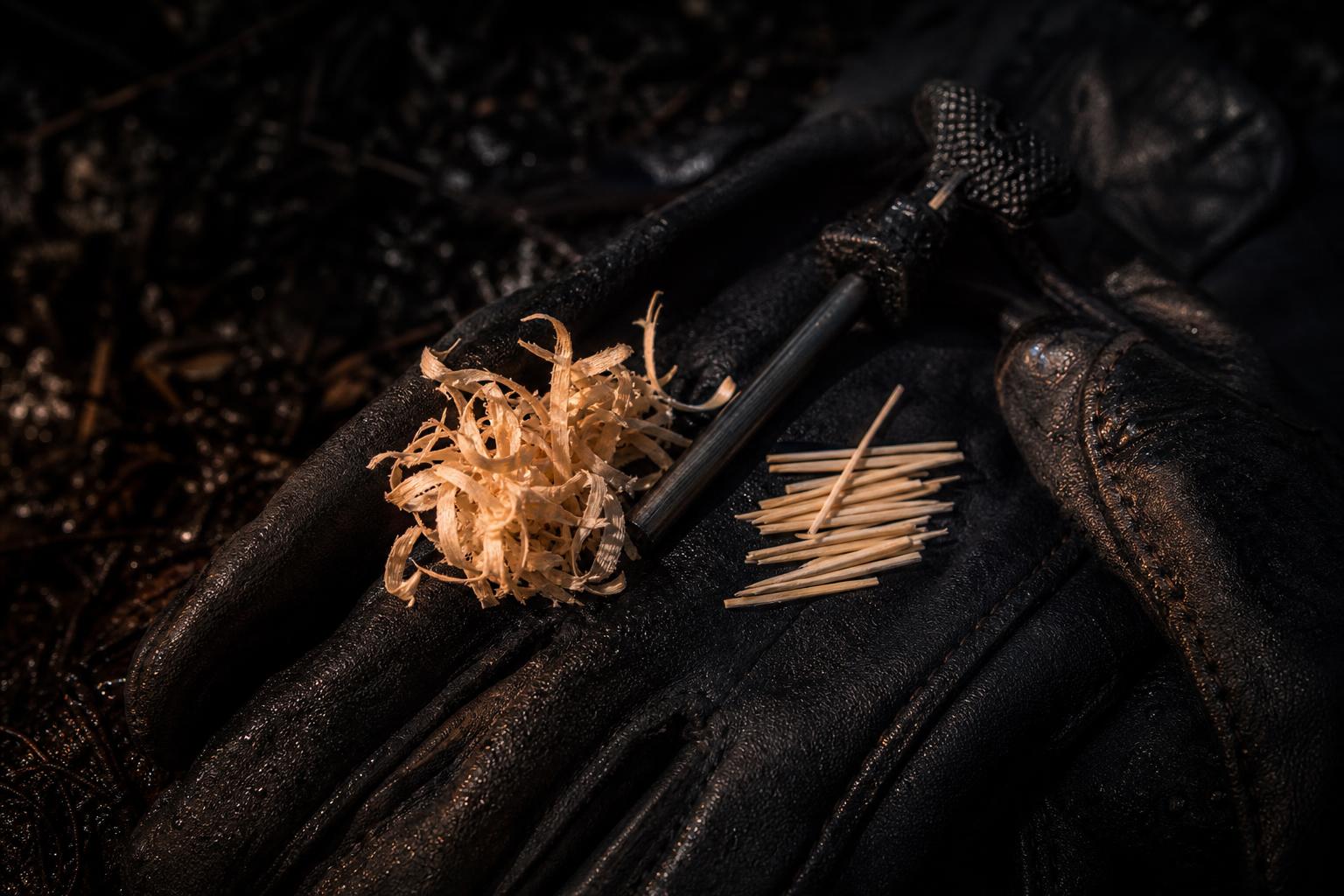
Fatwood should be processed into dust, fine shavings, and matchstick splinters. One pretty feather curl is not a fire lay. Fine material catches the spark, larger shavings build flame, and splinters bridge that flame into real kindling.
Use the spine of your knife if it has a sharp 90-degree edge. Scrape downward to make resin dust and tiny curls. If your knife spine is rounded, use the cutting edge carefully, pulling curls away from your body and keeping the blade controlled. A ferro rod striker can work, but most stamped strikers are mediocre. A real knife spine is faster.
Build three piles before ignition:
- Resin dust and hair-thin shavings: this catches ferro rod sparks.
- Thin curls: these turn the first flame into a stronger flame.
- Matchstick splinters: these burn longer and light your pencil-lead and pencil-size kindling.
Cut splinters from the same fatwood piece. Aim for pieces about the thickness of wooden matches at first, then a few closer to pencil lead. Arrange them above or beside the shaving pile so the flame climbs into them. Don’t smother the dust under a log cabin of chunky sticks. Air is part of the fuel system.
In wet weather, do this prep under cover if you can, under a jacket flap, a pack lid, a hat, or the lee side of a log. If rain is hitting your shaving pile directly, you’re donating heat to the weather.
Can fatwood start a fire in the rain?
Yes, fatwood works in wet conditions when you cut past the wet exterior and expose fresh resin-rich wood. Rain kills lazy prep, not properly shaved fatwood.
The outer surface can be soaked, muddy, or oxidized. That doesn’t make the whole piece useless. Shave off the nasty layer until the knife exposes waxy orange wood. Then make fresh shavings immediately before ignition. Don’t process a pile, leave it in rain for five minutes, and blame the fatwood.
The rain technique is not complicated, but it is unforgiving:
- Split or shave down to clean resin-rich wood.
- Scrape a dry-ish platform from bark, a split stick, or flat stone.
- Make a compact pile of fine shavings the size of a cotton ball.
- Add curls and matchstick fatwood splinters above it with air gaps.
- Have dry inner kindling ready before striking sparks.
That last step is where wet-weather fires fail. People get a flame, then turn around to gather kindling. By the time they come back, the fatwood has burned down and their knees are wet. Stage your materials first. Fatwood gives you a hotter, longer tinder flame than grass fluff, but it won’t dry a thumb-thick wet stick by magic.
Use a ferro rod like a cutting tool, not a magic wand
A ferro rod works best when the scraper stays close to the tinder and the rod is pulled back. Driving the striker forward blows your shaving pile apart. Pull the rod, keep the scraper still, and dump sparks into one spot.
Plant your knuckles near the ground. Put the ferro rod tip close to the fatwood dust, close enough that sparks don’t cool in the air. Pin the striker in place and pull the rod backward with firm pressure. You want a shower of sparks landing in the same thumbprint-size target.
Don’t peck at it. Long, hard strokes throw more molten material. Short nervous scratches make you feel busy while nothing changes. If your shavings are right, the pile catches. If it doesn’t, make them thinner. The answer is almost never more waving.
Keep your ferro rod clean and dry enough to grip. It does not need pampering, but mud and grease make bad handling worse. Scrape off any dark coating on a new rod before relying on it. A ferrocerium alloy rod is simple gear, but simple gear still demands competent hands.
Fatwood is tinder, kindling, and insurance, not a whole fire
Fatwood can act as tinder and small kindling, but it is not a complete fire by itself. It buys you flame. Your fire lay still needs dry inner wood, progressively larger fuel, airflow, and a safe place to burn.
The best wet-weather pairing is fatwood plus split kindling. Find dead branches off the ground, split them, and use the dry interior. Pencil-lead twigs go first, then pencil-size, then finger-size. Fatwood splinters sit at the base and feed flame upward.
Do not build directly on wet soil. Wet ground steals heat. Use a bark slab, split sticks, or a small platform of dry-ish wood. Keep the first flame tight and protected. Big open teepees look good in diagrams and fail in sideways rain.
Smoke is part of burning resin-rich wood. Don’t cook your lungs over it and don’t use fatwood as your main cooking fuel if you can avoid it. Use it to start the fire, then transition to cleaner burning fuel. For campfire safety, site selection, control, and extinguishing matter as much as ignition. The National Park Service campfire guidance is blunt about keeping fires controlled and putting them out cold.
Store it so it does not become pocket trash
Carry fatwood in prepared pieces, not as one unprocessed trophy stick. A useful kit has a few pencil-size splinters, one larger backup piece, and a small tin or bag of shavings if you can keep them clean.
Pre-shaved fatwood catches fast, but loose shavings get contaminated with lint, dirt, and crumbs. A small metal tin, plastic vial, or heavy zip bag fixes that. Leave some pieces unshaved too. Fresh shavings cut in the field are more reliable than dust that has been ground into pocket debris for six months.
A practical fire kit carries redundancy without turning into a junk drawer. Fatwood, a ferro rod, and a lighter cover a lot of ground. Add dry kindling prep and you’re ahead of most people. Add five gimmick fire starters and no knife, and you’re just carrying a craft project.
For vehicle kits and home preparedness, keep fatwood dry because dry gear is faster gear. The resin helps it tolerate moisture, but there is no virtue in soaking your supplies. Store it with your stove, emergency candles, or field fire kit. If you’re building broader homestead or shelter plans, fire starting belongs beside heat, water, food, and security, not in a random drawer. The same seriousness that goes into how to build a cheap bunker in your backyard belongs in the small gear too.
FAQ
Is fatwood really waterproof?
Fatwood is highly water-resistant as a fire starter because resin-rich pine burns well after the wet outer layer is shaved away. It is not magic. Fresh shavings from the dry, waxy interior are what make it work in rain.
Can you light fatwood with sparks instead of matches?
Yes, fine fatwood dust and thin shavings can catch from a ferro rod. A whole stick usually will not. Process it first, keep the spark close, and pull the rod backward so you don’t scatter the tinder pile.
How much fatwood should I carry?
A few pencil-size splinters, one thumb-size backup piece, and a small protected stash of shavings are enough for a compact kit. Skill matters more than bulk. Test your pieces before you trust them.
Conclusion
Fatwood earns its place in a survival kit, but only when you stop treating it like a lucky charm. Find the dense orange resin wood in dead pine stumps, knots, and root crowns. Harvest small pieces from dead material. Test them. Cut fresh shavings, build splinters, stage real kindling, and use your ferro rod with control instead of hope.
Most fire-starting failures are preparation failures wearing a weather costume. Fatwood gives you an edge in wet conditions, not an excuse to skip the fundamentals. Build the system, then carry the tinder.
For more no-nonsense field skills, download the free PDFs in the free survival guide PDFs collection and put them where you can actually use them before the weather turns ugly.
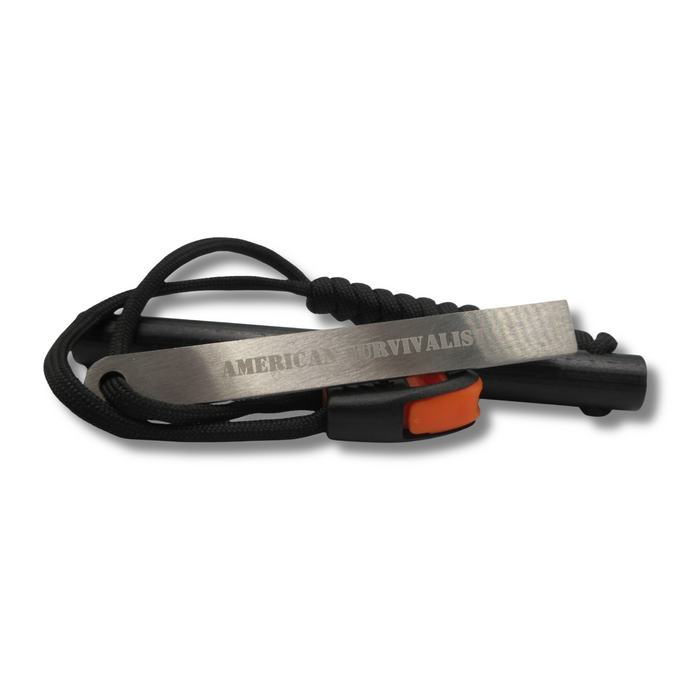
Pair your fatwood with a rod that earns it
Fatwood shavings are only half the equation, and a cheap striker will skip right off that resin dust. The Large Ferro Rod we build drops a hot, heavy shower of sparks onto a nickel-size pile of fatwood curls and lights it wet or dry, and the hardened striker's squared edge peels shavings straight off the rod when you need more tinder. It's a half-inch bar of ferrocerium rated past 15,000 strikes, so it'll outlast every stump you ever harvest. Keep the Large Ferro Rod and striker next to your fatwood stash, and pull down the free survival guides to sharpen the rest of your fire and water plan.