Ferro Rod vs Flint and Steel: Which Fire Starter Should You Trust in a Survival Kit?

Most ferro rod vs flint and steel comparisons are campfire folklore dressed up as gear advice. They treat both tools like they do the same job. They don’t. A ferro rod is a high-temperature spark shower that can ignite the right tinder directly. Flint and steel is an ember-making system that lives or dies on char cloth. Leave that part out and you’re not comparing fire starters, you’re comparing fantasy.
I’ve watched capable people struggle with this because they packed the romantic option and skipped the ugly details. Cold hands. Damp tinder. No prepared char. A steel striker clicking against rock like a pocket full of excuses. In a survival kit, the winner is not the tool that looks better on a blanket photo. It’s the one that still gives you a flame when the weather has been working against you all day.
Is a ferro rod better than flint and steel for survival?
Yes, a ferro rod is the better primary survival fire starter because it produces hotter, more aggressive sparks and needs less specialized tinder. Flint and steel still has value, but it belongs in a kit only when you also carry dry char cloth and know how to turn an ember into flame.
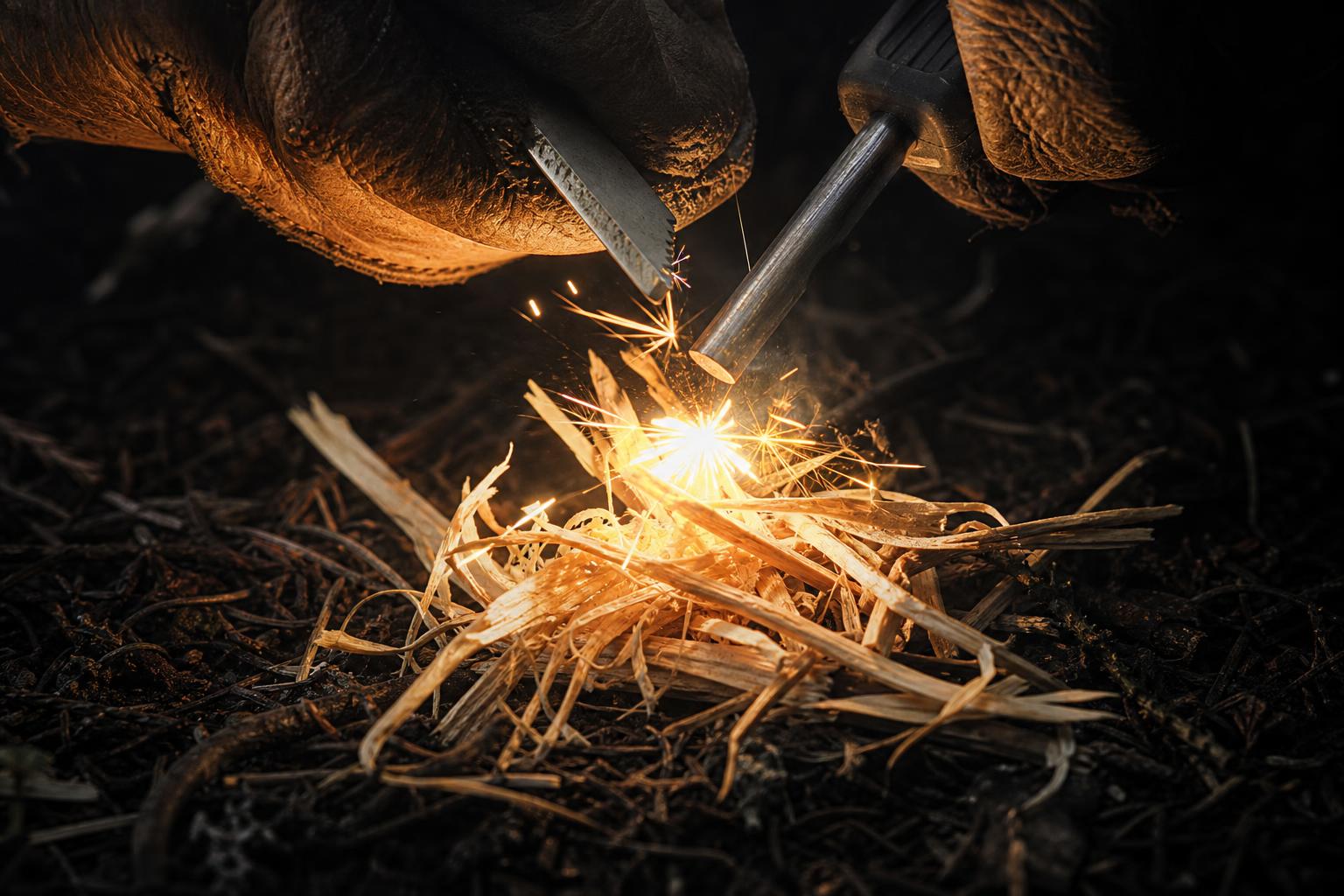
A ferro rod is made from ferrocerium alloy. Scrape it hard with a sharp spine or striker and it throws a spray of sparks commonly cited at 5,400F plus. Quality rods are often rated for 15,000 plus strikes. That does not mean every scrape starts a fire. It means the tool gives you a hot ignition source over and over with no fuel, no battery, and no moving parts.
Flint and steel works differently. The sharp stone edge shaves tiny pieces from high-carbon steel. Those steel particles oxidize as sparks, but they are smaller, cooler, shorter-lived, and far less forgiving than ferro rod sparks. They are not the same class of ignition. Anyone telling you otherwise has not tried lighting bad tinder with both after rain.
That difference decides the survival verdict. A ferro rod can light properly prepared natural tinder, commercial tinder, scraped inner bark, dry grass, or fine feather sticks. Flint and steel is usually trying to catch a spark on char cloth first, then nurse that tiny ember into a tinder bundle. That is a whole chain. Every link has to be right.
Why does ignition temperature change the whole fire-starting problem?
Hotter sparks widen your margin for error. A ferro rod’s 5,400F plus sparks can ignite fine, dry tinder directly, while flint and steel sparks usually need char cloth because ordinary tinder does not catch them reliably.
This is the part most gear lists butcher. They say both tools make sparks. That is like saying a lighter and a birthday candle both make flame. True, and useless.
A ferro rod spark lands hot and bright enough to bite into tinder that has been processed correctly. The keyword is processed. A pencil-sized stick is not tinder. A curled feather stick with hair-thin shavings can be tinder. A handful of grass that feels dry on top but cool against the back of your hand is still too damp. Cedar scrapings, fatwood dust, dry bark fibers, cattail fluff mixed with a more substantial carrier, and shaved dry wood all respond better when the ferro rod is scraped with pressure and the sparks are aimed into one tight point.
Flint and steel sparks do not give you that same violence. They are best at making a pinpoint ember in charred material. Char cloth catches because it has already been cooked down into a low-ignition ember cloth. Once it catches, you still do not have flame. You have a glowing dot. Put that dot into a tinder nest, close the nest around it, and blow until the whole bundle crosses over into flame.
That is a fine skill. It is not a direct replacement for a ferro rod. If your hands are shaking, your breath is ragged, and the wind is stealing heat from everything, the difference matters.
Why does char cloth make flint and steel a system instead of a striker?
Flint and steel depends on char cloth or another charred tinder to be reliable. Without it, you are carrying a spark maker that usually cannot turn natural tinder into fire fast enough for survival use.
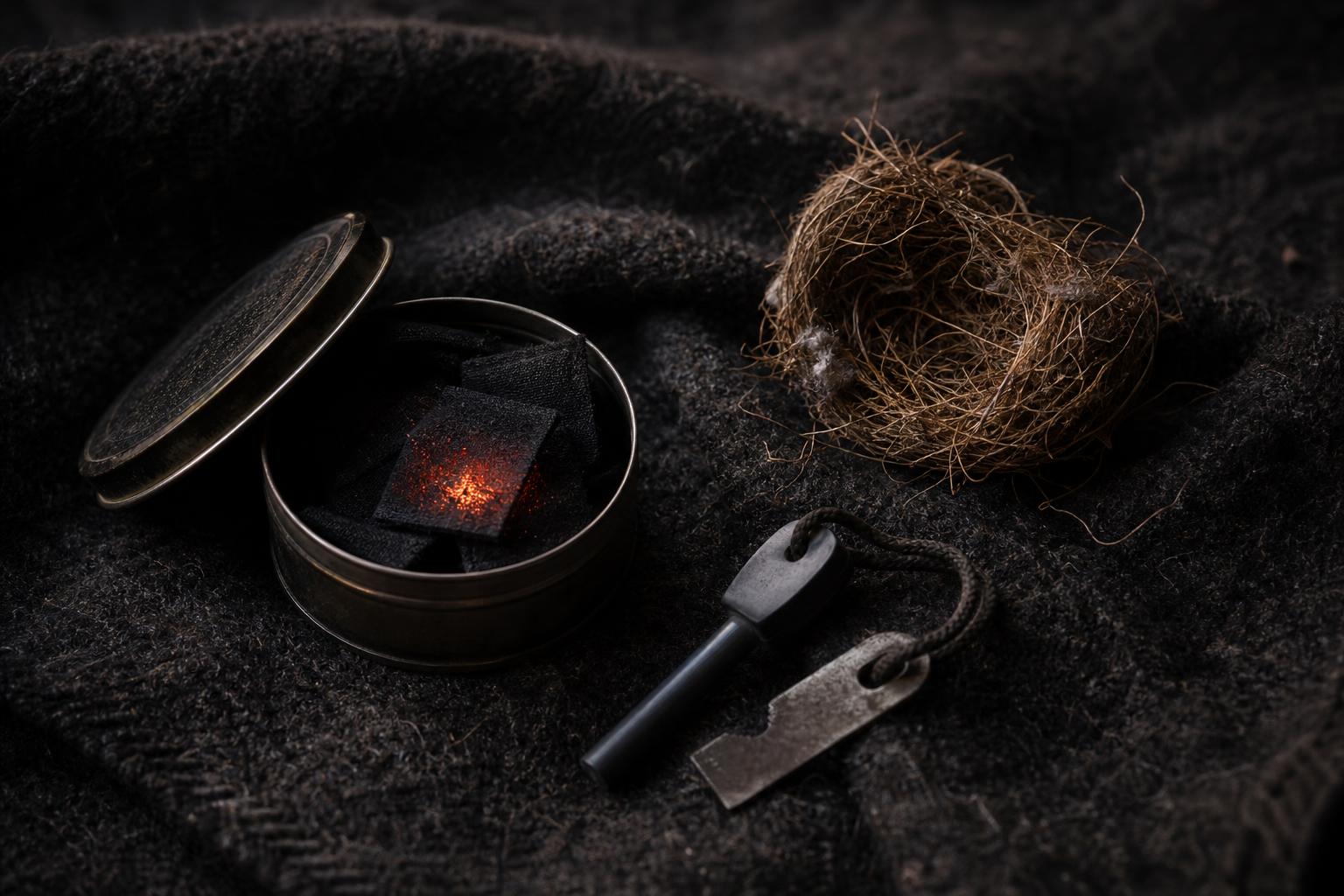
Char cloth is usually cotton fabric heated in a low-oxygen container until it blackens without burning to ash. Kept dry, it catches a small steel spark and holds an ember. That ember then has to be transferred into a dry, airy tinder bundle. The bundle has to be fine enough to catch, but not packed so tight that it smothers. This is not complicated in calm weather on a porch. In sleet, with numb fingers, it becomes a test.
The flint and steel crowd tends to skip the consumables. They show the striker and rock, then pretend the kit is complete. It isn’t. A real flint and steel kit includes:
- Sharp flint or similar hard stone: dull edges waste effort and produce poor sparks.
- High-carbon steel striker: stainless pocket tools are not the same thing.
- Dry char cloth: packed in a tin or waterproof container.
- Prepared tinder nest: bark fibers, dry grass, or other fine material ready to take an ember.
- A way to protect the ember from wind and rain: your body, a hat, a bark sheet, or a fire lay with cover.
Forget any of those pieces and the system collapses. A ferro rod also needs tinder, no argument there. The difference is that a ferro rod does not usually require a separate ember-catching material before the tinder can ignite.
Which fire starter works better in rain?
A ferro rod works better in rain because the rod itself is not ruined by water and it can throw hot sparks after being wiped or scraped. Flint and steel hardware can also survive water, but wet char cloth is dead weight until dried.
This is where the phrase waterproof fire starter gets abused. A waterproof fire starter does not make wet tinder burn. It only means the ignition tool can survive water. Fire still demands dry fuel at the ignition point. If your tinder is wet, both systems punish you. The ferro rod simply gives you more heat to work with once you find or make dry tinder.
In the field, the rain problem is usually not the rod. It is the tinder. Split dead standing wood and look inside. Shave curls from the dry interior. Scrape feather-fine dust from the heart of the stick. Keep your body between the tinder and the rain. If the shavings clump, bend, and feel cold, keep processing. Fire starting is often carpentry before it is ignition.
With flint and steel, your char cloth has to stay dry in a tin, vial, or sealed pouch. A single wet corner can ruin your immediate fire plan. You can dry it later if conditions allow, but survival kits are built for the moment when later is not guaranteed.
The right answer is not to worship one tool. The right answer is to package fire as a protected system. Ignition source, tinder, kindling, and a dry container. The same thinking applies across survival gear. Water tools are no different, and a fire kit pairs naturally with a DIY water filtration system for survival because heat, hydration, and sanitation all start failing together when weather turns ugly.
What tinder should you carry with each fire starter?
Carry dry, fast-catching tinder with a ferro rod and carry char cloth plus a separate tinder nest with flint and steel. The ferro rod can start at spark-to-flame, while flint and steel usually starts at spark-to-ember.
For a ferro rod, I want tinder that accepts a direct spark and burns long enough to light pencil-lead and pencil-sized kindling. Cotton balls with petroleum jelly, commercial tinder tabs, fatwood shavings, dry bark fiber, and fine feather sticks all work when protected from moisture. Natural tinder is better after you rough it up. Smooth bark is lazy tinder. Fuzzy bark is useful tinder. Dust, curls, and fibers beat chunks.
For flint and steel, char cloth is the first catch. After that, the tinder nest does the heavy lifting. A good nest has three zones: a fine inner core for the ember, a slightly coarser middle, and a loose outer shell that allows oxygen to move. If you pack it like a baseball, you’ll smother it. If you leave it too loose, the ember won’t transfer enough heat.
Carry both tinder types if you insist on carrying both tools. Do not assume one damp wad of grass solves the problem. Your kit should have at least one sealed tinder reserve that you do not touch for practice. Training tinder and survival tinder should not be the same last piece.
How much kit weight are you really carrying?
A ferro rod is usually the lighter practical system because the rod, striker, and dry tinder are enough for reliable use. Flint and steel looks compact until you count the char cloth tin, waterproof storage, and tinder bundle it depends on.
This is another place the internet cheats. It weighs the striker and rock against the ferro rod and calls it a fair comparison. It is not fair. A fire starter should be weighed as a working fire kit, not as a display item.
A realistic ferro rod kit contains:
- Ferro rod
- Dedicated striker or a knife spine that actually throws sparks
- Sealed tinder
- Small backup tinder or accelerant tab
A realistic flint and steel kit contains:
- Steel striker
- Flint or similar sharp stone
- Char cloth
- Char tin or waterproof container
- Dry tinder nest material
- Often, extra char because it gets consumed
The flint and steel kit is not automatically heavy. It can be compact. The point is that it is not just two objects clicking together. Once you count the consumables, the ferro rod wins for most emergency kits because it gives more ignition power per ounce and less dependency on perfect prep.
Where does flint and steel still earn a place?
Flint and steel earns a place as a traditional backup, a long-term skill tool, and a low-tech method for people who already carry char cloth correctly. It should not be your only fire starter unless you have practiced it in bad weather.
I like flint and steel for teaching because it exposes sloppy tinder work. If your nest is wrong, it fails immediately. If your char cloth is damp, it fails. If you blow like you are inflating a tire instead of feeding an ember, it fails. That feedback is useful.
It also has long-term value. A steel striker and hard stone are durable. Char can be made from suitable cloth if you have a container and a controlled fire. That matters in extended living situations where consumable modern gear eventually runs down. Still, you have to get to that point first. In the first cold rain of an emergency, I want the ferro rod.
There is also a discipline advantage. People who practice flint and steel tend to become better at scouting dry material, making tinder nests, and protecting ignition from wind. Those skills transfer back to ferro rods, lighters, and matches. The tool is slower, but the training is honest.
What should the survival kit verdict be?
Carry a ferro rod as the primary non-fuel fire starter and flint and steel only as a practiced backup with dry char cloth. A lighter may still be your fastest first option, but between these two spark tools, the ferro rod is the one to trust first.
My baseline fire kit is not romantic:
- Primary flame: a reliable lighter stored dry.
- Primary spark: a ferro rod with a striker that actually bites.
- Prepared tinder: sealed, redundant, and separate from practice tinder.
- Optional traditional backup: flint and steel packed with char cloth, not loose in a pouch as a costume piece.
Notice what is missing. No faith. No vague claim that one tool works in all conditions. No pretending that sparks equal fire. Fire is a sequence: ignition, tinder, kindling, fuel, protection, and control. Break the sequence anywhere and you get smoke, frustration, or nothing.
Also, don’t be the person who gets the fire started and then mishandles it. Build fires where legal, keep them controlled, and drown or stir until they are out cold. The National Park Service campfire guidance is worth reading because bad fire discipline turns survival practice into a wildfire problem fast.
FAQ
Can flint and steel light tinder without char cloth?
It can happen with the right charred natural material or extremely receptive tinder, but char cloth is the reliable standard. If your survival plan depends on bare sparks landing in random dry grass, your plan is weak.
Is a ferro rod a waterproof fire starter?
The ferro rod itself can function after getting wet once wiped or scraped, which makes it a strong waterproof fire starter component. Your tinder still has to be dry enough to take a spark.
Should I carry both a ferro rod and flint and steel?
Carry both only if you have room and you practice both. A ferro rod plus sealed tinder belongs in the core kit. Flint and steel belongs in the backup or skills kit with char cloth packed beside it.
Carry the fire starter that forgives real weather
The ferro rod vs flint and steel answer is not close for a primary survival kit. The ferro rod gives hotter sparks, simpler tinder requirements, better rain tolerance, and a cleaner weight-to-usefulness ratio. Flint and steel is a real skill and a respectable backup, but only when treated as a complete char cloth system.
Pack gear that works when you are cold, wet, and annoyed. Practice until you can make flame without posing for it. For more practical kit-building and field survival skills, download the free PDFs in the free survival guide PDFs.
If the ferro rod's the pick, carry a real one
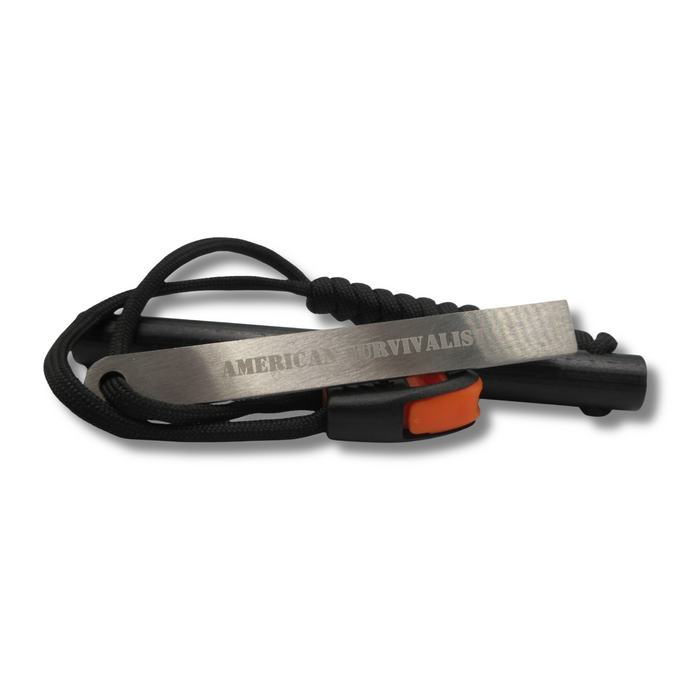
The verdict here is the ferro rod, and a comparison is only worth as much as the rod you actually pack. Our Large Ferro Rod is the half-inch, five-inch version of everything that makes ferro win this matchup: hotter ignition, no char cloth to keep dry, and it shrugs off water. It comes with a hardened striker that bites, a paracord lanyard, and a whistle on the kit, rated past 15,000 strikes. Carry the fire starter that forgives real weather.