Fire Starter Guide for Wet, Windy, and Cold Survival

Most fire starter advice is written by people who tested gear once on a dry picnic table. That’s why so many kits fail the first time the wood is damp, the wind is pushing sparks sideways, and your fingers feel like wooden sticks. A survival fire starter is not a gadget. It’s a system: ignition, tinder, flame extender, fuel prep, shelter from wind, and enough hand-friendly redundancy to work when conditions are ugly.
The single-tool fantasy needs to die. A ferro rod alone is not a fire kit. A lighter alone is not a fire kit. A bag of fatwood without a striker is not a fire kit. If you can’t make flame from wet-country materials while wearing gloves or shaking from cold, your setup is a camp accessory, not survival gear.
What is the best fire starter for survival?
The best survival fire starter is a full-size ferro rod paired with waterproof tinder, backed up by a lighter and a second ignition source. That combination gives you speed, durability, and enough redundancy to survive rain, wind, and cold hands.
A ferro rod earns its place because ferrocerium throws extremely hot sparks, commonly listed at 5,400°F or more, and many full-size rods are rated for 15,000 or more strikes. That doesn’t mean sparks magically light sticks. They don’t. It means you have a durable ignition source that keeps working after a disposable lighter wheel gets wet or your matches are gone.
The lighter still rides in the kit because flame beats sparks for speed. Anyone who says they’d rather use a ferro rod than a working lighter in bad weather is performing for the internet. The ferro rod is the long-life tool. The lighter is the fast tool. Waterproof tinder is the bridge between both of them and the wet fuel you actually have.
Why do most fire starter kits fail in rain?
Most kits fail in rain because they confuse ignition with fire. A spark is not a flame, a flame is not a coal bed, and a coal bed is not a sustainable fire unless your next fuel is already prepared.
Wet-weather fire fails in the middle stage. People get a match lit, touch it to damp bark, and call the tool junk when the flame dies. The tool did its job. The kit was missing prepared tinder and dry inner wood.
A serious fire starter system has four stages ready before the first spark:
- Ignition: lighter, ferro rod, storm matches, or magnesium fire starter.
- Tinder: material that catches a spark or small flame immediately.
- Flame extender: fatwood, waxed cotton, petroleum-jelly cotton, or commercial waterproof tabs that burn long enough to dry the next layer.
- Fuel ladder: feather sticks, pencil-lead twigs, pencil-thick sticks, thumb-thick sticks, then larger fuel.
That fuel ladder is where amateurs get exposed. They try to jump from cotton ball to wrist-thick wood. That almost never works in rain. Survival fire is won by boring prep before ignition.
Use the back-of-hand test on natural tinder and kindling. If it feels cool against the back of your hand, it’s still too damp on the surface. Split it, shave it, or replace it. Dry wood can hide inside wet wood, but you have to open it up.
The ignition layer: carry three tools, not one
A real survival kit carries three ignition options because every tool has a failure mode. That’s not paranoia. It’s field math.
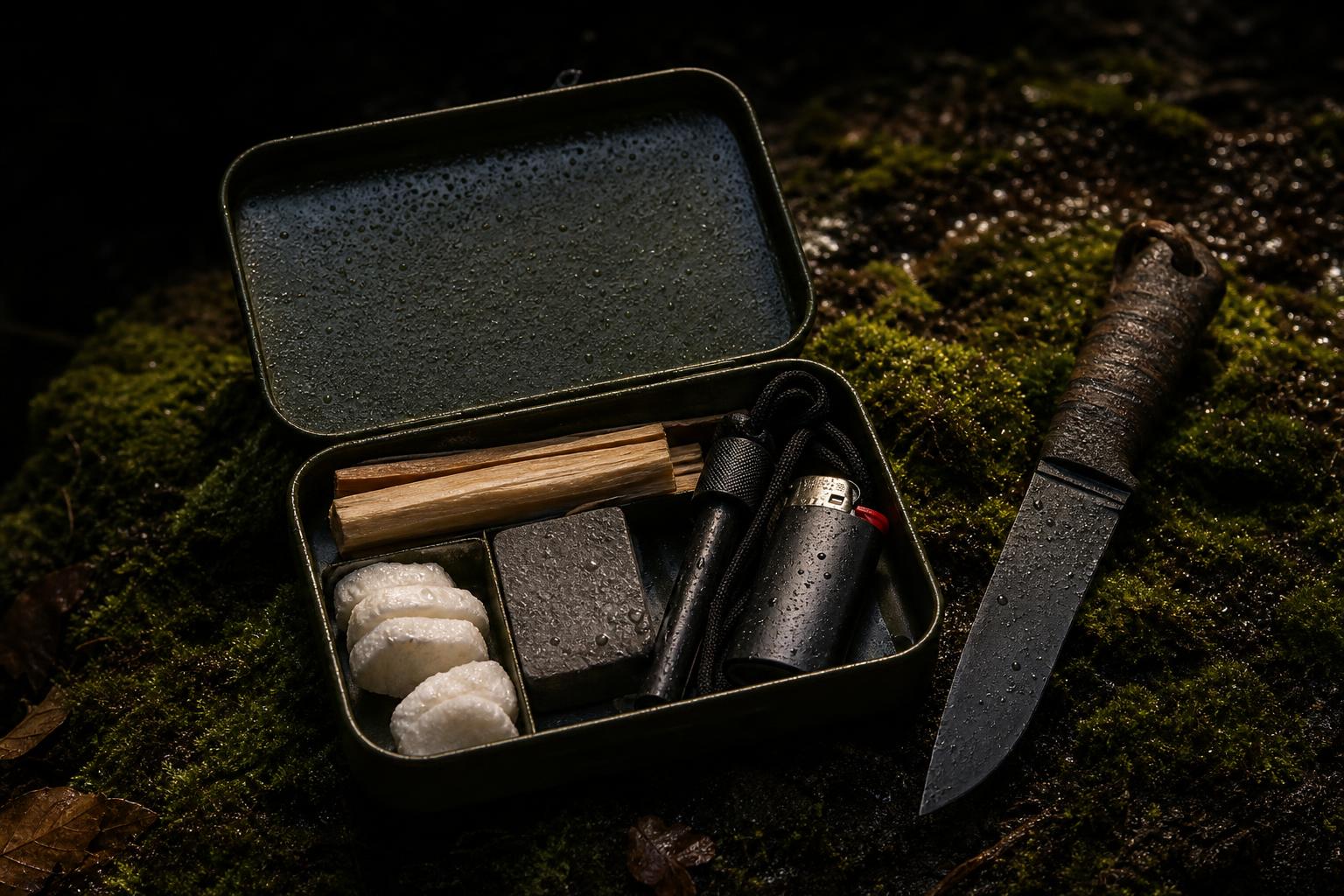
Disposable lighter: fastest flame when it works. Carry two, keep one in a pocket where body heat helps, and don’t bury both in the same wet pouch. A lighter is easy to use one-handed and easy to use when you’re tired.
Ferro rod: the durable backbone. It throws sparks when scraped hard with a sharp spine or striker. A larger rod is easier to control with gloves than a tiny keychain rod. Tiny rods are for zipper pulls, not hard use.
Storm matches or sealed matches: useful as a third layer. They give flame without needing a lighter wheel, but they’re finite and should be protected from crushing and moisture.
Magnifying lenses and bow drills belong in skills practice, not as primary emergency tools. Sunlight is not a plan in freezing rain. Friction fire is a valuable discipline, but betting your body temperature on it while carrying no modern ignition is dumb.
Is a ferro rod better than a lighter?
No. A ferro rod is more durable over time, while a lighter is faster when it works. The correct answer is to carry both and stop treating survival gear like a debate club.
The most reliable ferro rod technique is to keep the scraper still and pull the rod backward. Pushing the scraper forward is how people blast their tinder pile across the ground. Pin the striker near the tinder, angle the rod, and pull the rod back with pressure. Sparks land where you aimed them.
Use a sharp 90-degree spine, not the cutting edge of your knife unless you enjoy ruining your edge for no reason. A dedicated striker is fine if it bites well. A smooth, rounded piece of metal is just dead weight.
Ferro rods do best with tinder that accepts sparks: cotton with petroleum jelly, scraped fatwood dust, fine jute fibers, commercial tabs, charred material, or very fine dry inner bark. They do poorly when asked to light whole twigs. Sparks are ignition. They are not patience, preparation, or magic.
Does a magnesium fire starter work in wet weather?
Yes, a magnesium fire starter works in wet weather if you shave enough magnesium and keep the pile from blowing away. Most people fail with magnesium because they scrape a dusting, not a fuel pile.
A magnesium block is not used by casually scratching it three times. Cut curls or shavings into a compact pile about the size of a quarter. Do it on bark, foil, a flat chip of wood, or the inside of a split log so the shavings don’t vanish into wet leaves. Shield the pile with your body. Then strike ferro sparks directly into it.
Magnesium is useful because it gives a hot, aggressive burn that can help bridge into damp tinder and fine kindling. It is also slow to prepare with cold hands. That’s the trade. I like magnesium as a backup layer, not the first tool I reach for when a lighter and waxed tinder can do the job faster.
Why fatwood belongs in every wet-weather kit
Fatwood is one of the few natural tinder materials worth packing on purpose. It’s resin-rich pine heartwood, and that resin gives it staying power in damp conditions. Shaved fine, it catches from a flame easily and can catch from ferro sparks if the scrapings are thin enough.
The mistake is carrying fatwood as a stick and expecting the stick to light. That’s not how it works. Make dust, curls, and feathered slivers. A thumbnail-sized pile of fatwood scrapings under a few fine curls is far better than one proud chunk held over a lighter.
Carry short sticks in a small waterproof bag. Scrape the outside if it’s slick with water. Split it if needed. The exposed interior is what you want. Fatwood also gives you smell and feel feedback. Good fatwood smells sharp and piney, cuts waxy, and makes curls that hold together.
Waterproof tinder is the part cheap kits leave out
Waterproof tinder is what turns an ignition tool into a survival fire starter. Without it, you’re gambling that the woods will hand you perfect dry material at the exact moment weather turns against you.
Good waterproof tinder has three jobs. It must light from your available ignition source, burn long enough to dry pencil-thin kindling, and stay usable after living in a pack for months. That rules out a lot of junk.
- Commercial waterproof tabs: compact, clean, and consistent. Test one before trusting the rest.
- Cotton balls with petroleum jelly: cheap and effective if packed in a sealed container.
- Waxed cotton pads: slower to catch than loose cotton, but they burn longer once opened up.
- Jute twine with wax: strong dual-use cordage and tinder if you fray it thoroughly.
- Fatwood scrapings: excellent as a flame extender, especially with a lighter or strong ferro shower.
Dryer lint gets recommended by people who don’t test gear enough. Some lint works. Some lint is synthetic-heavy trash that melts, stinks, or refuses to behave. It also absorbs moisture easily. If you use it, mix it with petroleum jelly and test the actual batch. Better yet, use cotton.
The only DIY fire starter worth making for a survival kit
The best diy fire starter for a survival kit is cotton packed with petroleum jelly and sealed against water. It’s cheap, lights well, burns longer than dry cotton, and can be made in bulk without pretending you’re running a craft channel.
Make it simple:
- Use real cotton balls or cotton makeup pads.
- Work petroleum jelly into the fibers, but leave some dry fibers exposed for spark capture.
- Pack each piece in foil, a small zip bag, a straw segment heat-sealed at both ends, or a tiny screw-top container.
- Open and fluff the fibers before lighting. Compressed cotton catches poorly.
Waxed pads are the cleaner option for long storage. Dip cotton pads in melted wax, let them cool, then cut or tear one open before use so the fibers are exposed. A sealed wax puck won’t take sparks well until you rough it up.
Do not build your fire plan around gasoline, white gas, or other liquid accelerants. They create flash risk, waste critical fuel, and teach bad habits. A survival fire starter should be controllable with shaking hands, not a fireball trick.
How do you build a fire in wind without wasting tinder?
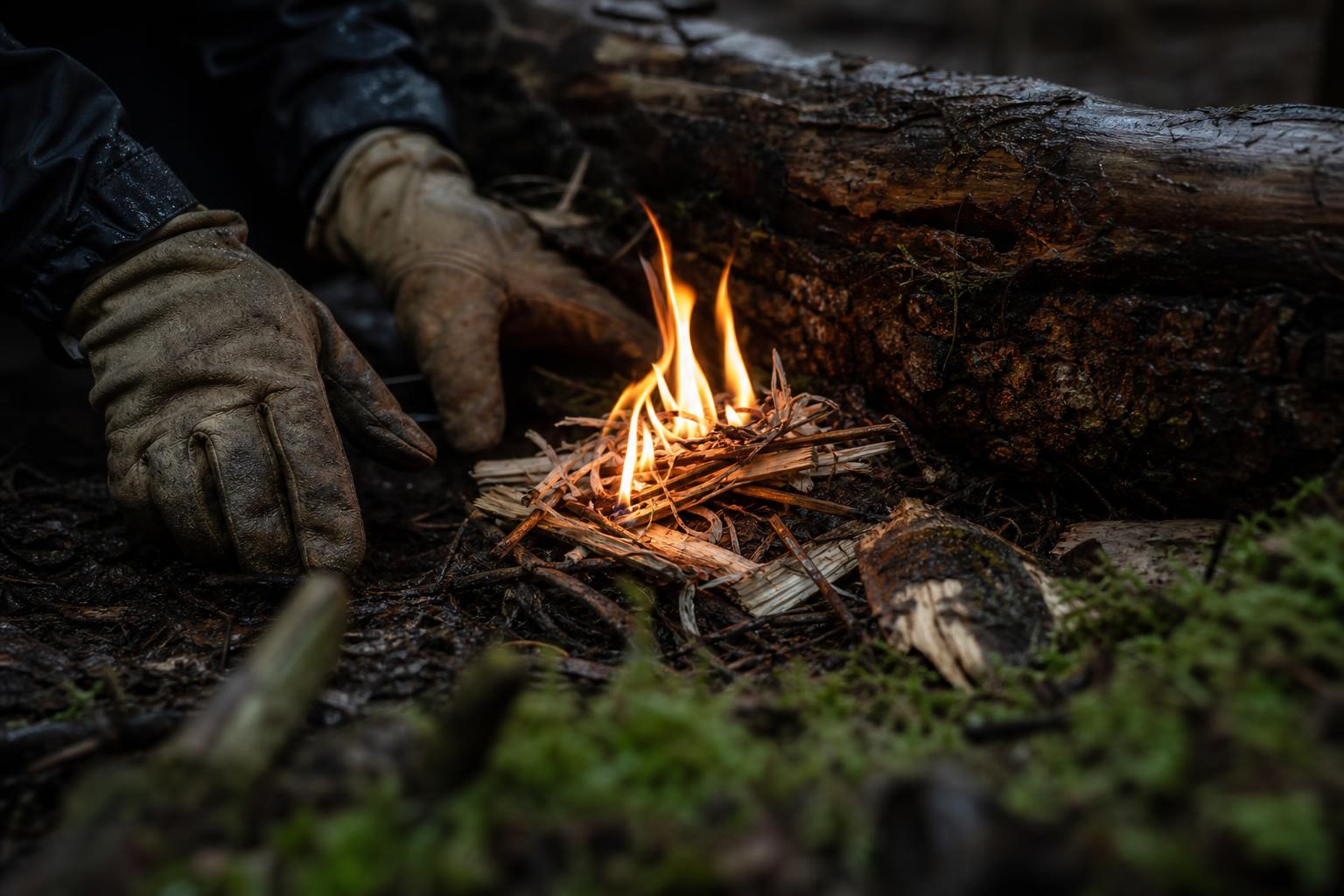
Build low, tight, and shielded, with prepared fuel close enough to feed without reaching through flame. Wind rewards compact fire lays and punishes tall, airy piles.
Use a natural windbreak if it’s safe, such as a log, bank, or depression. Don’t build under low branches, against rotten roots, or where sparks can run through dry grass. Clear the base down to mineral soil when you can. In wet snow or soaked ground, build on a raft of green sticks or split wet logs so your tinder doesn’t drink water from below.
Put your finest tinder in a protected pocket, then stack feather sticks and pencil-thin kindling close over it. Not high. Close. Flame has to touch the next fuel. Leave enough air for draft, but don’t build a loose teepee that lets wind strip the heat away.
A small fire that survives is better than a big fire that collapses. Feed it in stages. Once it has thumb-thick fuel burning on its own, you can start drying larger sticks beside it. Keep the wettest wood close enough to warm, not so close it smothers the flame with steam.
Extinguishing matters too. Survival isn’t an excuse to leave a hazard behind. The Smokey Bear campfire safety guidance is blunt: drown, stir, and make sure the fire is cold before you leave it. If it’s too hot to touch, it’s too hot to leave.
What changes in cold conditions?
Cold turns simple tasks into clumsy tasks, so your fire starter must work with gloves, numb fingers, and reduced patience. Tiny gear is a liability when fine motor control starts fading.
The National Weather Service wind chill chart shows why wind and cold are a brutal pair: moving air increases heat loss from exposed skin, and dangerous combinations can produce frostbite risk fast. That’s not trivia. It changes what you carry.
Cold-weather fire kits need oversized controls. Full-size ferro rod. Full-size lighter. Tinder packets you can tear open with gloves or teeth. A striker you can grip. A knife you can access without unpacking your whole bag.
Keep one lighter inside a clothing pocket. Keep tinder in two places. Store the ferro rod where you can reach it without dumping the pack. If your hands are already shaking, the kit buried under spare socks may as well be in another county.
Cold also makes fuel prep more important. Frozen wood can be dry inside, but the outside can be icy or wet. Split it. Feather it. Make more small material than you think you need. Then make more. The first flame is fragile, and cold wood steals heat fast.
The survival fire starter kit I would actually carry
A practical kit is small enough to carry and complete enough to matter. This is the loadout I’d trust for wet, windy, and cold conditions:
- Two disposable lighters, stored separately.
- One full-size ferro rod with a striker that actually bites.
- Storm matches in a sealed case with striker material protected.
- Six to ten waterproof tinder tabs or cotton petroleum-jelly packets.
- Two short fatwood sticks for shavings and flame extension.
- One magnesium fire starter as a backup hot-burn option.
- A compact knife with a sharp spine, or a dedicated scraper.
- A small waterproof pouch, plus a second location for backup tinder.
That sounds like more than a keychain toy because it is. It still weighs little, and it solves real problems. One tool lights fast. One tool lasts. One tinder type catches sparks. One tinder type extends flame. One system survives mistakes.
Fire also doesn’t replace the rest of your survival plan. Wet-cold conditions punish dehydration and bad water choices, so your fire kit should ride beside a real water plan, not substitute for one. If that part of your kit is weak, read our DIY water filtration system for survival guide and fix it.
FAQ
What is the most reliable waterproof fire starter?
The most reliable waterproof fire starter setup is a full-size ferro rod or lighter paired with sealed waterproof tinder. The waterproof part is usually the tinder, not the ignition tool.
Can a ferro rod light wet wood?
A ferro rod can light prepared tinder that then dries and ignites fine kindling. It will not reliably light wet sticks directly, no matter what sloppy gear reviews imply.
Is fatwood better than cotton tinder?
Fatwood is better as a flame extender, while cotton with petroleum jelly is usually better at catching sparks. Carry both if rain is part of the problem.
Conclusion
A survival fire starter is a system, not a shiny rod on a lanyard. Carry fast flame, durable sparks, waterproof tinder, fatwood, and a way to process wet fuel down to dry inner wood. Practice when the weather is bad, not when the backyard is comfortable. That’s where the lies fall apart.
If you’re building a serious kit, grab the free PDFs in our free survival guide PDFs. They belong in the same binder as your fire plan, water plan, and cold-weather loadout.
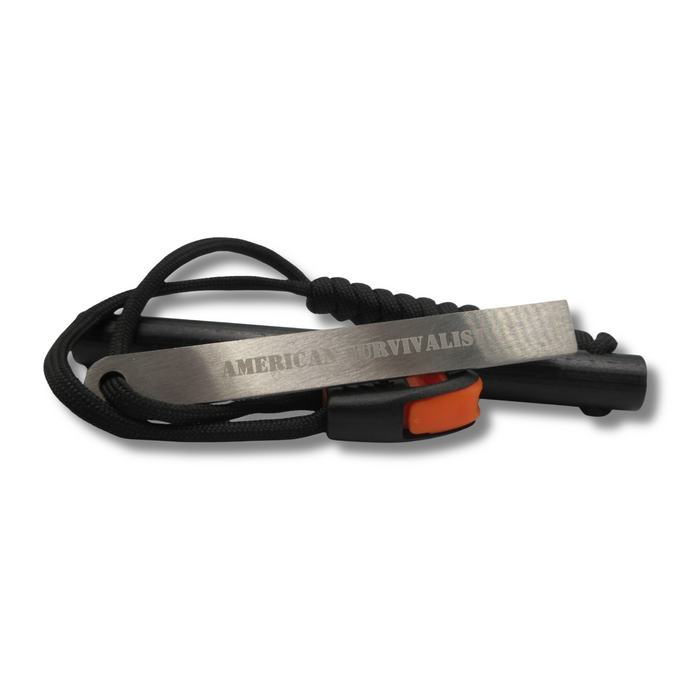
The full-size rod this kit is built around
This whole guide keeps pointing at one thing: a full-size ferro rod you can actually work with cold, gloved hands. Ours is built for exactly that, a half-inch bar with five inches of ferrocerium that throws a heavy shower of sparks soaking wet or bone dry, plus a hardened striker with a squared edge, a paracord lanyard, and a whistle on the kit. It's rated past 15,000 strikes, so it's still throwing sparks long after the keychain toys have quit. Build your kit around the Large Ferro Rod and striker, and download our free survival guides to keep the fire, water, and cold-weather plan in one binder.