Magnesium Fire Starter: Pros, Cons, and When to Carry One

A magnesium fire starter has saved plenty of cold hands and embarrassed plenty of gear reviewers. The difference is not luck. It is technique. Most people scrape a few sad curls onto wet bark, shower sparks at them for ten seconds, then declare the block useless. That is not testing. That is skipping the fire.
The magnesium block is a backup fire-making tool, not the easiest primary ignition source. Most versions combine a magnesium block with a ferrocerium rod. The magnesium is the fast-burning fuel. The ferro rod supplies the spark. That simple division matters, because once you understand it, the nonsense around this tool gets easier to spot.
If you want a tool that turns soaked sticks into flame with no prep, stop reading and buy a road flare. If you want a compact, durable backup that can help you build fire in cold or damp conditions after you do the work, a magnesium block earns a place in the kit.
A magnesium fire starter is backup ignition, not a magic wand
A magnesium fire starter works best as a backup fire-making tool paired with prepared tinder. It is not the easiest primary tool, and it will not make up for lazy fire lay prep.
This is the first thing cheap reviews get wrong. They treat every fire starter like it should perform the same trick. A lighter gives you flame. Matches give you flame. A ferro rod gives you sparks. A magnesium block gives you fuel shavings that can catch those sparks and burn fast.
Those are different jobs.
The magnesium block helps bridge the gap between spark and tinder. That is useful when your tinder is marginal, the air is cold, or the ground is damp. It is not useful if you aim sparks at thumb-thick sticks and expect them to ignite. Sparks do not light sticks. Sparks light fine, dry material. Magnesium shavings burn hot and fast, but they still need to be fine, dry, and concentrated in the right place.
Carry one with that expectation and it is a solid tool. Carry one because a reviewer called it a waterproof fire starter and you think that means no tinder prep, and you are carrying a metal rectangle of disappointment.
What does the magnesium actually do?
The magnesium is the first fuel, not the ignition source. The ferro rod makes sparks, and the scraped magnesium shavings catch those sparks and flare hot enough to help ignite prepared tinder.
Most common magnesium starters are a block of magnesium with a ferrocerium rod attached to one side. The ferrocerium rod is the part people usually call the ferro rod. Scrape it hard with a sharp spine or striker and it throws sparks. Generic ferro rods are often advertised with 5,400F-plus sparks and 15,000-plus strikes, depending on size and composition. Those numbers are useful, but they do not change the physics in your hands. Sparks are brief. Fuel has to be ready.
The magnesium side exists because sparks alone are not always enough. Fine magnesium shavings are fast-burning fuel. When a spark catches them, they flash hard and give you a short, aggressive burst of heat. That burst is the chance your tinder bundle needs.
Not your kindling. Not your split wood. Tinder.
If the tinder is not properly prepared, the magnesium flares and dies while you stare at smoke. That is the classic failure. The tool did its job. The fire lay did not.
The tinder decides whether the tool works
Fine, dry tinder is the real fire starter. Magnesium shavings improve your odds, but they cannot replace the material that has to take the flame next.
Bad instruction usually starts at the wrong place. It talks about the block, the scraper, the spark angle, the brand name, and the survival fantasy. Then it gives tinder half a sentence. That is backwards. Tinder is the system. The magnesium is an accelerant inside that system.
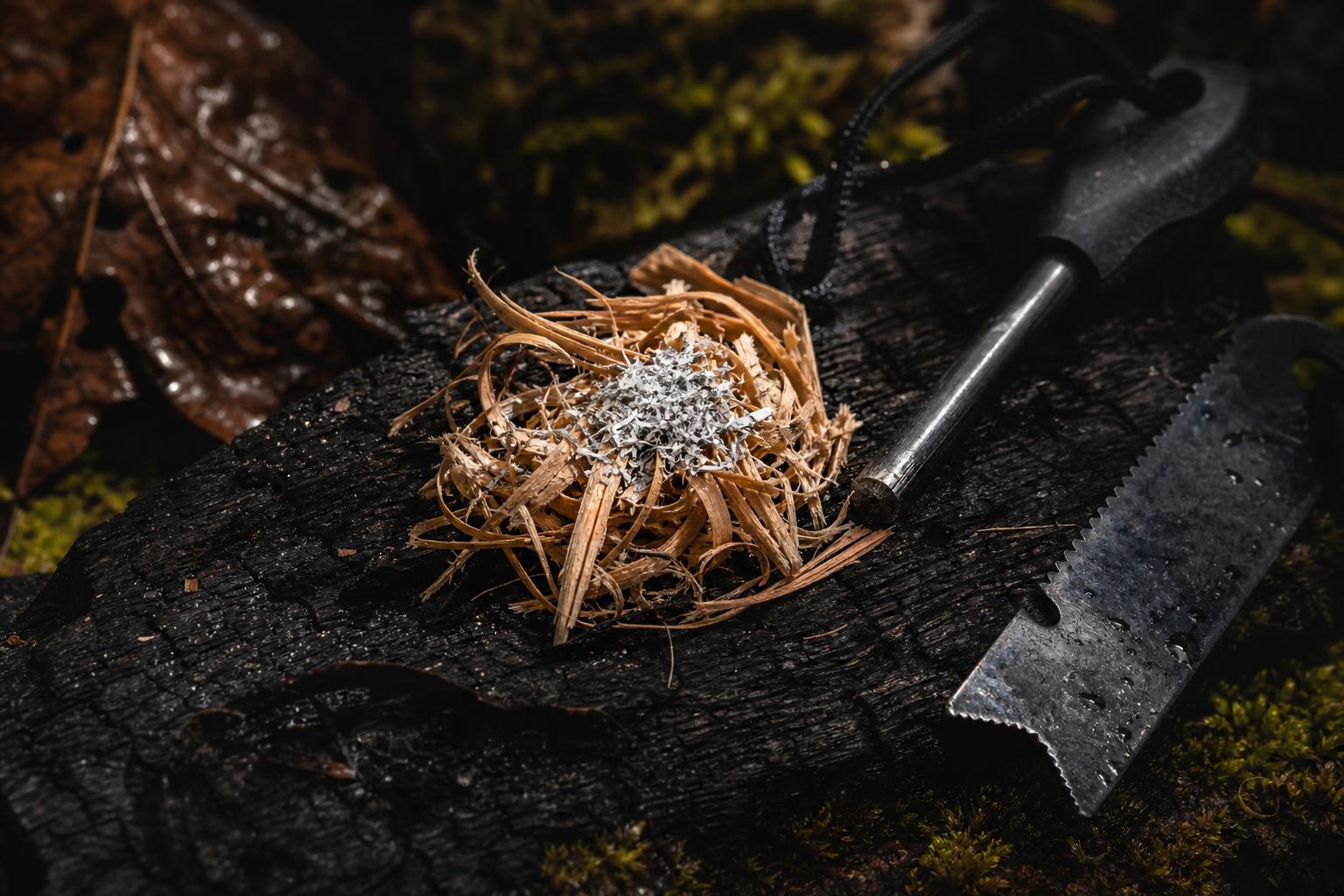
Your tinder needs surface area. It needs to be dry enough to accept heat quickly. It needs to be arranged so the magnesium flare is trapped inside it instead of sitting exposed in the wind. A loose bird nest of dry fibers works better than a flat pile sitting on bark. Shavings belong in a pocket or depression inside the tinder bundle, not scattered across the ground like glitter.
In the field, this is where people get sloppy because scraping magnesium is annoying. They make too little. They make it too coarse. They scrape it onto a damp log. Then one gust of wind takes half of it. You want a concentrated pile of bright, fine shavings. Not chunks. Not dust blown across a stump. A pile.
If your tinder feels cool against the back of your hand, it is still holding moisture. Cold, damp tinder will steal heat from that magnesium flare. That does not mean the tool failed. It means you asked a spark and a few shavings to do the work of preparation.
How do you use a magnesium fire starter in damp weather?
Scrape dry, fine magnesium shavings into protected tinder, keep the pile out of wind and surface moisture, then strike the ferro rod into the shavings. Damp weather makes preparation more critical, not optional.
Cold or damp conditions are exactly where magnesium can help. That does not mean wet-weather fire becomes easy. It means you have a fast-burning fuel you can introduce to a tinder bundle after you have done the ugly work of finding or making dry material.
Build the fire in stages:
- Prepare the site. Get off soaked ground if you can. Use bark, split wood, flat stone, or another dry base so your tinder is not drinking moisture from below.
- Make the tinder first. Shred it fine. Open the fibers. Create a nest or pocket that can hold shavings. Do not scrape magnesium first and then wander around looking for tinder.
- Scrape enough magnesium. Use controlled strokes and collect the shavings in one tight pile. Fine shavings catch easier than thick curls.
- Place kindling before ignition. Your first seconds matter. Have pencil-lead and pencil-thick material ready before you strike.
- Strike into the pile. Keep the rod close. Drive sparks into the magnesium, not vaguely toward it.
- Add fuel gently. The flare is fast. Smothering it with damp sticks is how beginners kill a fire they nearly had.
The common mistake is reversing that order. People throw sparks, get a flare, then start searching for kindling. By then the magnesium is gone. The tool gives you a window, not a campfire.
Fire safety still applies. Public land agencies do not care that your kit is tactical if the woods are under restriction. Check burn rules and fire danger before practicing. The U.S. Forest Service fire restrictions guidance is a good place to start before a trip, and the National Park Service campfire guidance gives practical campfire standards for public land users.
The pros are real, but they are narrower than the marketing claims
A magnesium block is compact, durable, and useful when paired with a ferro rod and proper tinder. Its main advantage is giving spark-based ignition a fast-burning fuel boost.
The best reasons to carry one are practical:
- It combines fuel and spark. A basic block with an attached ferro rod gives you both the magnesium shavings and the spark source in one tool.
- It handles rough storage. Unlike a matchbook, the block is not fragile. Unlike a cheap lighter, it does not depend on a tiny fuel reservoir.
- It helps in cold or damp conditions. That is the real use case. Dry, fine shavings inside prepared tinder can make the difference when natural tinder is reluctant.
- It forces discipline. This sounds like a strange advantage, but it matters. A magnesium block punishes bad habits immediately. It teaches fire lay, tinder prep, and spark control.
- It is small enough for backup roles. A block rides well in a pouch, vehicle kit, hunting pack, or survival tin.
That last point is where I like magnesium most. It is not my first move when my hands are cold and a lighter works. It is the tool I want after the lighter is dead, the matches are gone, or the ferro rod alone is not giving wet-world tinder enough heat to cross over.
That is a backup role. Backups are allowed to require skill. They are not allowed to require fantasy.
The cons are the parts reviewers skip
A magnesium fire starter is slower and fussier than a lighter, and it performs poorly when users scrape too little magnesium or skip tinder prep. The biggest weakness is not the block, it is the work required before ignition.
There are real downsides:
- Scraping takes time. You need a usable pile, not a few flakes. Cold fingers make that slower.
- Bad scrapers waste effort. A dull, rounded striker can skate across the block and produce coarse shavings. Coarse pieces do not catch as cleanly as fine ones.
- Wind steals your work. Magnesium shavings are light. Scrape them into a protected tinder pocket or watch them disappear.
- The flare is brief. Magnesium burns fast. If the tinder and kindling are not staged, the chance is gone.
- It does not light sticks. This needs to be tattooed on half the survival internet. Sparks and magnesium shavings are for tinder, not fuel wood.
The cheap reviews love dunk tests. They dip the tool in water, shake it off, scrape a little pile, and call it waterproof. That proves less than people think. A ferro rod and magnesium block can still function after getting wet, but your fire depends on dry shavings and prepared tinder. The tool resisting water is not the same as the environment handing you dry fuel.
A waterproof fire starter claim is only useful if the user understands the next step. If the tinder is soaked, you are still working. Split wood. Find protected fibers. Use what is dry inside, not what is wet outside. The block helps after that work, not before it.
Ferro rod vs magnesium block is the wrong argument
A ferro rod creates sparks, while a magnesium block adds fast-burning fuel to help those sparks become flame. The better question is whether your kit already has reliable tinder.
People argue about the best ferro rod like it replaces the rest of the fire kit. It does not. A good ferro rod throws sparks consistently. That is valuable. It still needs something to catch.
A plain ferro rod is faster if you already carry excellent tinder. Cotton-based tinder, waxed tinder, properly processed natural fibers, or another reliable fire starter can make magnesium unnecessary for routine use. In that setup, the ferro rod is the ignition source and your packed tinder is the bridge to flame.
A magnesium block makes more sense when you want that bridge built into the tool. It is less convenient than carrying ready-made tinder, but it is durable and compact. I do not see it as either-or. A serious kit can carry a lighter, a ferro rod, dry tinder, and a magnesium block without turning into a museum display.
The hierarchy is simple. Use the fastest reliable tool first. Keep slower tools for when the easy answer is gone. Practicing how to start a fire without matches is not about pretending matches are bad. It is about competence after simple options fail.
Scraper quality matters more than most gear charts admit
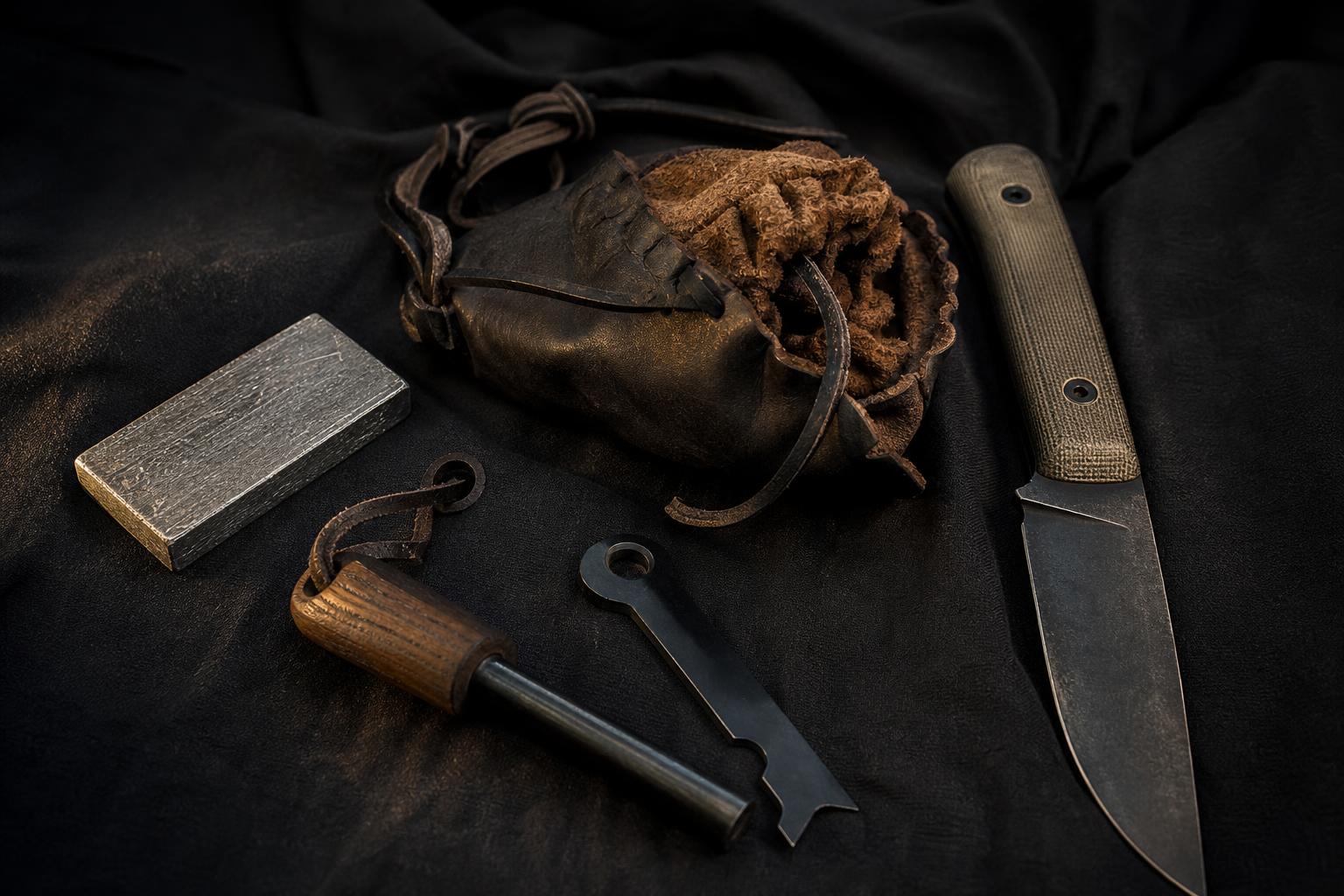
A good scraper bites the magnesium cleanly and throws sparks from the ferro rod without rounding over. If the scraper cannot make fine shavings, the block becomes harder to use than it should be.
This is the quiet failure point in budget kits. The block can be fine. The rod can be fine. The included scraper can still be garbage.
You want a sharp scraping edge, enough grip to use with cold hands, and control. A tiny stamped striker may technically work, but technical success at a kitchen table is not the same as efficiency in rain, wind, or numb weather. A square knife spine often works better than a weak included scraper, assuming your knife has the right edge geometry and you are not damaging a cutting edge to prove a point.
Scraping magnesium and striking a ferro rod are not identical motions. For magnesium, use controlled pressure and collect shavings. For sparks, use a firm scrape on the ferro rod while keeping the rod close to the target. Some people move the striker forward and knock the tinder apart. Better technique is often holding the striker steady and pulling the rod back, keeping sparks landing where the shavings sit.
That little detail prevents a lot of ruined piles. If your striker stroke blasts the tinder nest open, you just scattered the fuel you spent two minutes making.
When should you carry one?
Carry a magnesium block when you need a compact backup for cold, damp, or extended outings where lighter failure is realistic. Leave it out only if you already carry redundant ignition and reliable tinder that you actually know how to use.
I like magnesium blocks in:
- Hunting packs. Early mornings, wet brush, and cold hands make backup fire tools worth carrying.
- Vehicle kits. A block stores well and does not care much about sitting unused.
- Emergency pouches. Small tools that combine spark and fuel belong in compact kits.
- Training kits. They expose weak tinder prep fast, which is exactly why people should practice with them.
- Cold-weather backups. The ability to add fast-burning fuel to a spark matters more when everything around you is reluctant to burn.
I do not like magnesium blocks as the only fire tool for beginners. That is not gatekeeping. That is reality. A beginner should carry a lighter, storm matches or another practical ignition option, prepared dry tinder, and then learn ferro rod and magnesium work as backup skills. The woods do not award style points for doing everything the hard way first.
The same logic applies across preparedness. Redundancy beats romance. A water plan should not depend on one bottle any more than a fire plan should depend on one spark tool. If your kit still has gaps there, read our DIY water filtration system for survival guide and fix the unglamorous basics.
How to practice without lying to yourself
Practice with the same kind of tinder, weather, gloves, and knife setup you expect to use outside. A magnesium fire starter tested on dry cardboard in a garage tells you almost nothing.
Real practice is boring and strict. That is why it works.
Use this drill:
- Gather or prepare natural tinder before touching the block.
- Build a small platform to keep the tinder off damp ground.
- Scrape a pile of fine magnesium shavings into the tinder pocket.
- Stage kindling in escalating sizes before ignition.
- Strike the ferro rod until the shavings catch.
- Feed the fire without crushing airflow.
- Repeat in wind, cold, and light damp conditions after you can do it dry.
Do not count success until the tinder lights kindling. A magnesium flare by itself is not a fire. Smoke is not a fire. A flame that dies because no kindling was ready is not a fire. The whole chain has to work.
That level of honesty is rare in online fire starter tests. They show the spark. They show the flare. They cut before the actual fire lay proves itself. In the field, that edit gets people cold.
FAQ
Is a magnesium fire starter better than a lighter?
No. A lighter is easier for most immediate fire-starting tasks. A magnesium block is better treated as a durable backup that can add fast-burning fuel when sparks alone are not enough.
Can a magnesium block start a fire without matches?
Yes, if it has a ferro rod or you have another spark source, and if you scrape fine, dry magnesium shavings into properly prepared tinder. It will not ignite sticks by itself.
Is a magnesium fire starter waterproof?
The block and ferro rod can tolerate water better than many disposable ignition tools, but dry shavings and dry-enough tinder still matter. Waterproof gear does not make wet tinder ready to burn.
The block is fine. The lazy method is the problem.
A magnesium fire starter is useful when you treat it like what it is: a backup tool that combines fast-burning magnesium fuel with ferro rod sparks. It shines in cold or damp conditions only after you scrape fine, dry shavings into real tinder and stage the fire properly.
The bad reputation comes from bad expectations. Sparks do not ignite sticks. Magnesium does not excuse wet tinder. A cheap striker can make the job harder than it needs to be. None of that makes the tool useless. It means the user has to build the fire instead of waving gear at it.
If you are building a serious kit, build the whole system: water, food, shelter, fire, and practice. Start with the American Survivalist free survival guide PDFs and get the fundamentals squared away before the next cold rain teaches the lesson for you.
Skip the shavings, keep the sparks
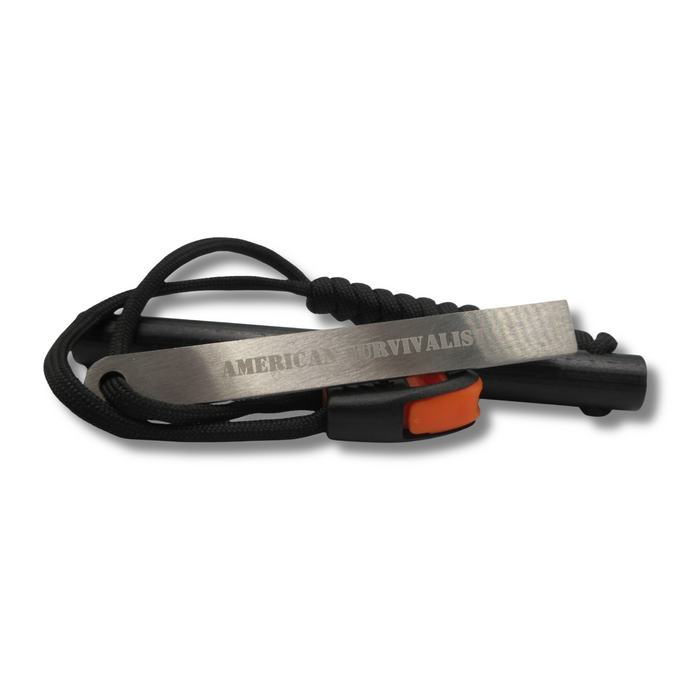
The magnesium block is a fine backup, and for most people a dependable standalone ferro rod plus real tinder is the faster answer. That's what we built with our Large Ferro Rod: a half-inch bar with five inches of ferrocerium that throws a heavy shower of sparks wet or dry, no scraping a pile of flakes first. It ships with a hardened steel striker that has a squared edge for clean sparks, a paracord lanyard, and a whistle, and it's rated past 15,000 strikes. Look over the Large Ferro Rod and striker kit, then grab our free survival guides and get the tinder side of your kit dialed in.