Flint and Steel: How to Start a Fire with Char Cloth and Natural Tinder

Most people who fail with flint and steel fail before the first strike. They grab a rock, scrape a striker like they’re using a ferro rod, shower nothing useful into a wad of half-damp grass, then blame the tool. That’s not traditional firecraft. That’s impatience with a historical costume.
Real flint and steel is an ember-making system. The spark is weak, brief, and precious. It needs char cloth. Then that glowing char needs a tinder bundle. Then that flame needs kindling already staged by size. Skip one of those links and you’re not practicing a primitive skill, you’re rehearsing failure.
Flint and steel is not a ferro rod
The spark in traditional flint and steel comes from the steel, not the stone. A sharp edge of flint, chert, quartz, jasper, or similar hard stone shaves tiny burning flakes off high-carbon steel, and those flakes are what become sparks.
This is the correction half the internet still gets wrong. The rock is not throwing fire. The steel is being cut. The National Park Service flint and steel guide describes the method plainly: steel is struck across flint or quartz, sending burning metal flakes into easy-burning material, most reliably char cloth.
A ferro rod is a different animal. It throws a hotter, more aggressive spray that can light better-prepared raw tinder. Traditional flint and steel doesn’t forgive sloppy tinder. It doesn’t care that you saw someone on a short video scrape sparks into bark dust. In the field, with cold fingers and real wind, you aim those sparks at char cloth or you waste time.
Use a sharp stone edge. Use a high-carbon steel striker, not stainless kitchen steel. Keep the striking angle glancing, not smashing. You’re shaving the steel, not hammering a nail.
Why is char cloth the reliable target for flint and steel?
Char cloth catches the tiny steel spark and turns it into a controlled glowing ember. Raw grass, bark, and plant fluff can work in ideal conditions, but char cloth is the dependable bridge from spark to flame.
Char cloth matters because flint-and-steel sparks are weak and short-lived. They need a tinder that accepts a pinprick of heat and holds it. Proper char cloth does exactly that. Once it catches, the ember creeps through the blackened cotton instead of vanishing instantly.
That ember is not the fire. Don’t celebrate yet. It’s the transfer stage. The glowing char goes into a prepared tinder bundle, the bundle gets closed around it, and steady breath turns that ember into flame. Then the flame must meet fine kindling immediately. This is the whole progression:
- Spark from steel
- Glowing char cloth
- Tinder bundle flame
- Hair-thin to pencil-lead shavings
- Matchstick-size twigs
- Pencil-size twigs
- Finger-size sticks
- Sticks under 1 inch around
- Larger fuelwood only after the fire is established
That ladder is not optional. Beginners love to skip from a smoking tinder bundle straight to thumb-thick wood. Then the flame dies in three seconds. Fire doesn’t reward optimism. It rewards surface area.
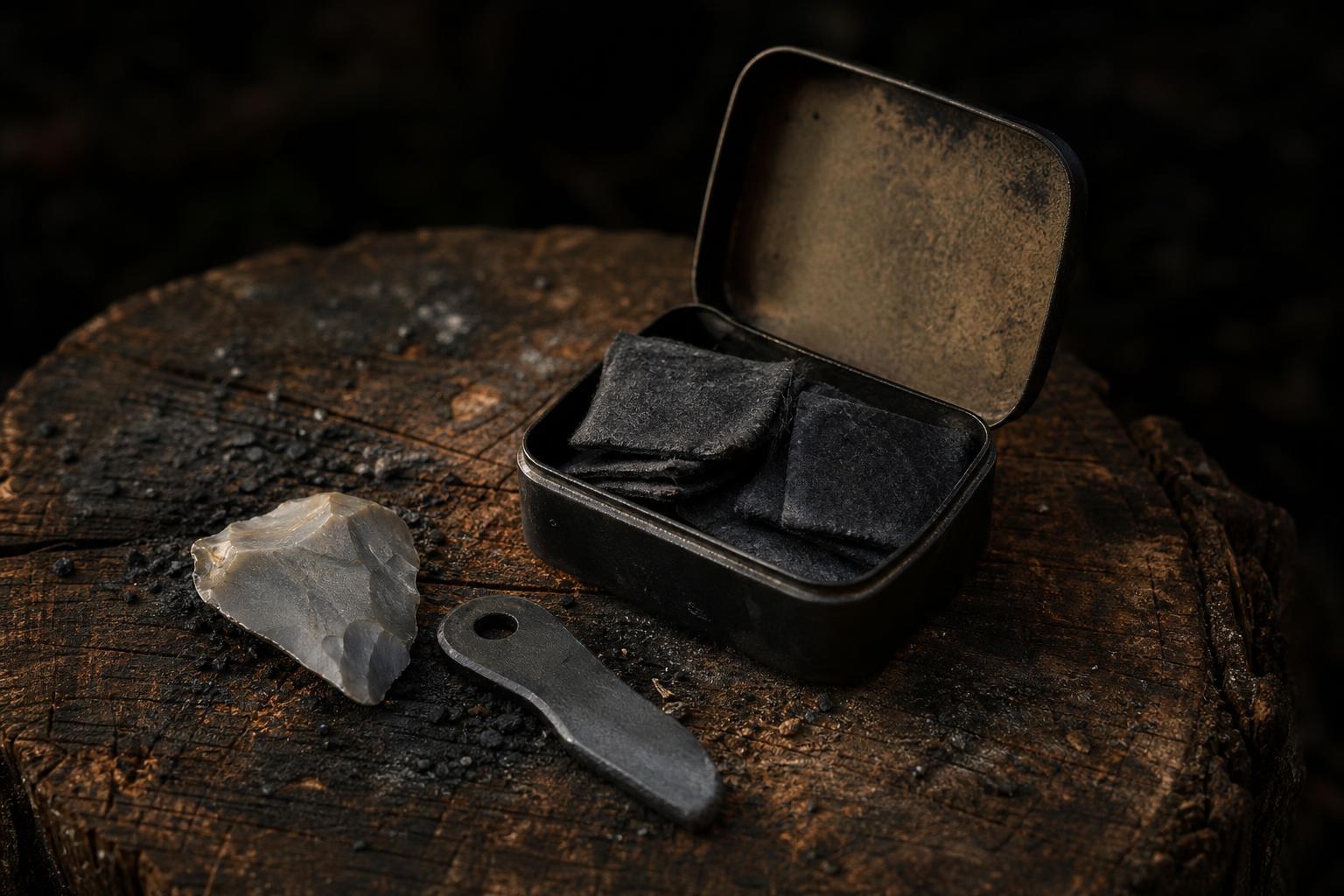
Make char cloth before you need it
Good char cloth is black, flexible, and dry. Brown or tan cloth is under-charred. Cloth that crumbles into ash was over-burned or got too much oxygen.
Use 100% cotton. Old denim, cotton bandana, canvas, or a cotton T-shirt all work. Don’t use synthetic fabric. Cut the cotton into 1 to 2 inch squares. Smaller pieces catch easily, but they also burn through faster, so don’t make them confetti-sized unless you enjoy racing your own ember.
- Cut 100% cotton cloth into rough 1 to 2 inch squares.
- Place the pieces loosely inside a small metal tin with a tight lid.
- Make one tiny vent hole in the lid.
- Set the tin on coals or a camp stove flame outdoors.
- Watch the smoke or gas vent from the hole.
- When the smoke nearly stops, remove the tin from heat.
- Let the tin cool completely before opening it.
- Check the cloth. It should be black, soft, and flexible, not shiny, brown, or dusty ash.
The cooling step is where careless people ruin a good batch. Open the tin while it’s hot and oxygen can hit the char. It can ignite right there. Let it cool completely, then store the finished cloth bone-dry in a tin or waterproof container.
The fire lay has to exist before the first spark
Strike nothing until your whole fuel ladder is ready. Flint and steel gives you a small ember, not a timeout while you wander around looking for twigs.
Build in a safe fire ring or pit. Have water, a shovel, and a bucket or large container ready before ignition. Smokey Bear’s campfire guidance lists water, a bucket or large container, a shovel, and a metal fire ring as basic campfire tools, and that’s not bureaucratic fluff. It’s the minimum kit for anyone who wants fire without losing control of it. The Smokey Bear campfire safety guide is worth following because it treats fire as a tool with consequences, not a camp aesthetic.
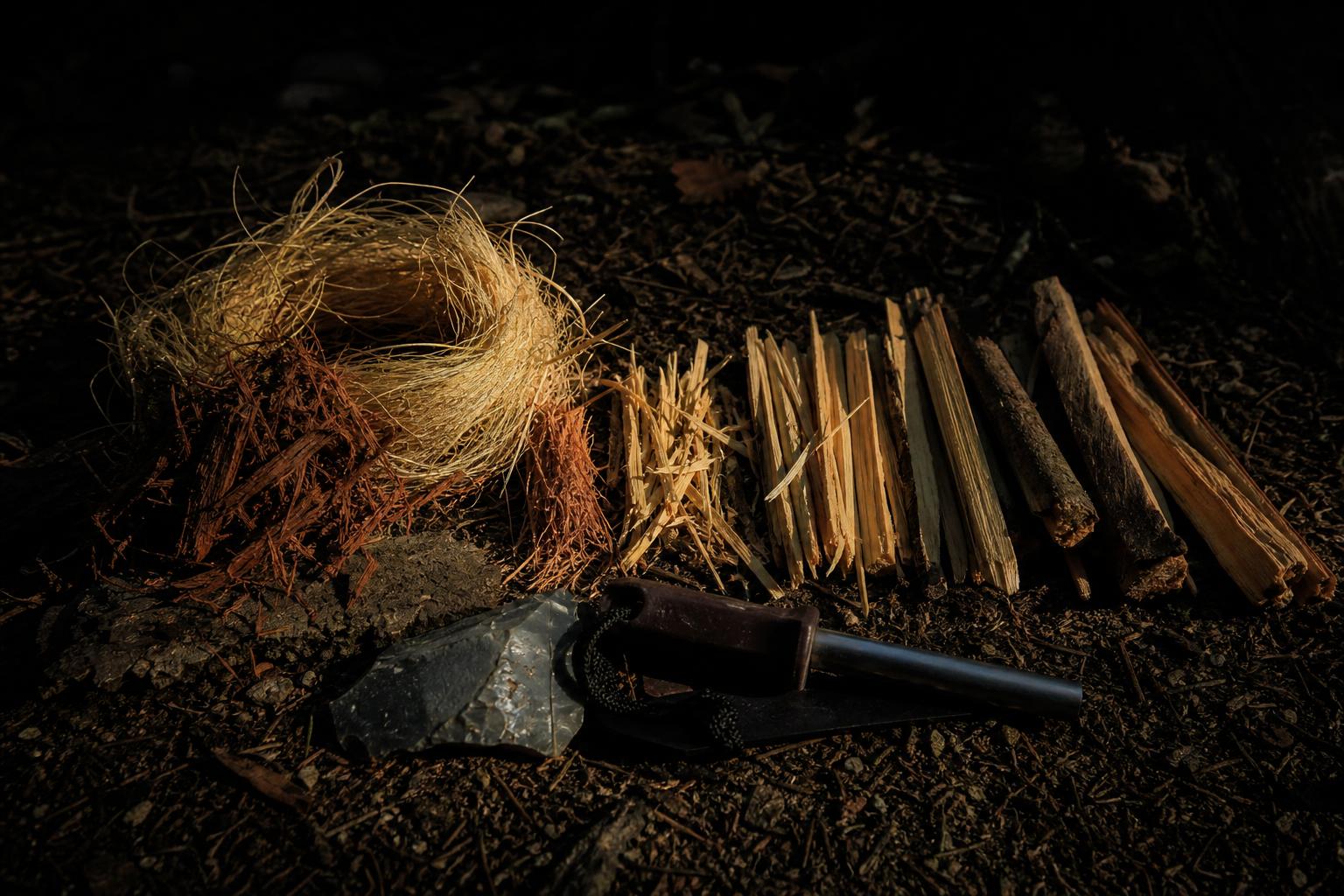
Lay out your material in grades before you strike:
- Tinder bundle: dry grass, inner bark fibers, shredded cedar bark, cattail fluff mixed with grass, dead dry plant fibers, or scraped and shredded punky wood.
- First flame material: hair-thin to pencil-lead shavings.
- Small kindling: matchstick-size twigs.
- Next grade: pencil-size twigs.
- Stronger kindling: finger-size sticks.
- Upper kindling: sticks under 1 inch around.
- Fuelwood: larger wood only after the smaller stages are burning cleanly.
Smokey Bear defines kindling as sticks smaller than 1 inch around, with larger pieces becoming logs or fuel. That measurement matters. If your first real sticks are over 1 inch, you’re trying to cook a meal over a birthday candle.
If you’re building a full camp system, fire and water belong in the same planning window. A safe fire lay needs water nearby, and a long-term camp needs a cleaner water plan, so pair this skill with a practical DIY water filtration system for survival.
How do you start a fire with flint and steel?
Catch a spark in char cloth, fold that glowing cloth into a dry tinder bundle, blow until it flames, then feed it pre-staged kindling from the smallest material upward. The method works when the fuel is prepared before ignition.
- Prepare the site. Use a safe fire ring or pit. Clear the work area. Put water, a shovel, and a bucket within reach before making flame.
- Build the tinder bundle. Form a loose nest from dry grass, inner bark fibers, shredded cedar bark, cattail fluff mixed with grass, dead dry plant fibers, or scraped punky wood. The center should be fine and airy, not packed like felt.
- Stage the kindling. Place hair-thin shavings closest to the fire lay, then matchstick twigs, pencil twigs, finger-size sticks, and sticks under 1 inch. Larger fuelwood waits.
- Set the char cloth. Put one dry 1 to 2 inch square of char cloth near the sharp edge of the flint. Many people lay the cloth on top of the stone with an edge exposed near the striking face.
- Strike correctly. Drive the steel across the sharp stone edge with a short, glancing blow. The goal is to shave tiny burning flakes from the steel and land them on the char cloth.
- Watch for the ember. A caught spark appears as a tiny orange glow. Don’t whip it around. Don’t blow hard yet. Give it a second and confirm it’s spreading in the char.
- Transfer to the bundle. Place the glowing char cloth into the center of the tinder nest. Fold the fibers around it loosely so air can still move.
- Blow with control. Use steady breath, not frantic blasting. Smoke will thicken first. Heat builds inside the bundle. When the fibers flash, lower the flaming bundle into the fire lay.
- Feed the flame immediately. Add hair-thin and pencil-lead shavings first. Then matchstick twigs. Then pencil-size twigs. Then finger-size sticks. Stay under 1 inch until the bed of flame is strong.
What actually happens in the field is simple: the tinder bundle smokes longer than beginners expect, then flames suddenly. If you panic and drop it into a pile of oversized sticks, the flame starves. If you calmly set it under prepared shavings, it climbs.
Natural tinder has to be dry, fibrous, and loose
The best natural tinder for char cloth is dry plant fiber with enough air space to breathe. A tight ball of damp grass is not tinder, it’s insulation.
Good tinder bundles use fine, dead, dry material. Dry grass works when it’s actually dry. Inner bark fibers work well when shredded fine. Cedar bark can be excellent when pulled into hairlike strands. Cattail fluff helps when mixed with grass or bark fiber so it doesn’t collapse into a smothering mat. Scraped or shredded punky wood can carry the ember into surrounding fiber when it’s dry enough.
Use your hands like a processor. Roll, shred, tease, and separate. The center should be fine enough to accept the char ember. The outside should be coarse enough to hold shape. If the tinder feels cool against the back of your hand, it’s probably still carrying moisture. If it bends like green rope instead of snapping or shredding, keep looking.
Don’t confuse fluffy with good. Pure fluff can smother itself or vanish too fast. Mixed tinder is stronger: cattail fluff with dry grass, cedar scrapings with inner bark, punky wood dust tucked inside a grass nest. The ember needs contact. The flame needs air.
Why most flint-and-steel fires fail
Most failures come from bad sequencing, damp materials, wrong steel, dull stone edges, or kindling that’s too large. The tool usually gets blamed after the preparation failed.
They strike at raw tinder
Raw grass and bark are not reliable spark targets for traditional flint and steel. Char cloth is the reliable target. The spark is too small and brief to waste on wishful thinking.
They use stainless or soft junk steel
The stone has to shave burning flakes from the steel. High-carbon steel is the proper striker material. A stainless kitchen tool is not a traditional striker just because it’s shiny and hard.
They crush the edge instead of shaving steel
A heavy straight-on impact chews up your rock and produces poor sparks. Use a sharp stone edge and a glancing strike across it. Think slicing, not pounding.
They make a tinder bundle with no air
A tight bundle smothers the ember. A loose bundle breathes. Smoke needs somewhere to move, and flame needs oxygen as soon as it flashes.
They feed flame with oversized wood
Finger-size sticks come after matchstick and pencil-size material. Sticks under 1 inch are still kindling. Larger wood waits until the fire has enough heat to accept it.
Ferro rod vs flint and steel: which one should you carry?
A ferro rod is easier for most emergency fire-starting, while traditional flint and steel is a durable skill that demands char cloth and better tinder discipline. Don’t mix the methods and expect clean results.
If your goal is maximum ease in bad weather, a modern fire starter system has advantages. If your goal is traditional technique, historical reliability, and skill under primitive constraints, flint and steel earns its place. The mistake is pretending they work the same way.
Flint and steel teaches better habits because it punishes shortcuts. You learn to dry tinder. You learn to grade kindling. You learn to build the fire before making the ember. That discipline carries over to every other ignition source you’ll ever use.
FAQ
Can flint and steel light a fire without char cloth?
It can be done with ideal natural tinder, but char cloth is the reliable method. Traditional sparks are tiny burning flakes from the steel, and char cloth catches and holds that weak spark far better than raw plant material.
What size should char cloth be?
Cut 100% cotton into roughly 1 to 2 inch squares. Smaller pieces catch easily but burn through faster, while larger pieces are easier to handle during transfer to the tinder bundle.
How small should kindling be for the first flame?
Start with hair-thin to pencil-lead shavings, then matchstick-size twigs, pencil-size twigs, finger-size sticks, and sticks under 1 inch around. Larger wood belongs on the fire only after the small stuff is burning hard.
Conclusion: the old method rewards preparation
Flint and steel is not magic, and it’s not a ferro rod with worse branding. It’s a precise ember system: sharp stone, high-carbon steel, dry char cloth, fibrous tinder bundle, and kindling staged in the right order. Do that and the method works. Skip it and you’ll make sparks, smoke, and excuses.
Build the kit before you need the fire. Carry dry char cloth. Practice the full ladder from ember to fuelwood, not just the striking motion. For more field-tested prep skills, grab the free survival guide PDFs from American Survivalist.
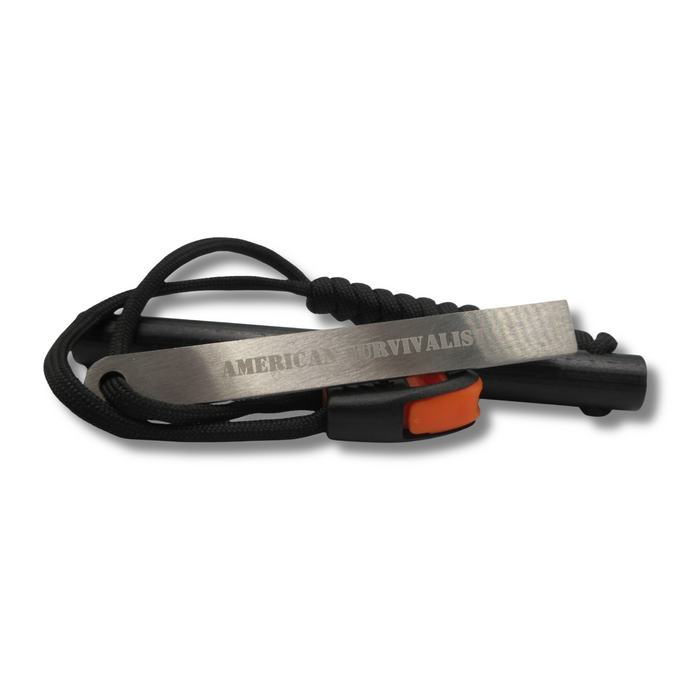
When you want the spark to do the work
Traditional flint and steel is worth learning because it forces discipline, and there are cold, wet nights when you'll still want a hotter, more forgiving spray than shaved steel gives you. That's the argument for our half-inch Large Ferro Rod, a five-inch bar of ferrocerium that rains sparks onto a tinder bundle whether it's soaking wet or bone dry and keeps striking past 15,000 times. Carry both, practice both, and you're never stuck betting the night on one method. Pick up the Large Ferro Rod and hardened striker here, and download our free survival guides while you're building out the kit.