How to Identify Poison Ivy Before It Ruins Your Hike or Campout

Most poison ivy advice is lazy enough to get you blistered. The old rhyme helps, then fails the minute the plant is a vine, a shrub, a groundcover, leafless, half-hidden in brush, or sitting beside a lookalike with the same three-leaflet trick. If you want to know how to identify poison ivy before a hike or campout, stop hunting for one magic clue. You’re reading the plant’s full pattern: region, growth form, leaflet structure, vine behavior, fruit, and exposure risk.
The field mistake I see over and over is confidence based on one glance. People see three leaves and panic, or they don’t see three perfect cartoon leaves and walk straight through it. Both are bad trailcraft. Good plant ID is slower than that. Not complicated. Slower.
Is leaves of three enough to identify poison ivy?
No. Leaves of three is a useful warning for poison ivy and poison oak, but it is not a complete identification system, and it does not apply to poison sumac the same way.
The CDC/NIOSH poisonous plants guidance backs the rhyme as a starting point for poison ivy and poison oak, then makes the critical distinction people leave out: poison sumac usually has 7 to 13 leaflets. That matters because a hiker who thinks every dangerous plant must come in threes is already set up to miss one of the three big rash-makers.
Poison ivy also changes its look by species, site, and season. A plant along a sunny trail edge will not present exactly like a shaded climbing vine on a tree trunk. Western poison ivy does not behave like eastern poison ivy. A young plant does not look like an old rope-like vine. The rhyme gets your attention. It does not clear the ground ahead of your boots.
Use it this way: three leaflets means slow down and inspect. It does not mean automatic poison ivy. It also does not mean anything with more than three leaflets is safe, especially if poison sumac is part of the landscape you’re moving through.
Start with region and growth form
Eastern and central U.S. hikers should expect poison ivy as groundcover, a small shrub, a trailing vine, or a climbing vine. Western poison ivy is typically a low shrub and does not form a climbing vine.
This is where most trail guides get sloppy. They show one tidy little three-leaflet plant and act like you’re done. In the eastern and central United States, poison ivy can crawl, stand, trail, or climb. Older climbing vines can look like hairy ropes plastered to tree trunks by aerial roots. Those hairy vines are one of the strongest field warnings you’ll get before you brush your sleeve, pack strap, or bare forearm across trouble.
Western poison ivy is a different field problem. It’s usually a low shrub. The absence of a climbing vine does not clear it. If you’re in western poison ivy country and you’re only scanning tree trunks, you’re looking in the wrong place. Get your eyes down to shrub height and trail-edge vegetation.
Size will not save you either. Federal species review data in the research record describes eastern poison ivy as a shrub, trailing vine, or high-climbing vine with aerial roots. Eastern shrub forms can stand 2 to 10 feet tall, while climbing stems can exceed 160 feet and reach up to 6 inches in diameter. Western poison ivy is typically under 3 feet but can reach 10 feet. That range is why a blanket statement like poison ivy is a little plant is garbage advice.
- Eastern and central terrain: inspect the ground, shrub layer, downed logs, tree bases, and trunks.
- Western terrain: focus hard on low shrubs and brushy edges instead of expecting climbing vines.
- Camp setup areas: check the path between tent, fire area, latrine spot, and water source, not just the tent footprint.
The leaflet pattern is the best live-leaf test
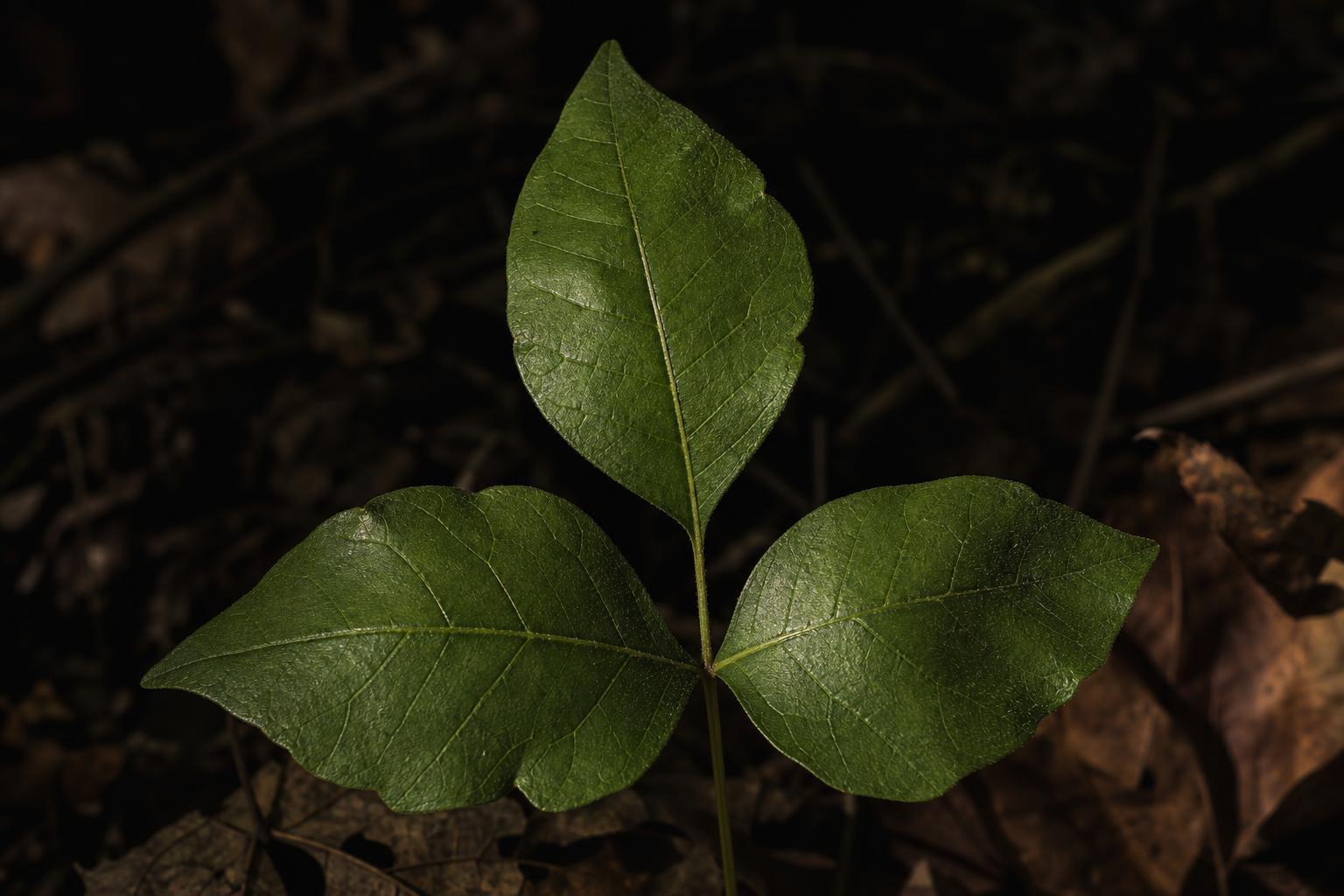
A poison ivy leaf is compound, with three leaflets. The middle leaflet has a longer stalk than the two side leaflets, and the three-leaflet clusters are arranged alternately along the main stem or vine.
That longer middle stalk is the detail beginners miss and experienced woodsmen look for first. The University of Maryland Extension poison ivy identification guide emphasizes this exact structure: three leaflets, center leaflet on a longer stalk, side leaflets on shorter stalks, and clusters alternating along the main stem rather than sitting directly opposite each other.
Read that again in field language. Don’t count three green things and call it done. Find the cluster. Confirm that it is one compound leaf made of three leaflets. Look at the center leaflet. Its little stalk should run longer than the two side leaflet stalks. Then look where that whole three-leaflet cluster attaches to the vine or stem. The next cluster should not be mirrored directly across from it like a perfect pair. Poison ivy’s clusters are alternate.
Leaflet size varies enough that there’s no single postcard version. USDA data in the brief reports eastern poison ivy leaflets at about 2 to 8 inches long and 1 to 6 inches wide. Western poison ivy leaflets run about 1 to 6 inches long and 1 to 4 inches wide. That overlap is another reason the internet’s neat little drawings fail on real trails.
In the field, I use this order:
- Find a three-leaflet cluster.
- Confirm the center leaflet has the longer stalk.
- Check that clusters alternate along the stem or vine.
- Check the growth form against your region.
- Only then decide whether to step around, reroute, or clear a safer camp path.
What should poison ivy vines look like?
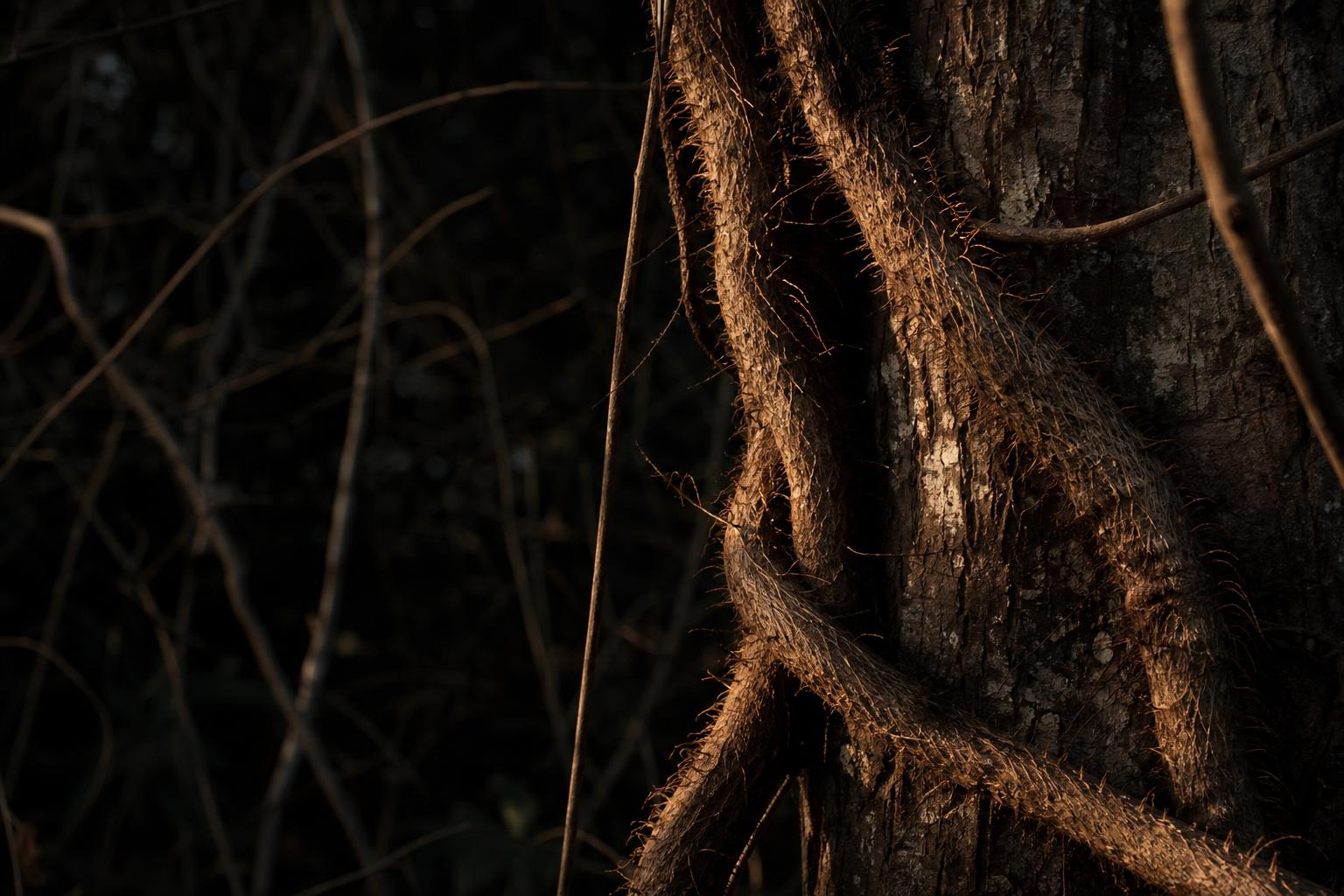
Eastern poison ivy vines can look like hairy, rope-like climbing vines attached to tree trunks by aerial roots. Do not grab, peel, cut, or burn those vines just because the leaves are gone or out of reach.
This is the poison ivy form that ruins campouts for people who think plant ID only happens at knee height. Old vines climb trees and can be thick enough to look like part of the tree. Those aerial roots give the vine that rough, hairy rope appearance. If you’re collecting firewood, hanging a tarp line, leaning a rifle, or stacking gear against a tree, that vine is not scenery. It’s contact risk.
Leafless vines deserve respect. The research brief makes clear that eastern poison ivy can be a high-climbing vine with aerial roots. It does not say the hazard only exists when the leaves are pretty and obvious. If your camp routine includes dragging dead limbs out from under trees, inspect the trunks and anything vine-wrapped before you put your hands on it. Gloves help with abrasion and dirt, but they can also become contaminated gear. Treat them that way.
Western poison ivy usually will not give you the hairy climbing-vine warning, because it typically does not form a climbing vine. That absence is not an all-clear. It just means your ID process shifts back to the shrub layer and leaflet structure.
Can you identify poison ivy by color or season?
No. Color is a weak shortcut because poison ivy appearance varies by species, environment, and season. Structure beats color every time.
I don’t let students clear a plant because it is the wrong shade of green, red, yellow, glossy, dull, young, old, ragged, or clean. The brief is explicit that poison ivy’s appearance varies. Color is the most abused clue because it feels fast. Fast is not the same as reliable.
Use seasonal clues only when they reinforce structure. If leaves are present, work the compound-leaf test: three leaflets, longer stalk on the middle leaflet, alternate arrangement along the stem or vine. If fruit is present, note it, but don’t pretend fruit alone is a full ID. USDA data in the brief describes poison ivy fruits as small round drupes about 3 to 7 millimeters across. That’s small. In brush, with uneven light, small fruit should make you slow down, not make you smug.
When leaves are absent or the plant is climbing above eye level, growth form takes over. Hairy, rope-like vines on trees in eastern poison ivy territory are a serious warning. Low shrubs in western poison ivy territory deserve the same suspicion. Winter does not turn bad trail habits into good ones.
What lookalike mistakes get hikers into poison ivy?
The two big mistakes are treating all three-leaflet plants as poison ivy and treating every non-perfect plant as safe. Common lookalikes exist, so the decision has to rest on multiple traits at once.
False positives are not harmless if they train you to ignore your own checks. You see three leaflets, call it poison ivy, then later see another three-leaflet plant that looks slightly different and decide the first one must have been a false alarm. That’s how people start negotiating with plants they haven’t identified.
False negatives are worse. A hiker expects a tiny ground plant and misses a climbing vine. A camper expects symmetrical leaf pairs and never checks for alternate clusters. Someone sees a shrub instead of a vine in western country and walks through it. Another person learns the rhyme, then gets confused by poison sumac because it usually carries 7 to 13 leaflets rather than three.
The correction is simple and boring, which is why social media hates it. Stack your evidence.
- Three leaflets: warning sign, not final proof.
- Longer middle stalk: strong poison ivy clue when leaves are present.
- Alternate cluster arrangement: stronger than a casual leaf count.
- Growth form by region: eastern and central vines, shrubs, groundcover, and trailing forms; western low shrub form.
- Hairy climbing vine: major eastern poison ivy warning, especially on tree trunks.
- Small round drupes: supporting clue when present, reported around 3 to 7 millimeters across.
What should you do if poison ivy is near your campsite?
Move the traffic pattern, not the plant. Avoid contact, keep gear off suspicious vines and shrubs, wash exposed skin and contaminated items, and never burn poison ivy.
Campers love to solve everything with a knife or fire. Bad idea here. The CDC/NIOSH guidance warns about exposure from poisonous plants, contaminated gear, and smoke hazards from burning. That means the plant is not your only problem. Your gloves, cuffs, boot laces, dog leash, saw handle, pack hip belt, and tent stuff sack can become the delivery system after the original contact.
If poison ivy is near camp, reroute the footpath first. Move the chair. Move the cooking area. Move the latrine path. Do not slash a vine off a tree and then spend the evening touching the same knife, gloves, and sleeves. Do not toss suspect vines into the fire. Smoke exposure is the kind of preventable mistake that turns a minor camp nuisance into a real wilderness first aid problem.
Mark the area mentally or physically without handling the plant. In a group, use blunt language: nobody walks through that patch, nobody leans gear against that tree, nobody collects wood wrapped in hairy vines. People follow clear boundaries better than vague warnings.
Brushy places that hold poison ivy also deserve a tick check mindset. Different hazard, same sloppy trail behavior: pushing through vegetation, sitting in edges, and failing to inspect afterward. If one is in your weekend plan, the other often belongs in your brain too, so keep a practical reference on how to remove a tick with your wilderness first aid knowledge.
A pre-hike poison ivy check takes two minutes
A good pre-hike check starts before your boots hit the trailhead. Know the regional growth form, then inspect trail edges, campsite trees, and brushy shortcuts with the leaflet and vine tests.
Most contact happens because somebody is rushing through a low-value decision. Shortcut to the creek. Step behind the log. Lean on the tree. Drag the dead branch. Set the pack down in a green patch. None of those actions are worth a rash.
Use this two-minute scan before committing to a rest stop or campsite:
- Scan tree trunks first in eastern and central country. Hairy rope-like vines are not grab handles, tarp anchors, or firewood decorations.
- Scan knee-to-waist vegetation next. Western poison ivy is usually a low shrub, and eastern poison ivy can also show up as shrubs or groundcover.
- Inspect any three-leaflet plant before stepping through. Look for the longer middle leaflet stalk.
- Check arrangement along the stem. Alternate clusters beat a lazy leaf count.
- Keep gear out of suspicious vegetation. Pack fabric, straps, gloves, and tools can carry contamination after contact.
- Reject burn solutions. Suspect vines and brush do not go into the campfire.
This is not paranoia. It is field discipline. The point is not to identify every plant in the forest. The point is to recognize enough poison ivy patterns that you stop paying for lazy movement with days of itching.
FAQ
Are poison ivy leaves always the same size?
No. Reported leaflet sizes vary by species. Eastern poison ivy leaflets are about 2 to 8 inches long and 1 to 6 inches wide, while western poison ivy leaflets are about 1 to 6 inches long and 1 to 4 inches wide.
Is poison oak the same as poison ivy?
No, but the CDC notes that leaves of three is a useful warning for both poison ivy and poison oak. Do not use that rhyme for poison sumac, which usually has 7 to 13 leaflets.
Can I burn poison ivy if I avoid touching it?
No. Burning is one of the worst fixes. CDC/NIOSH identifies smoke from burning poisonous plants as a hazard, so keep suspect vines and brush out of your fire completely.
Conclusion
The right way to identify poison ivy is not a rhyme. It is a field sequence: region, growth form, three-leaflet compound leaf, longer stalk on the middle leaflet, alternate arrangement, hairy eastern vines, shrub behavior in the West, and strict avoidance of contaminated gear and smoke. That sequence is what keeps a hike from turning into a miserable lesson you should have learned in the parking lot.
If you’re tightening up your outdoor skills before the next trip, grab the free survival guide PDFs and keep building the habits that prevent stupid problems before they become wilderness first aid problems.