Waterproof Fire Starter: Best Options for Wet Weather Survival Kits

Most waterproof fire starter advice is lazy. It treats wet-weather fire like a shopping problem, as if one shiny capsule or miracle match replaces skill, preparation, and redundancy. That’s how people end up shivering under a tarp, striking sparks into damp fluff, blaming the tool.
A real wet-weather fire kit separates ignition from tinder from fuel. A ferro rod throws sparks. A lighter gives flame. Fatwood catches and extends flame. A magnesium fire starter makes hot shavings, but only if you can keep those shavings in a pile. None of them magically dries rotten sticks in cold rain. The kit has to be built as a system.
The best survival kit for rain, wind, and cold carries at least two ignition sources and multiple waterproof tinder options. Anything less is gear optimism, and gear optimism gets punished in bad weather.
Which waterproof fire starter belongs in a survival kit?
The best waterproof fire starter setup is a ferro rod backed by a lighter or stormproof matches, plus sealed tinder that will take a spark or flame immediately. The fire starter is not one object, it’s the combination that still works after your pack gets rained on.
If you only remember one thing, remember this: ignition redundancy is cheap, tinder failure is expensive. A soaked lighter can be dried. A ferro rod can be wiped off. Matches can be sealed. Tinder that got damp at the fiber level is a miserable problem when your hands are stiff and the wind is leaning on you.
A wet-weather survival fire kit should cover three separate jobs:
- Ignition: ferro rod, lighter, stormproof matches, or magnesium striker.
- Water-resistant tinder: petroleum-treated cotton, waxed cotton, waxed jute, commercial fire tabs, scraped fatwood, or a sealed tinder bundle.
- Flame extender: fatwood slivers, thicker waxed tinder, resin-rich curls, or dry pencil-size kindling protected from rain.
Blogs love to rank fire starters like they’re pocket knives. Wrong framing. In the field, you’re not asking which tool looks best on a table. You’re asking which combination survives wet pockets, wind gusts, numb fingers, and bad fuel.
Ferro rod or lighter in wet weather?
A lighter is faster when it works, but a ferro rod is the more dependable wet-weather ignition source because water does not ruin the rod. The tradeoff is simple: a lighter gives flame, a ferro rod demands better tinder.
The lighter is still worth carrying. Anyone who tells you they don’t carry one because they’re too primitive is performing for the internet. A cheap lighter can start dozens of fires quickly when conditions are reasonable. In cold rain, though, lighters become fussy. Wet wheels slip. Cold hands fumble. Fuel-fed flame gets bullied by wind. If that’s your only plan, you don’t have a plan.
A ferro rod is different. It does not care that it got wet, but that does not mean it starts wet tinder. That distinction matters. A ferro rod is an ignition source, not a complete fire by itself. It shines when you pair it with tinder that has been kept dry, processed fine, and placed where the sparks are landing instead of three inches away because your striker hand is bouncing.
The better ferro rod technique is not wild hacking. Pin the striker. Pull the rod back. Keep the sparks driving into one exact spot. That keeps you from scattering your tinder pile and lets you work inside a small windbreak. There’s a reason we teach this instead of the dramatic scrape-and-flail nonsense you see in short videos. For a deeper technique drill, read how to use a ferro rod.
Stormproof matches earn a place as a backup, not a primary plan. They give you a brief flame, and that can matter when you’re trying to light waxed cotton or a fatwood feather. The problem is count. Every failed strike burns inventory. Ferro rods and lighters give you more attempts.
Tinder matters more than sparks
Wet-weather fire failures usually start at the tinder, not the ignition tool. If your tinder cannot catch fast and hold flame long enough to light kindling, your waterproof fire starter kit is just pocket jewelry.
Good waterproof tinder has two jobs. First, it has to stay usable after damp handling or rain exposure. Second, it has to burn long enough to dry the very outside of small kindling and heat the next fuel size. Flash tinder that vanishes in two seconds is fine for demonstrations. It’s weak medicine in ugly weather.
These are the tinder options that actually belong in a wet survival kit:
- Petroleum-treated cotton: It takes a spark well when teased open and burns longer than plain cotton. Pack it in a small sealed bag or hard capsule, because the clean, fluffy surface is the part that catches fastest.
- Waxed cotton or waxed jute: Wax protects the fibers and extends burn time. You have to expose fibers before striking sparks into it. A smooth waxy lump is not tinder, it’s a candle with no wick showing.
- Commercial waterproof fire tabs: Useful because they’re consistent and compact. Test the brand you carry before trusting it. Some light easily with flame but poorly with sparks.
- Fatwood shavings: Fatwood is resin-rich wood that burns better than ordinary wet sticks. Shave it fine, then build thicker curls and slivers beside it. A whole fatwood stick does not catch well from sparks. Process it.
- Char cloth: Excellent with flint and steel, and it catches easily, but it is not enough by itself in rain. It makes an ember. You still need a dry tinder nest and flame extender.
Dryer lint gets recommended constantly because it’s free. Plain dryer lint is overrated. It can absorb moisture, it varies depending on fabric, and it collapses into useless fuzz when handled wet. If you insist on using lint, bind it with wax and test it outside, not on a sunny kitchen counter.
For homemade options that are worth carrying, use the guide on DIY waterproof fire starters and then abuse-test them. Drop one in wet grass. Handle it with cold fingers. Try lighting it with a ferro rod in a breeze. If it only works under perfect conditions, it’s not survival gear.
Where does a magnesium fire starter fit?
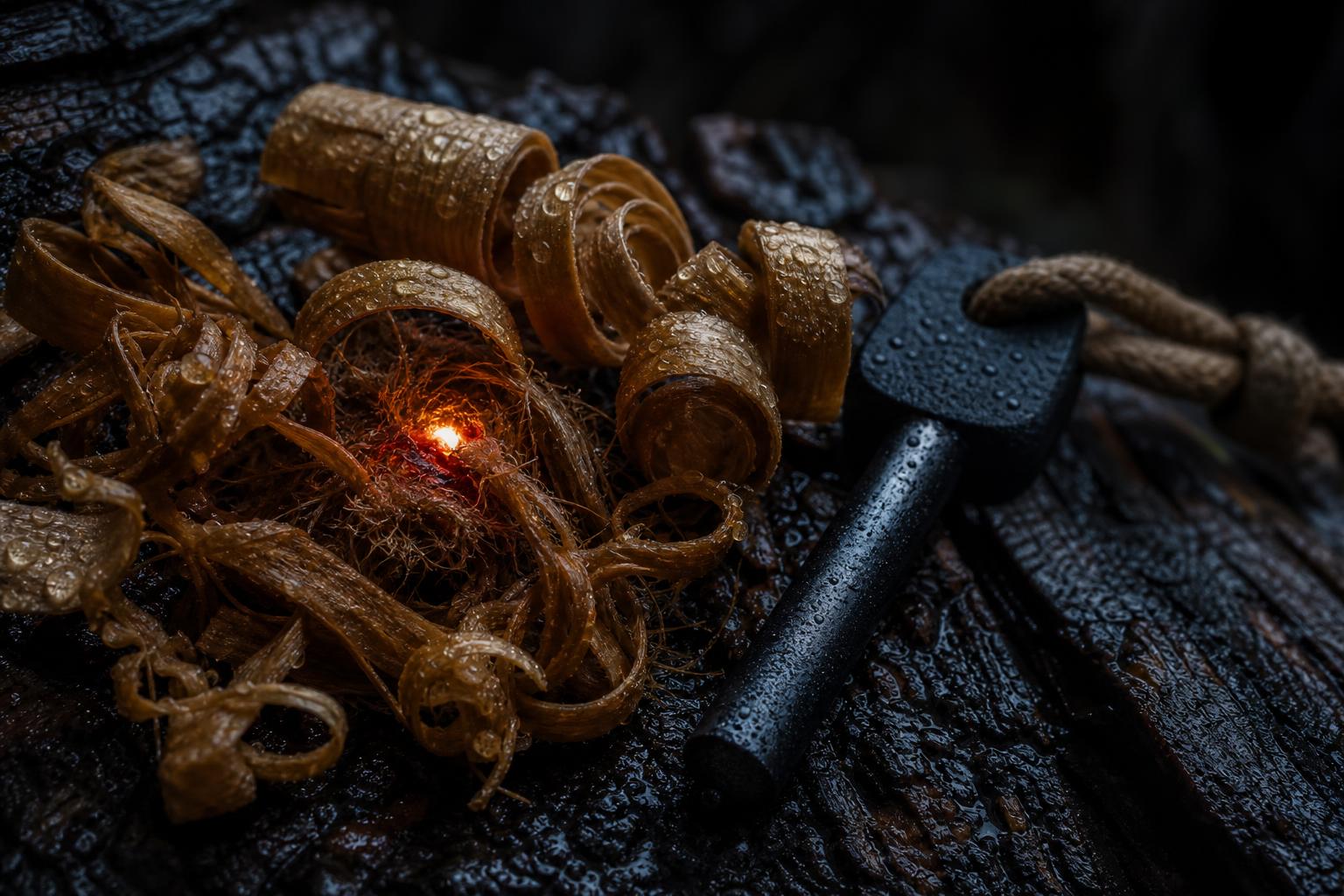
A magnesium fire starter is a useful backup when you understand its weakness: the shavings are light, fussy, and easy to lose in wind. It works best when scraped into a prepared tinder cup, not onto flat wet ground.
Magnesium gets praised like it’s magic. It isn’t. The block or bar is only valuable if you can shave enough material, keep it together, and ignite it where that brief intense burn can light something else. People scrape a few shiny flecks onto bark, strike once, and act surprised when nothing happens. That’s not a gear failure. That’s bad preparation.
Use a magnesium fire starter like this in rain:
- Make a small bowl from dry inner bark, a split stick, foil, or curled bark held under your shelter edge.
- Scrape a visible pile of magnesium shavings into the bowl. Not dust scattered across an acre. A pile.
- Surround it with feathered fatwood, waxed fibers, or petroleum cotton pulled open.
- Strike sparks directly into the shavings, with your body blocking wind.
- Feed pencil-lead and pencil-size kindling immediately once flame appears.
The magnesium is the booster, not the whole fire. If your next fuel is wet bark slabs and thumb-thick sticks, the magnesium will flare and die while you watch. Pair it with real tinder and prepared kindling or leave it out of the kit.
How do you make a fire in the rain with a waterproof fire starter?
To make a fire in the rain, keep the ignition area sheltered, start above wet ground, expose dry inner wood, and build from fine tinder into pencil-size kindling before adding larger fuel. Rain does not stop fire as often as bad fuel prep does.
The first move is not striking sparks. The first move is site control. Work under a tarp edge, a rain jacket, a rock overhang, or the downwind side of a pack if that’s all you have. Keep your tinder in its waterproof packaging until the moment you use it. People open the whole kit in the rain, soak every backup, then call the conditions impossible.
Get the fire off wet ground. Use a platform of split sticks, bark, flat stones, or green poles. Wet soil steals heat and turns your first flame into steam. Build small. Big sloppy teepees look good in illustrations and fail in rain because the flame cannot heat the fuel column fast enough.
Split wood is your friend. The outer bark may be soaked, but the inner wood of standing dead material can be drier. Use a knife to make feather sticks, fine curls, and splinters. If your tinder feels cool against the back of your hand, it’s still too damp for a spark-first plan. Use flame, fatwood, magnesium, or waxed tinder instead of pretending one more strike will fix it.
A wet-weather fire progression should look like this:
- Teased tinder or shaved fatwood protected from falling rain.
- Matchstick-thin curls and splinters placed close enough to heat, not smother.
- Pencil-lead twigs once flame is steady.
- Pencil-size sticks only after the first kindling is burning on its own.
- Thumb-thick fuel after you have a coal base or sustained flame.
That sequence is slower than dumping sticks on a flame. It also works. If you want the full rain-fire build, the field method is laid out in how to make a fire in the rain.
Fire legality and safety still count when the weather is bad. Use existing fire rings where required, follow local restrictions, and put the fire dead out before leaving. The National Park Service campfire guidance is plain about keeping fires controlled and fully extinguished. Survival skill does not excuse starting a problem someone else has to fight.
Pack the kit like a system, not a junk drawer
A good wet-weather fire kit is compact, redundant, and organized so you can use it with cold fingers. If you have to dump twenty loose pieces into the mud to find one tinder tab, your kit is badly built.
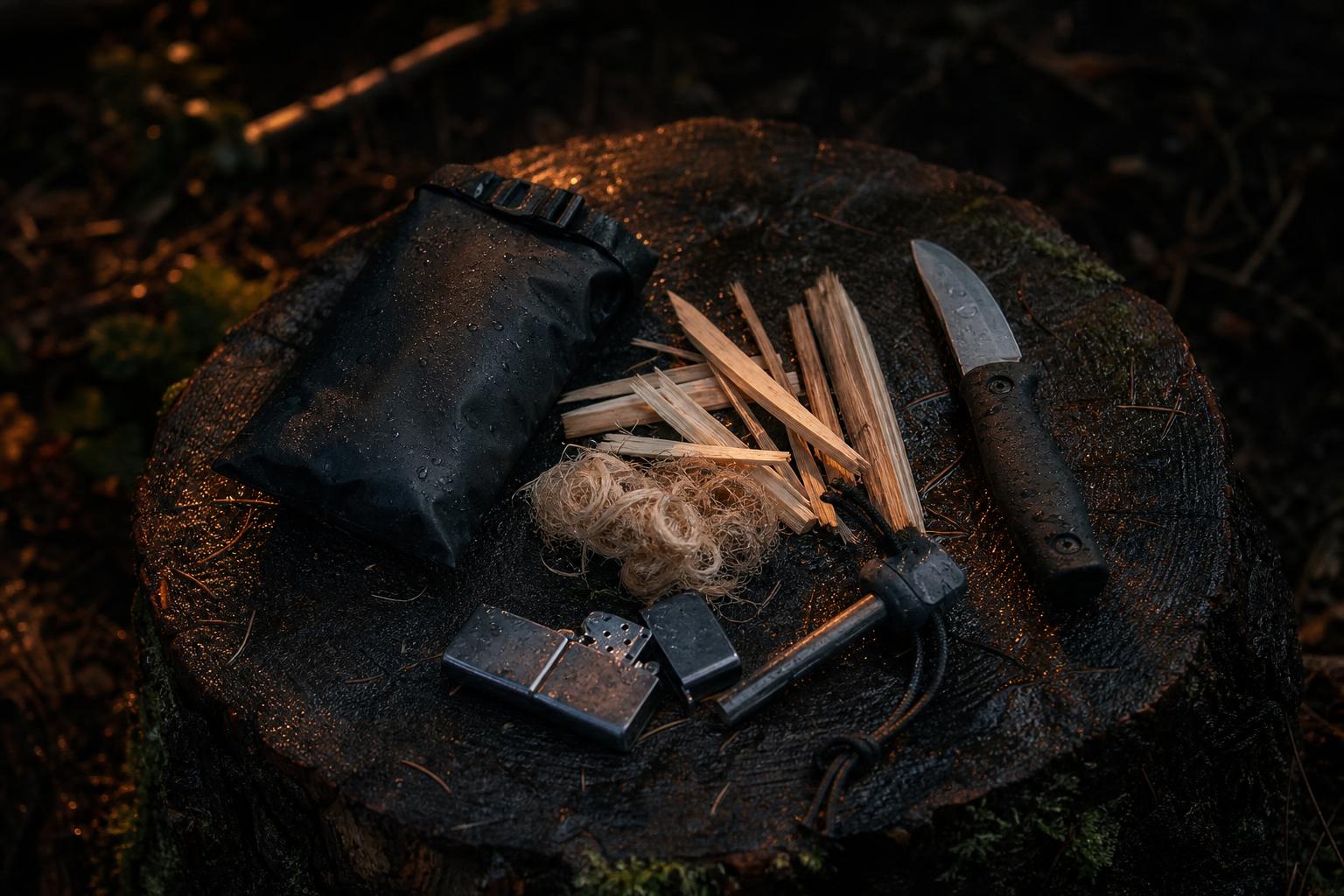
Use layers. Carry one ignition source on your body, one in your pack, and tinder sealed in more than one location. That way a soaked pouch or lost pocket does not erase your fire capability. A waterproof container is good. Two smaller waterproof containers are better than one big container that becomes a single failure point.
For most survival kits, this layout makes sense:
- Primary ignition: full-size ferro rod with striker, stored where it can be reached fast.
- Fast flame: lighter in a small waterproof bag or hard case.
- Match backup: a few stormproof matches with striker surface protected from abrasion and moisture.
- Spark-friendly tinder: petroleum cotton or commercial tabs packed in small portions.
- Flame extender: fatwood sticks, waxed jute, or thicker waxed cotton rolls.
- Processing tool: knife or sharp edge for curls, shavings, and split kindling.
Do not pack all tinder in one bag. Separate it. A tiny tinder capsule in a jacket pocket can matter more than a beautiful fire kit buried at the bottom of a soaked pack. Redundancy is not paranoia. It’s design.
Labeling also matters. In bad weather, clear organization beats clever organization. Keep ignition and tinder together in a small pouch, not scattered across five compartments. Practice opening every container with gloves or cold hands. Tiny screw caps and slick plastic bags get annoying fast when your fingers stop cooperating.
Best waterproof fire starter options ranked by field reliability
The best option is the one with the fewest wet-weather failure points, not the one with the flashiest claim. For survival kits, the strongest setup is a ferro rod plus sealed tinder, backed up by a lighter and fatwood.
- Ferro rod plus sealed tinder: Best long-term survival pairing. The rod tolerates wet storage, and sealed tinder solves the real problem. It demands practice, but it gives many attempts.
- Lighter plus waxed tinder: Fastest practical option when the lighter works. Excellent for cold, wet hands because open flame lights waxed fibers better than sparks do.
- Fatwood shavings and ferro rod: Strong natural-material option if the fatwood is shaved fine. Whole sticks are fuel, not initial tinder.
- Magnesium fire starter plus tinder cup: Good backup and useful in harsh conditions, but wind can ruin the shavings before ignition.
- Stormproof matches plus fire tabs: Reliable short flame with limited attempts. Worth carrying, not worth depending on as your only ignition.
- DIY waxed cotton or jute: Excellent if made well and tested. Useless if packed as a greasy lump with no exposed fiber.
The ranking changes if your skill changes. A practiced ferro rod user with good tinder outperforms a person with expensive storm matches and no kindling prep. Gear does not erase sloppy fire craft.
Common wet-weather mistakes that waste fire starters
Most failures come from using good ignition on bad material. The fire starter gets blamed because it’s visible, while the soaked tinder bundle and lazy kindling prep get ignored.
- Striking sparks into damp tinder: Sparks need fine, dry, receptive material. If it feels cool and clammy, switch to flame or replace it.
- Opening tinder too early: Keep sealed tinder sealed until everything else is ready. Rain only needs a moment to ruin fine fibers.
- Skipping the platform: Wet ground steals heat. Start on bark, split sticks, or another dry-ish base.
- Using fuel that is too large: Thumb-thick sticks do not belong on a newborn flame in the rain.
- Ignoring wind: Even good tinder fails when sparks and flame are blown sideways. Use your body, pack, terrain, or a tarp edge as a windbreak.
- Carrying one ignition source: One lighter, one match case, or one bargain striker is not redundancy. It is a bet.
The worst advice is the idea that waterproof equals foolproof. Waterproof packaging protects tinder during storage. It does not process fuel, block wind, or build the fire lay. That work is still yours.
FAQ
Can a ferro rod be a waterproof fire starter?
Yes, a ferro rod can serve as waterproof ignition because the rod still throws sparks after getting wet. It is not complete by itself, so pair it with sealed tinder that accepts sparks quickly.
Is fatwood waterproof?
Fatwood is water-resistant enough to be valuable in wet weather, especially when shaved to expose resin-rich inner material. It still needs processing. A fatwood stick thrown whole into a weak flame is poor technique.
How many fire starters should be in a survival kit?
Carry at least two ignition sources and two forms of tinder, stored in separate places. A ferro rod, lighter, sealed tinder tabs, and fatwood cover far more real-world failures than one expensive gadget.
Build the kit before the rain proves you wrong
A waterproof fire starter is not a talisman. The right kit gives you overlapping answers: sparks when the lighter is wet, flame when the tinder needs more heat, fatwood when kindling is marginal, and sealed tinder when the whole world feels soaked. That’s the standard. Anything less is pretending.
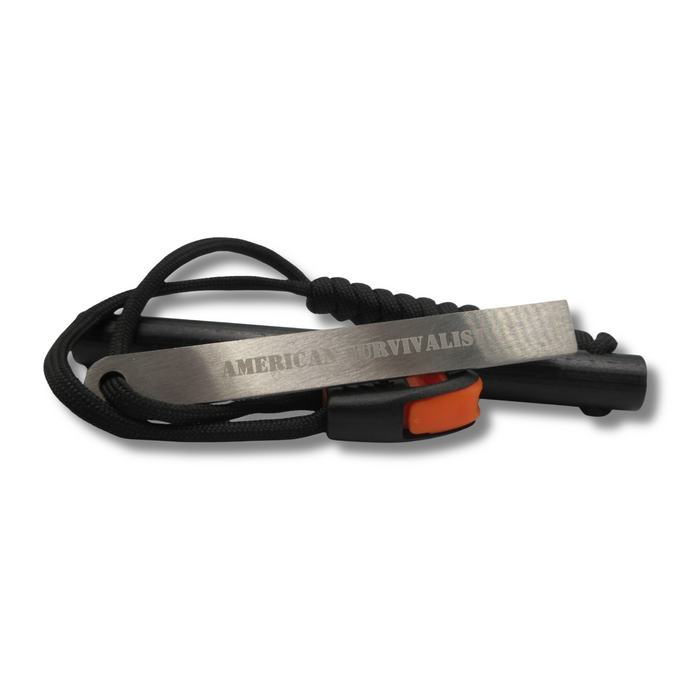
If your survival kit still has a tiny novelty striker and mystery lint in a sandwich bag, fix it. Start with proven ignition, pack tinder in separate waterproof portions, and practice in ugly weather before you need it. For a full-size ferro rod that belongs in a wet-weather kit, the American Survivalist Large Ferro Rod and Striker gives you a 5-inch, half-inch solid ferrocerium rod, a hardened 90-degree striker, and 15,000+ strikes to train with instead of rationing attempts.
Round out the rest of your preparedness binder with the free survival guide PDFs, then take your fire kit outside on a wet day and find out what actually works.